

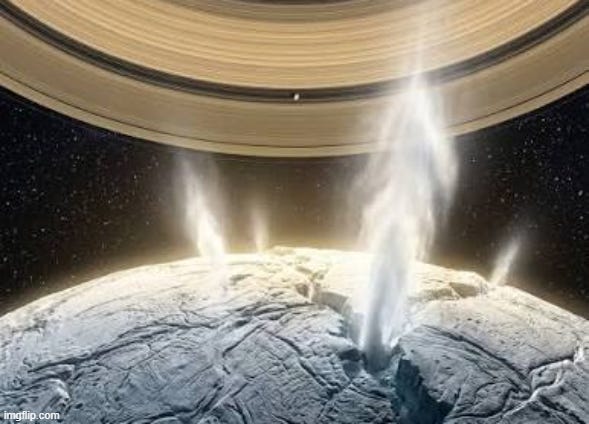
In the frozen outer reaches of our solar system, volcanoes do not spew scorching rivers of molten rock. Instead, they erupt with ice, water, and exotic gases. These bizarre geological features are known as cryovolcanoes, and they challenge everything we once believed about planetary activity far from the sun. In these ultra-cold environments, liquid water acts exactly like magma does on Earth, rising through fractures in a solid ice crust to explode into an unforgiving vacuum.
Because many of these icy worlds are small and possess weak gravitational pulls, cryovolcanic eruptions do not always behave like terrestrial ones. Instead of the material falling back to the surface as ash or snow, the explosive pressure can blast cryomagma straight out of the atmosphere. When a plume escapes the gravitational bonds of its parent body, it shoots directly into space, creating vast ghost-like halos of microscopic ice crystals that ring the planet.
This dramatic phenomenon allowed humanity to sample an alien ocean without ever landing a spacecraft. As the Cassini probe toured the Saturnian system, it flew directly through the towering plumes erupting from the south pole of the tiny moon Enceladus. Cassini was equipped with instruments capable of tasting the chemical makeup of these cosmic geysers. It discovered that the spray contained salt, simple organic molecules, methane, and silica nanoparticles, which strongly suggested the presence of hydrothermal vents churning at the floor of a subsurface ocean.
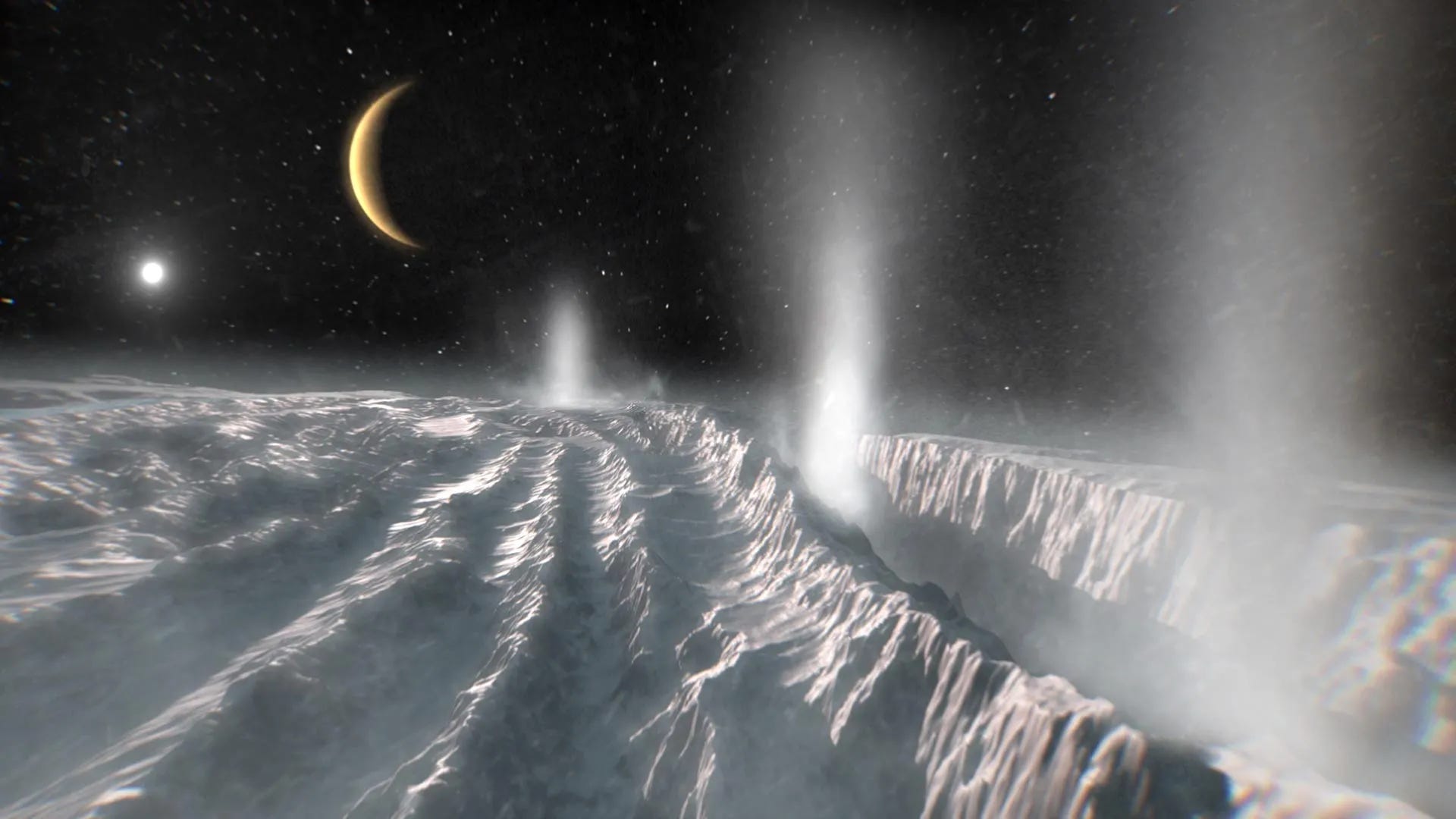
Recent analysis of that decades-old Cassini data has elevated Enceladus into an even more tantalising primary candidate in the search for extraterrestrial life. Researchers re-examining the plume composition identified high concentrations of hydrogen cyanide, a volatile molecule that serves as a crucial building block for amino acids and the origin of life. Furthermore, computer models of the moon’s internal chemistry indicate a massive reservoir of chemical energy, far exceeding previous estimates. This powerful cocktail of organic molecules and energy sources means the hidden ocean of Enceladus is not merely a passive pool of water, but a highly active, habitable environment where alien microbes could realistically thrive right now.