

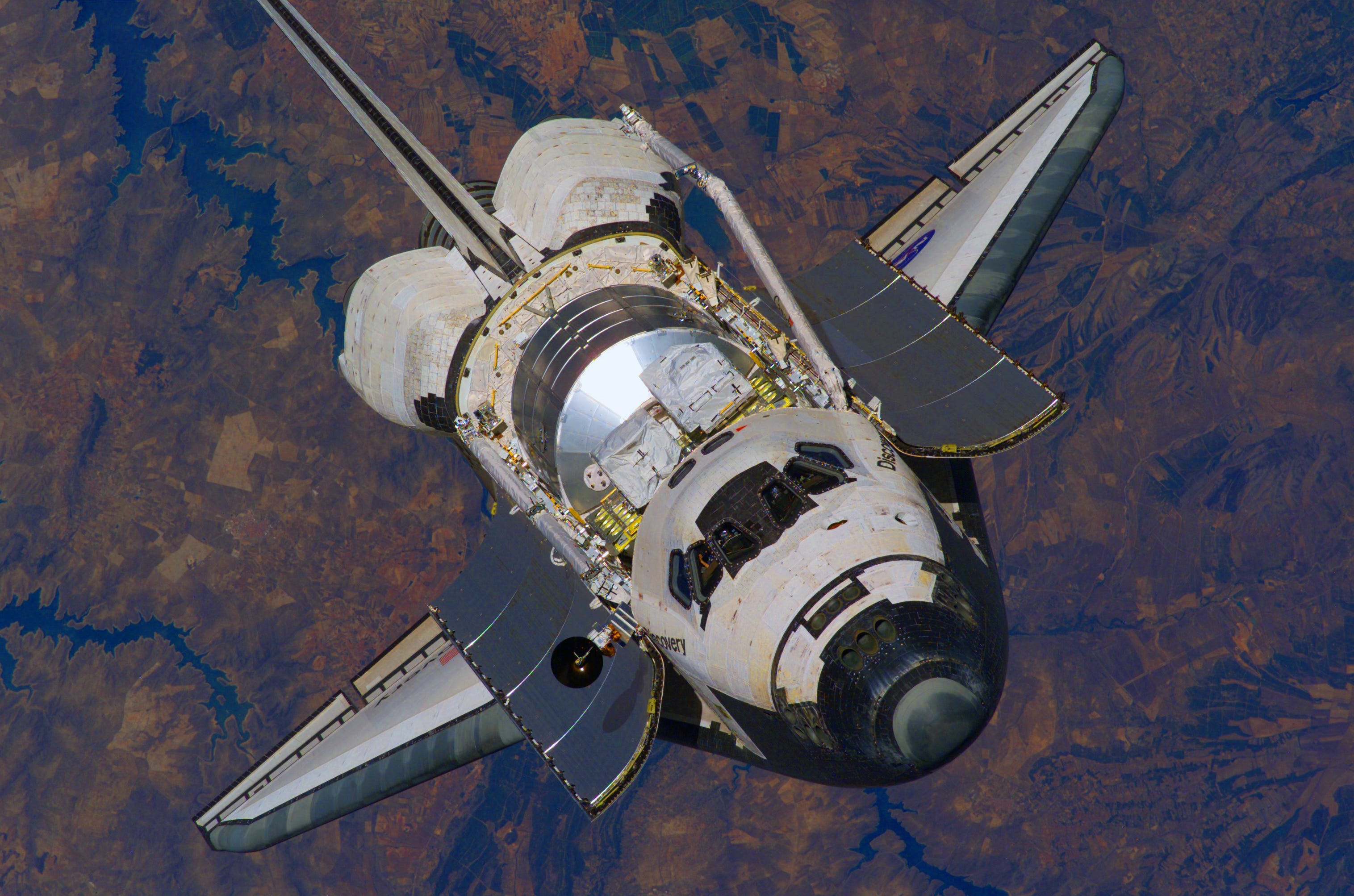
The Space Shuttle occupies a complicated place in the history of human spaceflight. Conceived in the early 1970s as a revolutionary system that would make access to orbit routine, affordable, and reusable, it instead became a vehicle defined as much by its shortcomings as by its accomplishments. Asking whether it ranks as the worst spacecraft ever designed and built requires examining both the scale of its failures and the context in which it operated. The answer, grounded in performance rather than nostalgia or politics, is that it was not the worst, yet it remains one of the most instructive examples of how ambitious engineering can be undermined by compromise, overpromising, and institutional inertia.
From the outset the Shuttle was shaped by conflicting demands. NASA sought a vehicle capable of frequent flights with large crews and substantial cargo. The Air Force required a large payload bay and the ability to return to specific landing sites after polar orbits. Budget constraints ruled out a fully reusable two-stage design. The result was a hybrid: a winged orbiter mounted on the side of a massive external tank, flanked by two solid rocket boosters that could not be shut down once ignited. This configuration created inherent vulnerabilities. Debris shed from the external tank could strike the orbiter, a risk that ultimately destroyed Columbia in 2003. The solid boosters introduced the O-ring failure that doomed Challenger in 1986. The thermal protection system of more than twenty thousand fragile tiles demanded exhaustive inspection and repair between flights. These were not minor defects; they were baked into the architecture by the need to satisfy multiple stakeholders with limited funds.
Operational realities compounded the design problems. Early projections spoke of weekly flights at costs as low as twenty million dollars each. In practice the fleet never exceeded nine missions in a single year, and the average cost per flight settled in the range of one to one and a half billion dollars when the full program lifetime is accounted for. That figure stands in stark contrast to the economics of contemporary launch systems. A SpaceX Falcon 9 mission, capable of delivering more than twenty tons to low Earth orbit, is commercially priced in the vicinity of seventy million dollars, with internal marginal costs for highly reused boosters falling still lower. Blue Origin’s New Glenn aims for a similar commercial range while offering substantially greater payload capacity.
These modern vehicles achieve far higher flight rates through rapid first-stage recovery and refurbishment, rendering the Shuttle’s amortized expense per mission roughly twenty times higher. Turnaround times for the Shuttle stretched into months rather than days or weeks. The vehicle proved far more maintenance-intensive than anticipated. Two catastrophic accidents claimed fourteen lives and grounded the fleet for years, revealing not only technical flaws but also organizational culture that tolerated known risks. By the time the program ended in 2011 after 135 flights, the total expenditure had reached roughly two hundred billion dollars in then-year terms. Measured against the original vision of airline-like operations, the Shuttle was an economic and safety disappointment.
Yet the same vehicle delivered capabilities no contemporary system matched. It carried crews of up to eight, deployed and retrieved satellites, conducted extensive on-orbit research, and served as the primary construction platform for the International Space Station. Multiple servicing missions rescued and upgraded the Hubble Space Telescope, transforming it from a flawed instrument into one of the most productive observatories in history. The Shuttle demonstrated that a winged, reusable orbiter could survive the extreme thermal and aerodynamic loads of reentry at orbital velocity, advancing materials science and propulsion technology in the process. Its main engines remain among the highest-performance reusable rocket engines ever flown. These achievements cannot be dismissed simply because the broader program failed to meet its loftiest goals.
Comparison with other spacecraft clarifies the ranking. Many vehicles have failed more completely: early experimental craft that never reached orbit, probes that malfunctioned within hours of launch, or concepts that never progressed beyond the drawing board. The Shuttle flew successfully more than a hundred times and accomplished unique missions. Its shortcomings were real and costly, but they occurred within a system that still returned crews and cargo from orbit repeatedly over three decades. Later systems, particularly those employing vertical landing and rapid reuse, have already demonstrated lower costs and higher flight rates precisely because engineers studied the Shuttle’s limitations. The program therefore functions less as an absolute low point than as a cautionary benchmark.
In the end the Space Shuttle was neither a triumph nor a total failure. It was a pioneering effort constrained by politics, budgets, and the state of technology in its era. It fell short of the transformative role once envisioned, carried excessive risk, and consumed resources that might have supported other architectures. At the same time it expanded human presence in low Earth orbit and left a technical legacy that subsequent programs continue to build upon. To label it the worst spacecraft ever designed and built overstates the case and understates the complexity of assessing vehicles that must balance ambition, safety, cost, and capability under real-world constraints. Its true significance lies in the lessons it provides about the dangers of overpromising and the enduring difficulty of making spaceflight routine.
While I hated to see it retired as much as anyone else at the time, there's no doubt about it: the Shuttle over promised and under delivered. That aside, with all of the considerations that went into designing it, NASA did the best it could within the allowed parameters.