

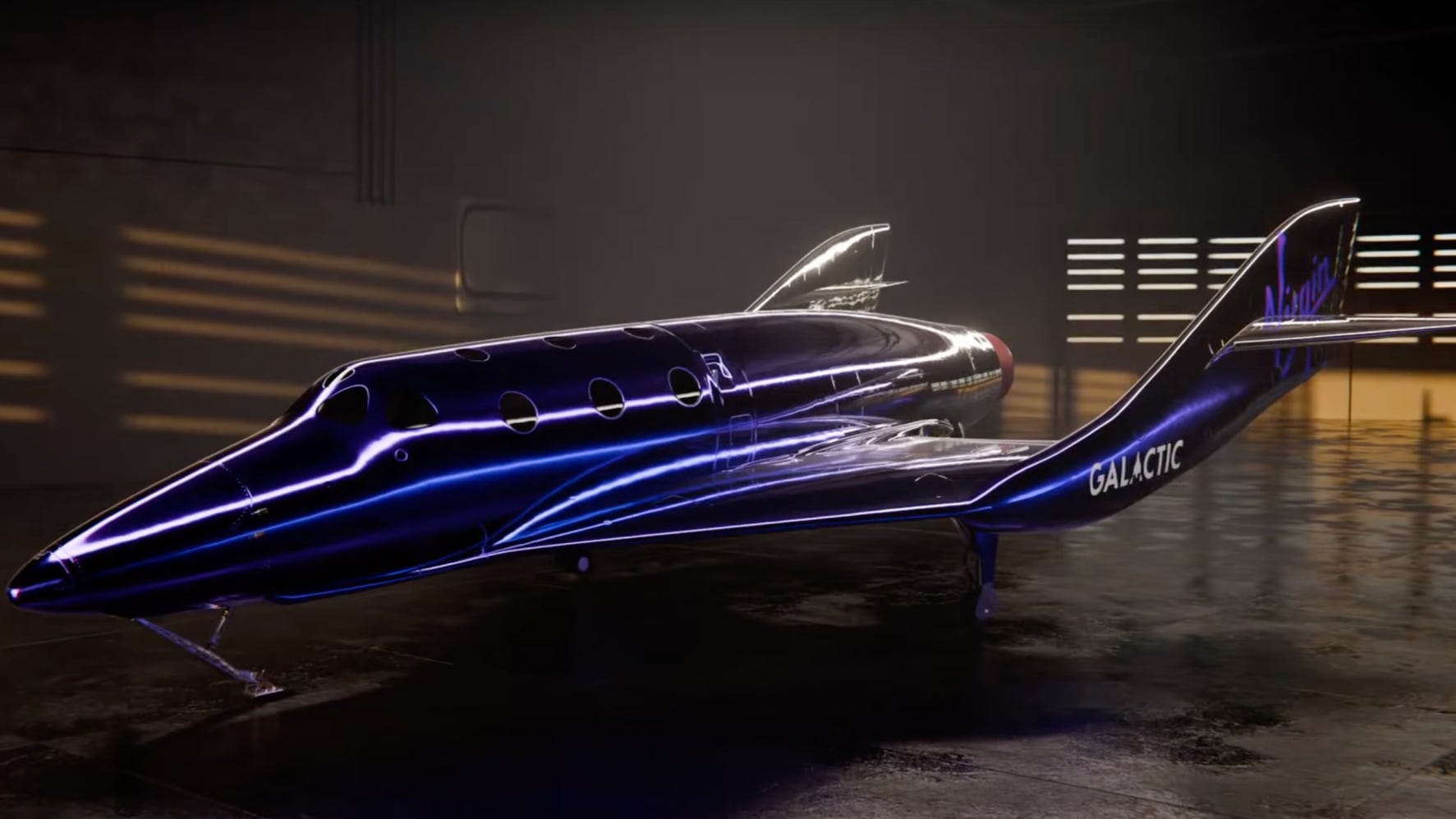
Virgin Galactic’s new Delta class space plane
Human fascination with space is moving from aspiration to commercial reality. Virgin Galactic is at the forefront of this shift, offering suborbital flights to private citizens and researchers. After years of development and a deliberate pause, the company is preparing to resume commercial operations in early 2027 with its next-generation Delta-class spaceships.
The Delta-class vehicles represent the core of Virgin Galactic’s push toward higher flight frequency and economic scale. Designed for faster turnarounds and greater efficiency than the retired VSS Unity, these spaceships will carry six passengers per flight and support multiple missions per month once fully operational. Final assembly and testing are advancing at the company’s production facility in Mesa, Arizona. Strong demand has already been demonstrated: the most recent tranche of Spaceflight Expeditions sold out ahead of schedule, reflecting sustained interest from the Future Astronaut community and new customers alike.
Looking ahead, the early 2027 return to flight is intended to begin clearing the existing backlog of Future Astronauts while opening additional ticket releases. The company also plans to expand opportunities for human-tended microgravity research. By focusing on repeatable, higher-cadence operations, Virgin Galactic aims to evolve from a pioneering demonstration program into a reliable commercial spaceline.
Virgin Galactic was founded in 2004 by Richard Branson with the goal of making space accessible to private individuals. Building on the success of the Ansari X Prize-winning SpaceShipOne, the company pursued an air-launched spaceplane architecture rather than traditional vertical rockets. The path included significant setbacks, most notably the 2014 loss of a test vehicle, as well as key milestones: the first spaceflight in December 2018 and Branson’s own flight to the edge of space in July 2021.
After a series of research and private astronaut missions, VSS Unity was retired in mid-2024. Attention then shifted fully to the Delta-class program, engineered for improved performance, modularity, and rapid turnaround. These vehicles form the foundation of Virgin Galactic’s plan to increase flight rates substantially and move closer to its long-standing ambition of operating as a dependable spaceline for Earth.
As flight testing of the Delta-class fleet approaches and commercial service targets early 2027, Virgin Galactic continues to pursue a model of frequent, safer, and more accessible suborbital travel—offering participants a direct experience of the view that has long inspired humanity.