

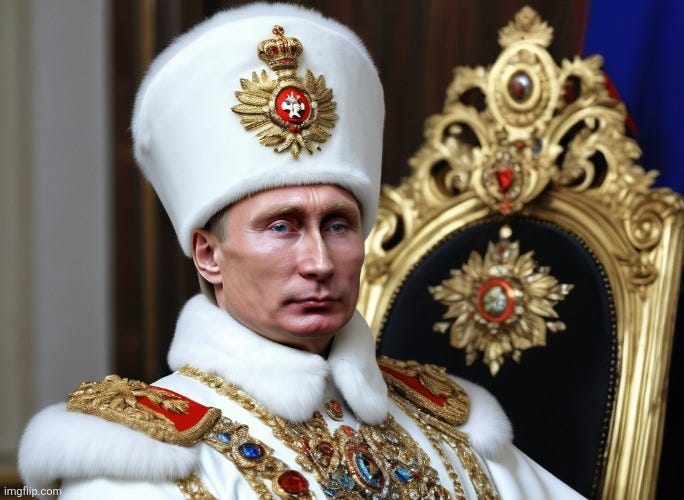
Russia’s military transformation, the future of European security, the nuclear deterrence dilemma and the possibility that the end of the war in Ukraine could mark the beginning of an even more dangerous chapter in global security.
The war that changed the enemy
On 24 February 2022, Russia launched what Vladimir Putin described as a special military operation. The scale of the invasion suggested that Moscow expected a relatively rapid collapse of Ukrainian resistance. Russian forces advanced towards Kyiv, airborne troops attempted to seize strategic airfields, and armoured columns pushed deep into Ukrainian territory. The political assumption underlying the operation appeared to be that Ukraine’s government would collapse, its military would be overwhelmed and the country’s political future would be decided before the West could organise a meaningful response.
The invasion was not literally planned as a three-day military campaign, as the popular shorthand sometimes suggests. Research by the Royal United Services Institute indicates that Russia planned a rapid campaign lasting approximately ten days, followed by occupation and the political absorption of Ukraine by August 2022. The distinction is important because the Russian leadership was not simply expecting a quick military victory. It was expecting the destruction of Ukrainian political independence.
Instead, Russia encountered something it had profoundly underestimated: a country prepared to fight for its existence.
The Russian military that crossed the border was a very different organisation from the one that would eventually emerge from years of fighting. Its weaknesses became visible almost immediately. Logistics were inadequate, communications were vulnerable, coordination between military branches was frequently ineffective, and commanders appeared unable to adapt quickly when their original plans collapsed. Some units had received little information about the actual operation before entering Ukraine. The Russian military had prepared for a short, decisive campaign but found itself engaged in a prolonged war against a determined adversary.
The consequences were extraordinary. Russia lost large quantities of modern equipment, experienced personnel and some of its most capable professional formations. Its initial reputation as a formidable conventional military power was badly damaged. Ukrainian resistance, meanwhile, became an international demonstration of how a smaller military could frustrate a much larger opponent through determination, decentralised operations, intelligence and technological assistance.
But something else was happening beneath the surface. Russia was learning.
And the longer the war continued, the more dangerous that learning process became.
From an ageing arsenal to a wartime industrial machine
At the beginning of the invasion, Russia possessed an enormous inherited arsenal of Soviet-era equipment. It had tanks, armoured personnel carriers, artillery, aircraft and missile systems in substantial numbers. Yet much of this inventory was ageing, and the condition, availability and modernisation of stored equipment were not always what Russian military planners had assumed.
The invasion exposed the difference between possessing a large inventory and possessing an effective modern military.
As losses mounted, Russia began drawing heavily on stored equipment. Tanks that had spent decades in storage were refurbished and returned to service. Older artillery systems were reactivated. Soviet-era ammunition stocks were consumed at a remarkable rate. What initially appeared to be a temporary response to battlefield losses became an increasingly important component of the Russian war economy.
But Russia did not simply rely on its inheritance from the Soviet Union.
It began expanding production.
Defence enterprises increased shifts, factories expanded output and government contracts provided a powerful financial incentive to redirect industrial resources towards military requirements. Production of artillery ammunition, missiles, drones and electronic warfare equipment became central to the economy. Russia also developed external supply relationships, particularly with North Korea and Iran, which helped sustain its military operations.
The transformation has been substantial. Russia’s military expenditure reached an estimated $190 billion in 2025, equivalent to approximately 7.5 per cent of its gross domestic product, according to the Stockholm International Peace Research Institute. Military expenditure also accounted for approximately one-fifth of total government spending.
This is no longer an economy simply purchasing weapons for a military that occasionally fights a war. It is an economy in which a substantial part of industrial activity, government expenditure and technological development has been reorganised around military requirements.
However, this transformation has costs. Russia faces labour shortages, inflation, technological restrictions, dependence on foreign components and mounting pressure on civilian industries. Its defence sector is expanding, but its ability to sustain that expansion indefinitely should not be confused with unlimited industrial capacity.
Nevertheless, Russia has acquired something it did not possess in February 2022: a defence industry operating under the pressure of continuous wartime demand, with an increasingly experienced workforce and a much better understanding of what modern warfare actually consumes.
The battlefield became a laboratory
Perhaps the most significant transformation has not been industrial but intellectual.
Russia entered Ukraine with military assumptions that were exposed as dangerously optimistic. Its initial approach relied heavily on conventional manoeuvre, armoured formations, artillery and the expectation that Ukrainian resistance would rapidly disintegrate.
Ukraine forced Russia to confront an entirely different form of warfare.
Drones became ubiquitous. Commercial satellite imagery, sophisticated communications, Western intelligence and precision-guided weapons changed the battlefield. Small teams equipped with inexpensive systems could identify and attack targets that previously might have required much larger military formations. Artillery became increasingly dependent on real-time information. Electronic warfare became essential to both attack and defence.
Russia adapted.
It developed increasingly sophisticated drone operations, expanded electronic warfare capabilities, modified armoured vehicles, improved defensive positions and incorporated lessons from repeated Ukrainian attacks. Its use of unmanned aerial vehicles evolved from relatively simple reconnaissance and attack systems into a major component of its military strategy.
The battlefield also demonstrated the importance of mass production. A relatively inexpensive drone that can destroy an expensive vehicle changes the economics of warfare. A weapon does not necessarily need to be technologically superior if it can be manufactured cheaply, deployed in large numbers and replaced rapidly.
Russia has learned to use waves of relatively inexpensive drones alongside more sophisticated missiles and other strike systems. It has also become increasingly capable of adapting its tactics to Ukrainian defensive innovations.
This is a very different Russia from the military that initially advanced towards Kyiv.
It is now a military with years of experience in large-scale conventional warfare, industrial adaptation, electronic warfare, drone operations and the practical difficulties of fighting an opponent equipped with Western technology.
That experience should not be dismissed simply because Russia has suffered enormous casualties and equipment losses.
A military can become more capable while simultaneously becoming more depleted. Both things can be true.
The paradox of Ukraine: a smaller country helping to create a more experienced Russian military
There is a deeply uncomfortable paradox at the heart of this conflict.
Ukraine has demonstrated extraordinary military innovation. It has used Western weapons, intelligence and technology to defeat or frustrate a much larger opponent. It has developed domestic drone manufacturing, adapted rapidly to changing battlefield conditions and demonstrated that relatively inexpensive technologies can challenge some of the most expensive military equipment in the world.
But Russia has been learning from the same battlefield.
Every Ukrainian innovation creates a problem that Russian forces must solve. Every successful Ukrainian attack provides information about vulnerabilities that Russia can attempt to correct. Every new generation of Western equipment gives Russian engineers and military planners an opportunity to study its strengths and weaknesses.
Russia has also captured Western equipment, studied unexploded weapons and examined components recovered from the battlefield. It has gained practical experience against Western-designed military systems without having to fight the United States or NATO directly.
There is no guarantee that Russia will successfully reproduce everything it encounters. Understanding a weapon and manufacturing an equivalent are very different challenges. But the knowledge accumulated through years of fighting is a substantial military asset.
Ukraine, meanwhile, has paid for much of this learning in lives, destroyed infrastructure and enormous economic damage.
The war is therefore creating two opposing developments. Ukraine is becoming an exceptionally experienced and innovative military society, while Russia is becoming a more experienced, militarised and industrially mobilised state.
The question is what happens to those capabilities when the fighting eventually stops.
The postwar Russia that Europe should be considering
A Russian victory in Ukraine would not necessarily mean that Russian forces immediately turn towards another European country. Russia would have enormous reconstruction requirements, depleted personnel reserves and a military that would need considerable time to recover.
But a ceasefire could create a new strategic situation.
During the war, Russia has had to devote enormous quantities of ammunition, equipment and personnel to maintaining its positions in Ukraine. If the conflict ended, that consumption would decline. Production facilities would not necessarily close. Military engineers would not forget what they had learned. Factories would retain much of their expanded capacity, and the state could redirect resources towards replenishing strategic reserves.
The difference between a military fighting a war and a military preparing for its next war can be substantial.
The International Institute for Strategic Studies has examined this possibility. Its 2025 assessment considered a scenario in which the Ukraine war ended and American military support for Europe diminished. It concluded that Russia could potentially restore significant elements of its pre-invasion ground-force equipment strength as early as 2027 under the assumptions used in that scenario.
Other assessments have suggested longer periods, particularly for restoring personnel, training, command structures and the more sophisticated elements of military capability.
These are not predictions that Russia will invade Europe in 2027. They are estimates of how quickly Russia might rebuild enough conventional military capability to present a serious challenge.
The danger is not necessarily a repeat of February 2022. It could be a Russia that has spent several years refining its military organisation, expanding production and rebuilding its forces while European governments struggle to agree on how much they should spend on defence.
A postwar Russian military could be smaller than the theoretical Soviet military of the Cold War but considerably more experienced in contemporary warfare.
It could also possess a substantial inventory of drones, electronic warfare equipment, missiles and artillery, supported by an industrial structure accustomed to producing them continuously.
What if Ukraine is forced into an unfavourable peace?
This is where the political consequences become especially complicated.
Russia and Ukraine share centuries of intertwined history. Millions of Ukrainians speak Russian as their first or everyday language. Families cross the border through generations of marriage, migration and shared ancestry. The Soviet Union bound their economies, industries and populations together for decades.
There are genuine cultural, linguistic and familial connections.
But these connections should not be confused with political consent. Ukraine has its own national identity, history, institutions and political aspirations. Russian-speaking Ukrainians have fought against Russia, and language does not determine loyalty to Moscow. Ukrainian identity has, in many respects, strengthened during the invasion.
Nevertheless, the shared history creates a complicated foundation for any eventual settlement.
Imagine a situation in which Ukrainian President Volodymyr Zelensky, or a future Ukrainian government, concludes that continued resistance will cost more Ukrainian lives than the country can afford. Imagine that Western military assistance becomes uncertain, ammunition supplies diminish and the prospect of further territorial losses becomes increasingly difficult to avoid.
A settlement might then be considered that preserves a formally independent Ukraine while accepting significant restrictions on its sovereignty.
It might involve territorial concessions, military limitations, political neutrality or restrictions on the country’s future security arrangements.
The Ukrainian government could present such an agreement as an unavoidable compromise to save lives and preserve what remains of the country.
But would such a settlement actually end the conflict?
That is the central question.
A country can retain its flag, parliament and international recognition while losing much of its ability to determine its own foreign and domestic policy. Formal sovereignty and practical sovereignty are not necessarily the same thing.
If Russia acquired decisive influence over Ukraine’s military, political leadership and economic direction, it could achieve through a settlement some of the strategic objectives it failed to achieve through invasion.
There is an additional possibility worth considering. A future Ukrainian government might genuinely seek reconciliation and closer relations with Russia. That could eventually produce a form of political or military alignment between the two countries.
However, such an outcome should not be confused with a voluntary merger of two societies simply because they share language and family connections. The war has created profound hostility, grief and distrust. A political arrangement imposed under military pressure would be very different from a freely negotiated partnership.
A Russian-Ukrainian military combination: a different strategic equation
If Ukraine were brought back into Russia’s strategic orbit, the consequences for European security would be substantial.
Ukraine is not merely another piece of territory. It has a population of tens of millions, an important industrial inheritance, agricultural resources, significant infrastructure and a large geographical position between Russia and Central Europe.
It also possesses something Russia did not have at the beginning of the invasion: a military with years of experience fighting modern high-intensity warfare.
Consider the implications if a Russian-dominated Ukraine retained a substantial military establishment, including experienced personnel, drone manufacturing, domestic defence industries and battlefield knowledge accumulated through years of fighting.
Russia would not necessarily have to rebuild every capability from scratch.
It could potentially gain access to infrastructure and industrial resources that had previously supported Ukrainian resistance.
There would be a further complication. Ukrainian military personnel who had spent years fighting Russia would not automatically become loyal members of a Russian-controlled military. Nor would the Ukrainian population necessarily accept such an arrangement. Resistance, sabotage, political instability and the possibility of renewed insurgency could make the occupation or integration of Ukraine extraordinarily difficult.
A coerced political settlement could therefore create an apparent strategic gain while leaving behind a deeply unstable country.
Nevertheless, the potential military consequences of Russia gaining control over Ukrainian territory and resources deserve serious consideration.
It would alter the geographical balance of power in Eastern Europe, increase pressure on NATO’s eastern members and potentially provide Russia with greater strategic depth.
It would also raise an uncomfortable question: if Russia could not defeat Ukraine quickly in 2022, could it eventually benefit from absorbing some of the very military and industrial capabilities that Ukraine developed during the war?
Could Russia gamble on invading Europe?
The possibility of a future Russian attack on European NATO territory is one of the most serious questions facing Western defence planners.
It is important to distinguish between the ability to conduct an attack and the ability to sustain a successful war against NATO.
Russia does not need to conquer the whole of Europe to create a strategic crisis.
A limited territorial incursion, an attack on a Baltic state, or a military operation designed to establish control over a strategically important area could present NATO with an extraordinarily difficult decision.
The objective might not be to defeat NATO militarily. It could be to create a political crisis in which the alliance struggles to agree on a response.
Imagine a Russian operation that rapidly seizes a small amount of territory in a Baltic NATO member. Moscow might calculate that the United States and its European allies would hesitate to escalate a confrontation that could eventually become nuclear.
Russia could then threaten further escalation if NATO attempted to reverse the territorial gains.
This is not a prediction of Russian intentions. It is a strategic problem arising from the existence of nuclear weapons and the possibility of limited conventional aggression under a nuclear shadow.
The Kremlin would have to calculate whether NATO would actually fight to restore the territory. NATO, meanwhile, would have to calculate whether failing to respond would undermine the credibility of collective defence across the entire alliance.
Such a confrontation could become dangerous very quickly.
The fundamental question would be whether NATO’s political cohesion was strong enough to withstand nuclear intimidation.
The nuclear paradox: weapons that nobody wants to use
This is perhaps the most disturbing part of the entire scenario.
Russia and the United States possess nuclear arsenals capable of destroying each other’s societies. Both understand that a full-scale nuclear exchange could produce catastrophic consequences extending far beyond the countries involved.
The principle of Mutually Assured Destruction, commonly known as MAD, rests on the expectation that neither side can launch a nuclear attack without suffering an unacceptable retaliatory response.
It has helped prevent direct nuclear war between the major powers.
But MAD also creates an unusual strategic paradox.
If both sides believe that neither will actually use nuclear weapons, could one side exploit that reluctance?
Imagine a Russian leadership that believes Western governments are so terrified of nuclear escalation that they would rather tolerate a limited territorial loss than risk a wider war.
It might conclude that nuclear weapons provide a protective umbrella beneath which conventional aggression becomes possible.
This is sometimes described as nuclear coercion or nuclear blackmail.
The logic is not entirely new. Nuclear-armed states have repeatedly sought to exploit the uncertainty surrounding their opponents’ willingness to escalate.
Putin might believe that Western leaders would ultimately choose accommodation over the possibility of nuclear war.
But there is an important counterargument. Nuclear deterrence does not require a leader to be irrational or eager to use nuclear weapons. It requires an opponent to believe that escalation could become uncontrollable.
A conventional confrontation that begins with limited territorial objectives might develop into something neither government intended. Military losses, misinterpretation of signals, attacks on command systems or a perceived threat to national survival could change the calculations.
That uncertainty is precisely what makes nuclear deterrence dangerous.
There is also a distinction between nuclear retaliation and nuclear first use. NATO does not require an automatic nuclear response to a conventional attack. It possesses conventional forces and other means of responding. Russia, likewise, has conventional options.
The existence of nuclear weapons therefore does not make conventional warfare impossible. It makes the consequences of miscalculation potentially catastrophic.
I would not describe MAD as an imaginary security blanket. It has genuine strategic significance. But it is not a guarantee of safety, and it cannot prevent every form of aggression.
A nuclear arsenal can deter an existential attack while simultaneously encouraging an adversary to test the limits of that deterrence.
Could Putin convince the West that he is sufficiently unpredictable?
There is another dimension to this problem.
Nuclear deterrence depends partly on what each side believes about the other’s intentions, capabilities and willingness to accept risk.
A Russian leadership that deliberately cultivates an image of unpredictability could attempt to make Western decision-makers uncertain about where its escalation threshold lies.
The purpose would not necessarily be to launch nuclear weapons. It could be to make the threat of nuclear use sufficiently credible that Western governments hesitate before responding to conventional aggression.
This creates a difficult dilemma for American and European leaders.
If they respond too cautiously, Russia might conclude that nuclear threats can be used to obtain territorial or political concessions.
If they respond too aggressively, they could create an escalation pathway leading to a confrontation neither side can control.
The problem is particularly acute when dealing with limited territorial objectives. A government might believe that it can seize a small amount of land, declare that territory an integral part of its state and threaten nuclear consequences if an adversary attempts to recover it.
That does not mean the strategy would work. It means Western governments must consider how to prevent such a calculation from appearing attractive in the first place.
The credibility of conventional military defence is therefore an essential part of nuclear deterrence.
If Russia believes NATO can respond effectively with conventional forces, the incentive to gamble on nuclear intimidation is reduced.
How would America respond?
The United States remains the central military power within NATO, although European members possess considerable military capabilities of their own.
An attack on a NATO member would raise the question of Article 5 of the North Atlantic Treaty.
Article 5 establishes that an armed attack against one member is considered an attack against all. However, it does not prescribe an identical military response from every country. Each member must assist through whatever action it considers necessary, potentially including armed force.
This flexibility is important.
The United States could respond through conventional military deployments, air and naval operations, intelligence support, economic measures and other military assistance. Nuclear forces would remain part of the broader deterrence framework.
The American response would depend on the circumstances, the scale of the attack, the territory involved, the political decisions of the administration and the willingness of other NATO members to participate.
There is also a major question concerning American strategic priorities.
The United States must consider not only Europe but also the Indo-Pacific, particularly the military balance involving China.
If Washington believes that a European conflict could undermine its ability to deter China, it faces an exceptionally complicated strategic problem.
It cannot necessarily concentrate all its military resources in Europe without creating vulnerabilities elsewhere.
This is one reason European defence independence has become such an important issue.
Europe needs sufficient ammunition, air defence, long-range strike capability, intelligence infrastructure and industrial capacity to sustain a major conflict without assuming that American assistance will always arrive in the quantities and timeframes required.
That does not mean replacing NATO or the American nuclear umbrella. It means making European defence less dependent on the assumption that America will solve every military problem.
Could Russia overwhelm the West before it can mobilise?
This is where the industrial question returns.
A future confrontation would not necessarily begin with massed Russian tank formations crossing European borders.
It could begin with a combination of cyberattacks, sabotage, electronic warfare, attacks on infrastructure, disinformation and limited military operations.
A prolonged campaign of drone and missile attacks could place extraordinary pressure on European air-defence inventories.
The economic imbalance between inexpensive attacking weapons and expensive defensive interceptors could become particularly important.
Consider a hypothetical situation in which Russia launches repeated waves of drones and missiles against military installations, transport infrastructure, power generation and communications facilities.
European countries would need to intercept those weapons, repair damage, protect critical infrastructure and replenish their defensive inventories.
This is not simply a question of having enough missiles on the first day.
It is a question of whether factories can manufacture enough replacements over months and years.
The United States and Europe possess far greater combined economic resources than Russia. But economic size does not automatically translate into immediate military production.
A factory cannot manufacture an air-defence interceptor simply because a government announces that it wants one. It needs skilled workers, specialised machinery, engines, electronic components, explosives, testing facilities and reliable supply chains.
The Western defence industry has become highly specialised, and many systems are produced in relatively small quantities.
Russia has demonstrated that it is prepared to organise a significant portion of its economy around sustained military production.
The West must decide whether it is prepared to make a comparable industrial commitment.
There is, however, an important limitation to the idea that Russia could simply overwhelm the entire Western world. Russia’s economy is much smaller than the combined economies of the United States and Europe. Its access to technology, skilled labour, capital and industrial components is constrained. Its military also has substantial requirements of its own, including maintaining its nuclear forces and defending its enormous territory.
Russia cannot indefinitely manufacture weapons without regard to economic consequences.
The issue is not whether Russia can outproduce the entire West. It is whether it can produce enough weapons, quickly enough, to create a local military advantage before Western production and mobilisation catch up.
That is a much more realistic and important question.
Could Putin take over the world?
A Russian conquest of Europe followed by the subjugation of the United States is not a realistic conventional military scenario.
Russia does not possess the economic, demographic, naval or conventional military resources necessary to conquer and administer the Western world.
But that is not necessarily the most relevant way to think about the danger.
A powerful state does not need to conquer the world to change the international order.
It might seek to weaken alliances, intimidate neighbouring countries, establish political control over strategically important territory, undermine confidence in Western security guarantees and create a sphere of influence in which smaller states feel compelled to accommodate its demands.
It could also cooperate with other countries that share an interest in reducing American influence.
China, Iran and North Korea have different interests and different relationships with Moscow. They should not automatically be treated as a unified military alliance. Nevertheless, cooperation between authoritarian states can create additional pressures on Western governments, particularly when military supplies, technology, intelligence and diplomatic support are involved.
Russia would be considerably more influential in a world where the United States was distracted by several simultaneous crises.
The danger is therefore less about a Russian army marching across the globe and more about a gradual weakening of the international security system that has existed since the Second World War.
The most dangerous outcome may be a false sense of peace
There is one final scenario that deserves particular attention.
The Ukraine war ends. A peace agreement is signed. European governments welcome the return of stability. Reconstruction begins. Military spending becomes politically less attractive. Businesses return to normal commercial relationships where permitted.
Russia, meanwhile, retains much of its expanded defence industry, its wartime military experience and its increasingly sophisticated drone and missile capabilities.
Its armed forces begin rebuilding.
European governments, having spent years dealing with the immediate crisis, turn their attention to domestic economic problems and other political priorities.
Five years pass.
The Russian military is no longer the depleted force that fought its way through Ukraine. It has had time to replenish equipment, reorganise formations, train personnel and build reserves.
Europe has increased its defence capacity, but perhaps not sufficiently to match the scale of the challenge.
This is not an inevitable outcome. It is a scenario that depends on political decisions made by both Russia and Western governments.
A durable peace would give Ukraine an opportunity to rebuild, and it would give Europe time to strengthen its defences. A failed or coercive settlement, however, could simply postpone the next confrontation while allowing Russia to recover its strength.
The distinction between those two outcomes could shape European security for decades.
The choice facing the West
The lesson of Ukraine is not simply that Russia underestimated a smaller opponent.
It is that modern warfare is an industrial, technological and political contest as much as a military one.
Ukraine demonstrated that innovation, determination and technological assistance can allow a smaller country to resist a much larger military power.
Russia demonstrated that a country suffering enormous battlefield losses can adapt, reorganise its economy and continue fighting while learning from its failures.
Neither lesson should be ignored.
The West has extraordinary economic, technological and scientific resources. It possesses advanced aerospace industries, sophisticated electronics manufacturing, enormous financial capacity and access to a much larger combined industrial base than Russia.
But those advantages have to be translated into actual military capability.
Factories must be built. Production lines must be expanded. Skilled workers must be trained. Ammunition and missile inventories must be replenished. European governments must coordinate procurement rather than competing for limited supplies during a crisis.
And perhaps most importantly, Western governments must demonstrate that their security commitments are credible.
The purpose of building this capacity should not be to prepare for an inevitable war with Russia. It should be to make the prospect of such a war sufficiently unattractive that it never happens.
There is a profound irony here.
Russia launched its invasion believing that Ukraine was too weak to resist. Instead, it created a war that has transformed its own military and economy, accelerated European defence spending and fundamentally altered the security environment.
If the war ends without a durable settlement, the next chapter could be more dangerous than the one that began in February 2022.
The greatest risk may not be that Russia emerges as an unstoppable superpower. It is that Russia emerges as a sufficiently capable military power to believe that the West is too divided, too economically complacent and too frightened of nuclear escalation to stop it testing the boundaries of European security.
That is a possibility the West cannot afford to discover through experience.