

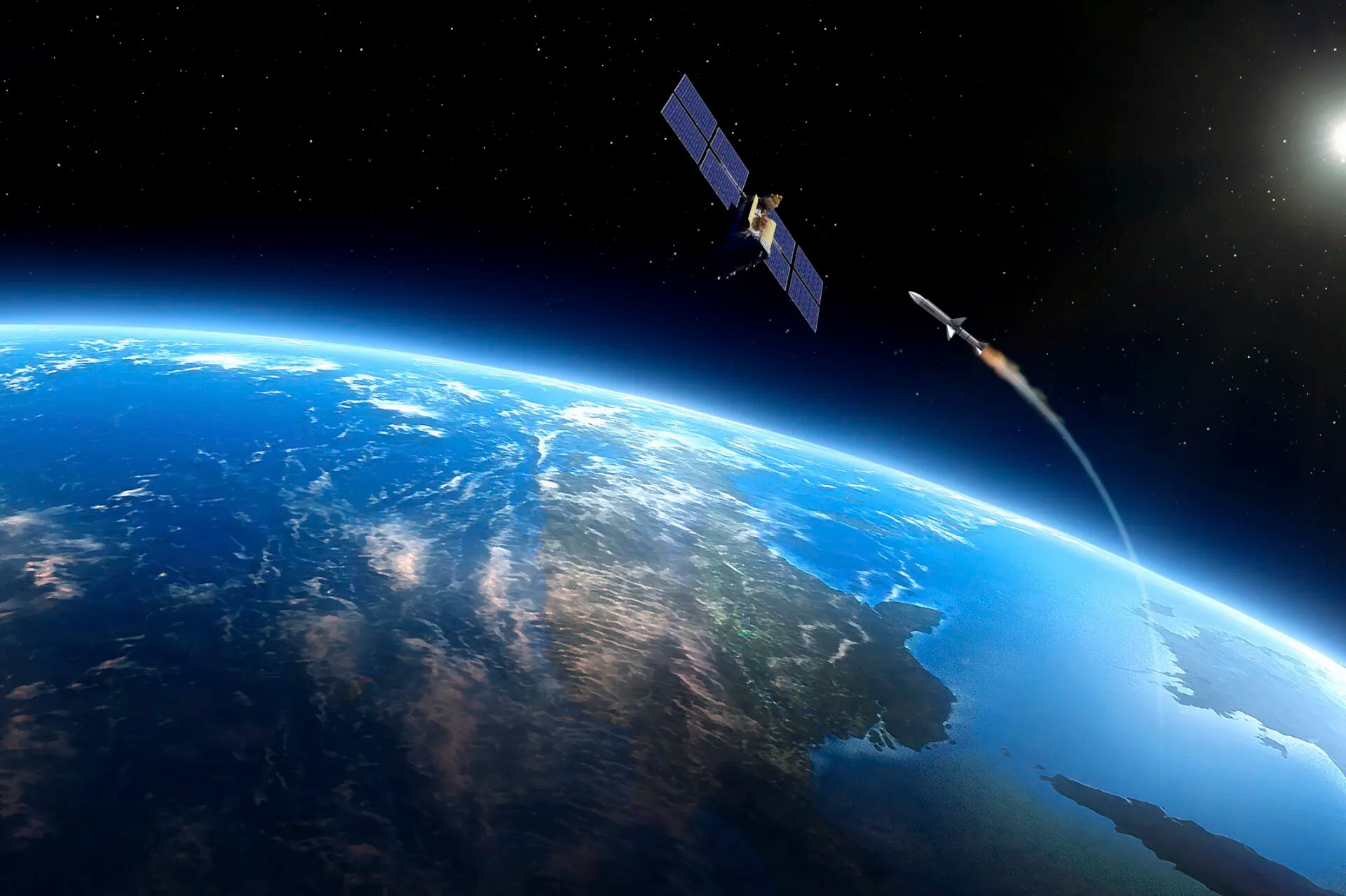
The conflict unfolding between Russia and Ukraine has shattered the traditional bounds of modern warfare, expanding the frontline far beyond the mud of the trenches into a high-stakes arena that experts are increasingly calling the first true space war. While the physical battles remain grounded on the surface of the earth, the eyes, ears, and nervous systems directing those armies are suspended hundreds of kilometers above in low earth orbit.
Satellites have transformed the nature of global conflict by providing unprecedented real-time transparency, exposing troop build-ups through thick cloud cover and darkness with synthetic aperture radar, and guiding precision munitions to their targets with pinpoint accuracy. The ultimate tactical advantage no longer belongs simply to the side with the most tanks, but to the nation that can command and protect its orbital infrastructure.
At the heart of this technological revolution is the vital role played by massive commercial satellite constellations. When traditional communications networks were systematically dismantled or jammed in the early days of the conflict, the rapid deployment of thousands of proliferated internet satellites filled the void. This architecture proved remarkably resilient against cyberattacks and electronic jamming because its sheer scale meant that destroying a single satellite would do nothing to break the overall network.
These space-based data lifelines allowed forces to maintain constant command and control, pilot swarms of unmanned drones, and share battlefield intelligence instantaneously. For the first time in human history, private space assets have effectively shifted the momentum of an interstate war, proving that access to space is a fundamental prerequisite for modern survival.
Because these space assets have become so decisively influential, the infrastructure supporting them has naturally moved to the top of the target list for both sides. The conflict has triggered an unprecedented campaign of physical destruction against ground-based space facilities, highlighting how vulnerable the cosmos is to terrestrial warfare. Ukrainian precision strikes have repeatedly targeted critical Russian aerospace nodes, including long-range deep-space tracking radar stations and communications hubs located in Crimea.
More recently, long-range cruise missiles successfully breached defenses hundreds of kilometers inside Russian borders to strike the Progress Rocket Space Center in Samara, a crucial manufacturing facility involved in building the satellites for Russia’s burgeoning broadband network. These calculated actions demonstrate that while you cannot easily shoot down a satellite constellation in orbit, you can disrupt the vital ground links and manufacturing pipelines that sustain them.
Ultimately, this ongoing struggle serves as a powerful and inspiring testament to human ingenuity and the evolving nature of global security. The space domain is no longer a detached scientific frontier or an elite playground for superpowers; it is an active, indispensable pillar of national sovereignty.
The resilience demonstrated by modern satellite networks and the dramatic tactical maneuvers taking place on the ground have set a new standard for how future generations will safeguard their freedoms. As nations around the world watch these events unfold, they are rewriting the rules of aerospace defense, realizing that the fight to protect democracy on earth must inevitably be won by securing our place among the stars.