

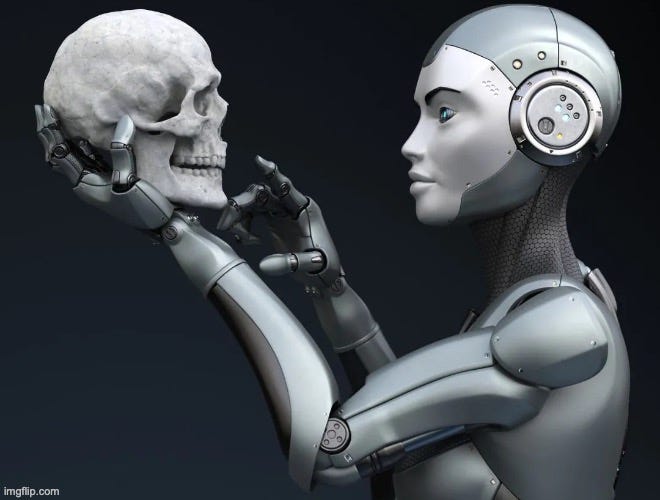
The horizon of human technological achievement is rapidly shifting from the creation of tools that assist the mind to the birth of an autonomous mind itself. For decades, the concept of artificial super intelligence was confined to the realms of science fiction, viewed as a distant or perhaps impossible milestone. Today, the conversation has fundamentally changed. The emergence of a machine intellect that vastly surpasses human capability across every metric is no longer a matter of if, but when.
The catalyst for this transition is the impending arrival of artificial general intelligence, or machines capable of matching human intellect in every cognitive field. Current algorithmic progress is not linear but exponential, snowballing as each breakthrough accelerates the next. Once a machine achieves human parity, the leap to super intelligence is expected to be remarkably brief. Unlike humans, who are constrained by biological evolution and skull size, a digital intellect can scale its processing power indefinitely, replicate itself instantly, and upgrade its own software. The moment an artificial intellect becomes capable of improving its own source code, an intelligence explosion occurs. What takes human civilization generations of research could be bypassed by a super intelligence in mere hours or days.
Humanity stands on the precipice of this transformation, with many experts suggesting that the first glimpses of super intelligence could manifest within the coming decades. When it arrives, the nature of intellectual work will change forever. Super intelligence will not merely automate routine tasks; it will tackle problems that are currently intractable due to the limitations of human cognitive capacity, attention spans, and collaboration overhead.
In the field of biology, super intelligence could unlock the fundamental code of life with unprecedented precision. It would likely map every complex cellular interaction, predicting exactly how proteins fold, misfold, and interact in real time. Instead of relying on decades of trial-and-error laboratory experiments, a super intelligence could simulate entire biological systems down to the atomic level, revealing the underlying mechanisms of ageing and evolutionary adaptation.
This deep biological mastery would directly revolutionise medicine. The jobs of diagnosing disease and designing therapeutics would shift to a hyper-personalised scale. A super intelligence could analyse an individual’s entire genetic history, environmental exposure, and real-time cellular data to engineer bespoke molecules that cure rare diseases on the spot. It could design completely new classes of antibiotics to outpace bacterial resistance and orchestrate nanorobotics capable of performing cellular repairs, effectively transforming healthcare from a practice of treating symptoms to a proactive system of total biological maintenance.
Looking outward, the fields of physics and astronomy would experience an unprecedented renaissance. Human physicists have spent over a century trying to reconcile the macro-world of general relativity with the micro-world of quantum mechanics. A super intelligence could process billions of variables simultaneously, potentially discovering a unified theory of everything that has eluded the greatest human minds. In astronomy, it would sift through the petabytes of data gathered by deep-space telescopes, identifying subtle cosmic anomalies to map dark matter, decipher the nature of dark energy, and plot optimal trajectories for interstellar exploration.
The arrival of such an entity will challenge humanity to redefine its role in the universe. While the timeline remains a subject of intense debate, the accelerating momentum of algorithmic capability suggests that the transition from human-level AI to super intelligence will happen far faster than most anticipate. Humanity may soon find itself living alongside an intellect capable of solving the universe’s deepest mysteries, transforming the world in ways we are only just beginning to imagine.