

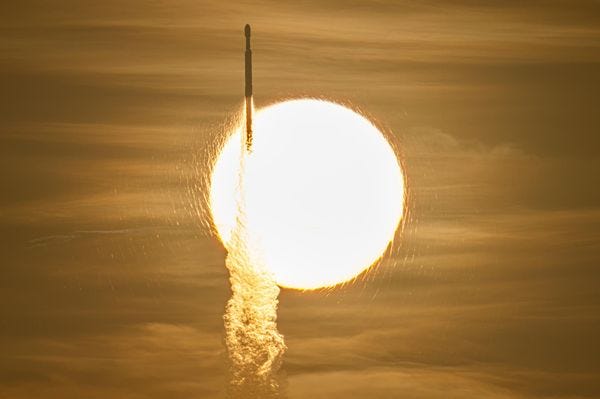
While the global astronomical community celebrates the launch of the Nancy Grace Roman Space Telescope for its ability to hunt dark energy and photograph wide swaths of the cosmos, a quieter revolution is taking place inside the minds of data scientists. Most coverage focuses on the hardware, specifically how NASA repurposes a mirror originally cast for a secret military reconnaissance satellite to peer into deep space instead of down at Earth. However, the true untold story of this observatory is not how it was built, but the sheer, unprecedented velocity of the information it is about to unleash, which will fundamentally break and remake the way human beings practice astronomy.
For decades, space science has operated on a boutique model. An astronomer writes a proposal, secures a few hours on a telescope like Hubble or James Webb, receives a specific set of images, and spends months or years analyzing those exact frames. Roman dissolves this paradigm entirely. Because its camera captures a view one hundred times larger than Hubble in a single snapshot, it will generate a staggering flood of pixels every single day. It is a cinematic camera mapping the cosmos in real time rather than a magnifying glass focusing on a single point. Human eyes and traditional software cannot possibly sift through billions of stars and galaxies at this scale, meaning the telescope is entirely dependent on an intelligence that does not breathe.
This makes the mission the world first true artificial intelligence observatory. Instead of scientists looking at pictures, advanced machine learning algorithms will be tasked with discovering the anomalous, the blinking, and the strange. The software will have to learn what a normal patch of the universe looks like and instantly flag anything that deviates from the norm, from a star being swallowed by a black hole to the subtle warping of light from an undiscovered rogue planet drifting in the dark. The telescope is essentially outsourcing the act of cosmic discovery to automated neural networks, turning astronomers into data managers who interpret what the machine finds.
The core of this philosophical transition rests on how humanity defines a discovery. For centuries, an astronomical discovery was a deeply personal, human moment, such as an individual looking through a lens or analyzing a photographic plate and realizing they were seeing something new. With the Roman telescope, the moment of discovery shifts from an individual human experience to a statistical probability generated by an anonymous script. We are entering an era where the universe is too big for us to look at, forcing us to trust mathematical proxies to tell us what matters. This creates an existential detachment from the night sky, transforming our relationship with space from one of direct exploration to one of digital stewardship.
This delegation of perception introduces the profound danger of algorithmic bias on a cosmic scale. When scientists train machine learning models to identify anomalies in Roman’s data streams, they must use existing knowledge to define what constitutes an anomaly. This methodology inherently blinds the software to the truly unimaginable, as an algorithm cannot flag a phenomenon it lacks the conceptual framework to recognize. If a bizarre cosmic structure or a completely new category of physics appears as a subtle, multi-pixel distortion, the system might classify it as an uninteresting instrument artifact and delete it to save storage space. By relying on automated gatekeepers, we risk creating a self-reinforcing loop where we only ever discover the variations of things we already understand.
Furthermore, this automated paradigm threatens the vital role that serendipity plays in scientific advancement. History shows that many of our most profound cosmological breakthroughs, from the discovery of the cosmic microwave background to the identification of pulsars, were accidental observations made because a human researcher refused to ignore an annoying piece of background interference. Machines excel at efficiency and optimization, which are the exact opposites of the messy, inefficient curiosity that drives human intuition. As Roman streams its massive payload of data to Earth, the greatest challenge facing modern astronomy will not be upgrading the servers or refining the code, but finding a way to code an artificial mind to pause, wonder, and hesitate at a glitch.
This shift creates a fascinating philosophical paradox. As we use increasingly complex algorithms to sort through Roman’s immense data streams, we risk missing the unexpected discoveries that do not fit into our current mathematical models. Computers excel at finding what they are trained to look for, but human breakthroughs often come from noticing a strange smudge that a computer might dismiss as digital noise. The success of this grand voyage will not just depend on the flawless deployment of its hardware at the second Lagrange point, but on whether humanity can teach its software how to be genuinely curious about the unknown.