

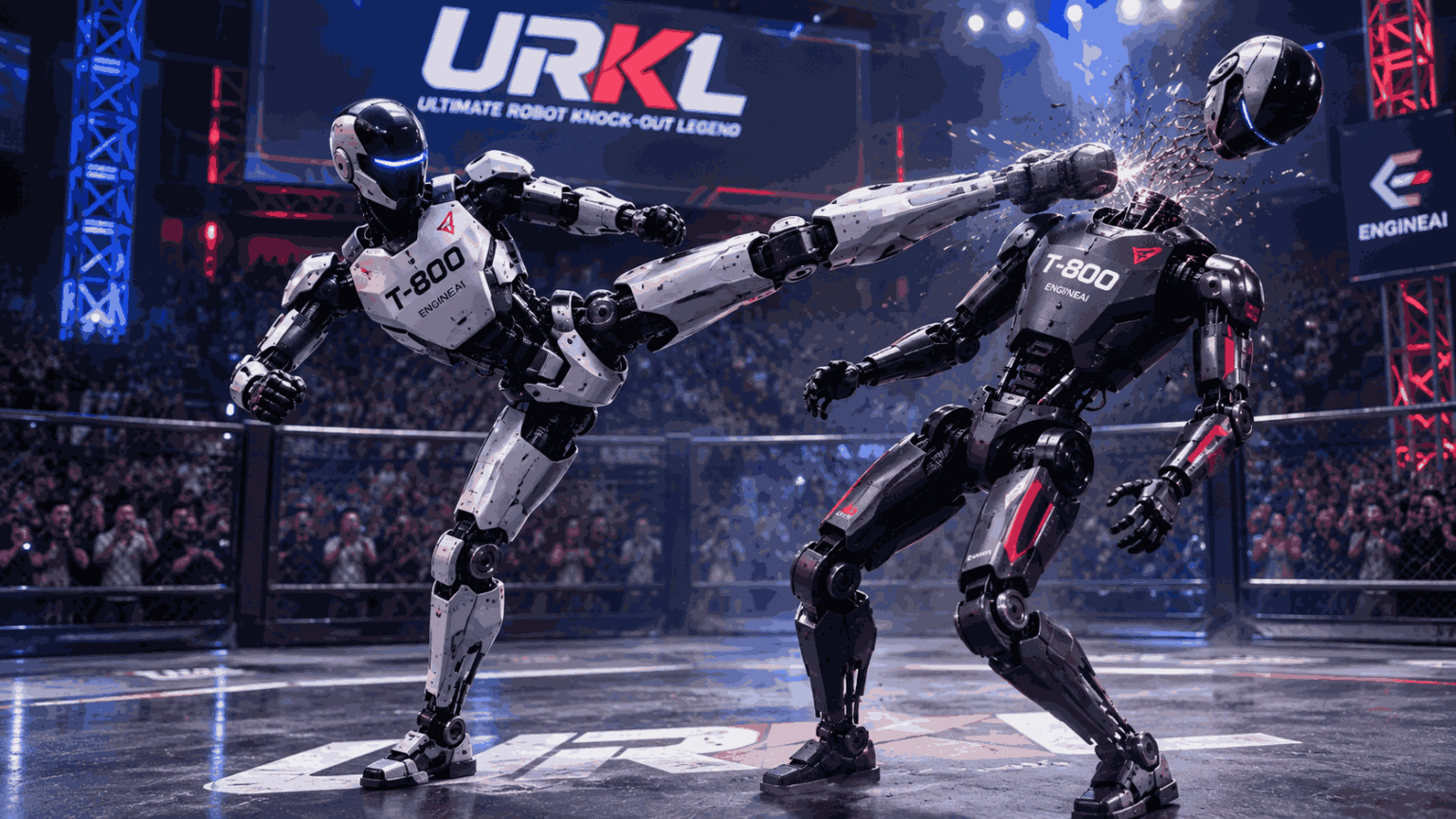
We have entered a technological Wild West where nations and leagues cannot agree on a single, solitary principle of engagement. If you think human boxing politics are complicated, imagine trying to negotiate a ruleset when one country insists the robots must think for themselves, another commands them via virtual reality headsets like oversized video game avatars, and a third allows a fighter to keep swinging even after its entire head has been punched clean off its shoulders. Incidentally, “Matador” won the match 3-2 on points despite literally losing its head.
There is zero international consensus. Is it a sport? Is it a stress test for material sciences? Is it an elaborate puppet show for adults? The answer is an enthusiastic yes to all three. Engineering teams across the globe are bickering over everything from weight classes to whether solid-state batteries constitute a performance-enhancing drug. Meanwhile, the machines are out there stumbling, brawling, and occasionally delivering spectacular roundhouse kicks that prove the future is already here, even if it occasionally loses its balance and face-plants into the canvas.
Ultimate Robot Knock-out Legend (URKL)
Shenzhen and Beijing, China
The absolute epicenter of autonomous mechanized violence sits firmly within China, where the philosophy favors artificial intelligence over human pilots. This is the home of the Ultimate Robot Knock-out Legend, also known as URKL. Founded by the robotics firm EngineAI, this league forces thirty-two global teams to use the exact same hardware platform, a 1.73-meter-tall bipedal machine known as the T800. Because the hardware is standardized, the entire tournament boils down to a brutal programming competition. Teams from Stanford, Tsinghua, and UC Berkeley spend months tweaking algorithms just to see whose software can prevent a ninety-kilogram stack of aerospace-grade alloy from falling over when it gets smacked in the chest.
The inaugural URKL championship event launched on July 16, 2026, at the Nanshan Cultural and Sports Center in Shenzhen, following an exhibition teaser at Futian COCO Park. The debut instantly went viral when a black-clad robot named Matador suffered a literal decapitation via a precise strike, only for its headless torso to keep swinging in the cage before ultimately winning a five-round decision to a white-armored rival aptly called White Eagle.
Following a second-leg tournament at the Baoshan Gymnasium in Shanghai on September 19, 2026, the league has been whittling down its brackets through October and November. The ultimate grand final is officially planned to take place in Dubai in late December 2026 or early 2027, where the surviving programmers will fight for a pure gold championship belt valued at ten million yuan.
Separately, Beijing hosts the World Humanoid Robot Games. During its five-day iteration in August 2026, the event featured a pure boxing tournament alongside soccer and track events. Here, bipedal robots like the Unitree G1 donned actual boxing gloves and protective headgear, stepping into a traditional ring to trade blows. Because these bouts are fully autonomous, the comedy factor skyrockets; a robot will land a solid straight punch, only for its own momentum and flawed balance algorithms to send it collapsing into the ropes, requiring a team of sweating technicians to rush out, lift the million-dollar paperweight, and reset it for the next round.
Hangzhou
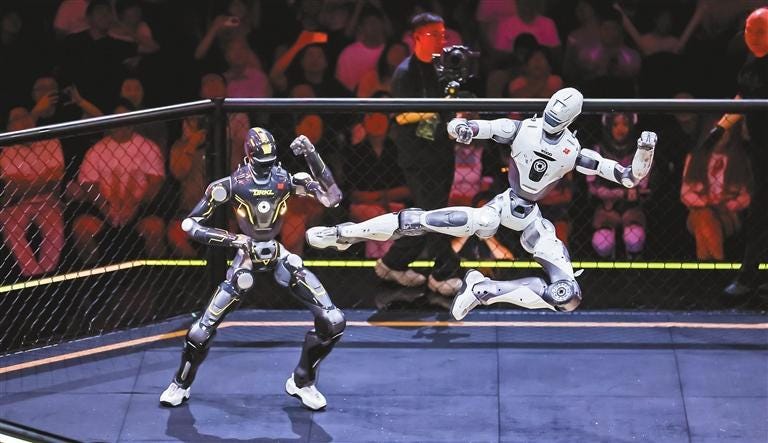
The World Robot Competition Mecha Fighting Series treats humanoid boxing as a catalyst for industrial development, which is a very polite way of describing remote-controlled machine warfare. Sponsored by national media groups, the events in this region focus heavily on the smaller, thirty-five-kilogram Unitree models throwing rapid jabs, hooks, and spinning backkicks. The rules are heavily focused on recovery; points are deducted if a machine cannot autonomously stand back up after being leveled by a hook. This has forced engineers to prioritize balance over raw power, resulting in bizarre matches where two highly advanced machines spend three minutes crouching, dodging, and occasionally delivering a sidekick that sends both competitors sliding across the arena floor like over-lubricated wind-up toys.
Dubai
The future of the sport is currently pointing toward the Middle East, where the upcoming grand finals of the global tournament are scheduled to take place. With a massive prize pool on the line, the event is already generating fierce geopolitical arguments over standard operating procedures. Western teams are pushing for strict human-teleoperated weight classes, while Eastern teams are demanding fully autonomous AI free-fighting where anything short of EMP weapons is perfectly legal. No consensus has been reached, the organizers are still arguing over ring dimensions, and the engineers are busy writing code that will allow their creations to survive the desert heat and each other. Whoever wins, one thing is certain: the rules will be entirely made up on the night.
Robot Entertainment Kombat (REK)
San Francisco, Los Angeles, and New York, United States
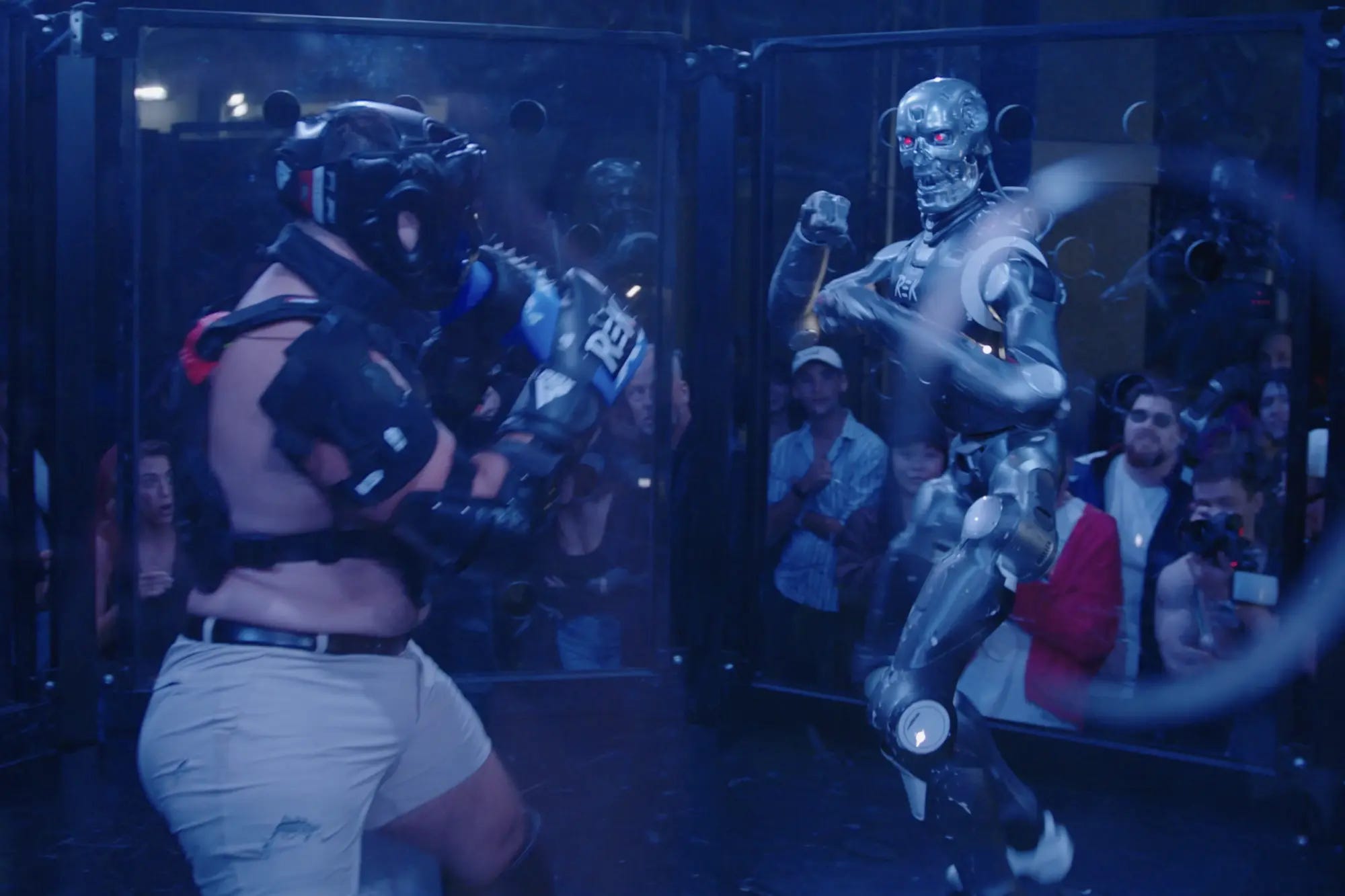
Across the Pacific, the American approach completely rejects the idea of letting the robots think for themselves. The United States is dominated by REK Fights, a promotion that behaves much more like a futuristic underground fight club. REK operates on the philosophy of human chaos. Instead of lines of code making decisions, human pilots stand outside a steel cage wearing virtual reality headsets and motion-tracking rigs. When the human punches, the six-foot-tall robot mirrors the motion in real time.
The REK circuit is a traveling circus of metal and muscle, having hosted fifteen events across cities like San Francisco, Los Angeles, Las Vegas, Austin, and New York. Their crown jewel occurred on September 20, 2026, in San Francisco, billed as the world’s first human-versus-robot combat showcase. An amateur human fighter stepped directly into the cage against a T800 humanoid model. Proving that carbon still has a few tricks left, the human fighter bypassed the robot’s stiff jabs, executed a flawless leg takedown, and slammed the metal entity onto the mat.
REK is leaning heavily into this avatar-style future. They have announced the launch of REK 2.1 on November 20, 2026. This upcoming event bridges the digital and physical worlds, allowing top players from their proprietary robot fighting simulator to qualify for the playoffs and earn the right to pilot an actual, physical humanoid machine in an upcoming live fight night.
Ultimate Fighting Bots league (UFB)
Las Vegas
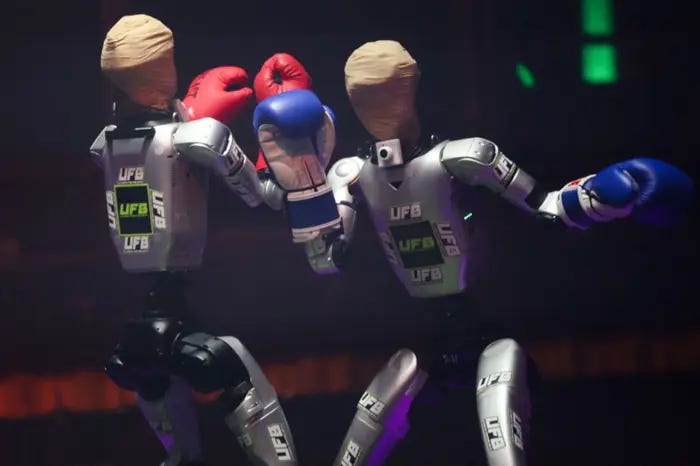
Nevada has always been the capital of unregulated prize fighting, so it was only natural that the Ultimate Fighting Bots league established its kingdom here. Operating out of the famous BattleBots Arena, this promotion specializes in spectacular, one-night-only fight night tournaments. The most notable iteration featured eight humanoid fighters wearing heavy regulation gloves clashing in a single-elimination tournament. Las Vegas rules are simple: the first machine to stop moving or explode loses. The league gained massive notoriety when independent creators and tech engineers began building custom motion-capture rigs to settle internet rivalries through their machines. The fight nights are fast, loud, and incredibly destructive, offering zero structural protection for the expensive internal gyroscopes of the competing robots.
Avatar Robot Combat League (ARC)
Singapore
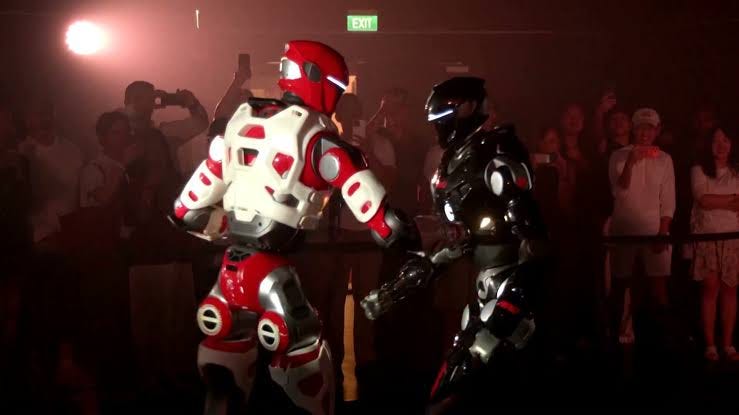
If China is the land of autonomous code and America is the land of VR gladiators, Singapore decided to combine the two into an absolute stress test of engineering endurance. The city-state hosted its inaugural humanoid fighting tournament on October 7, 2026.
The Singaporean ruleset is intentionally brutal. Utilizing two distinct weight classes, human pilots guide their mechanical fighters through wearable rigs, but the focus is heavily geared toward close-quarters grappling and tactical clinching. The developers behind this league openly admit that the matches are designed as an aggressive torture test for commercial hardware. While a robot in a laboratory might look graceful walking across a flat floor, the Singaporean ring introduces fast, unscripted human errors. The drama comes from pilots over-extending their punches, causing the gears to grind, the joints to lock, and the machines to violently twist into positions their blueprints never intended.
Humanoid Fighting Championship (HFC)
Melbourne, Australia
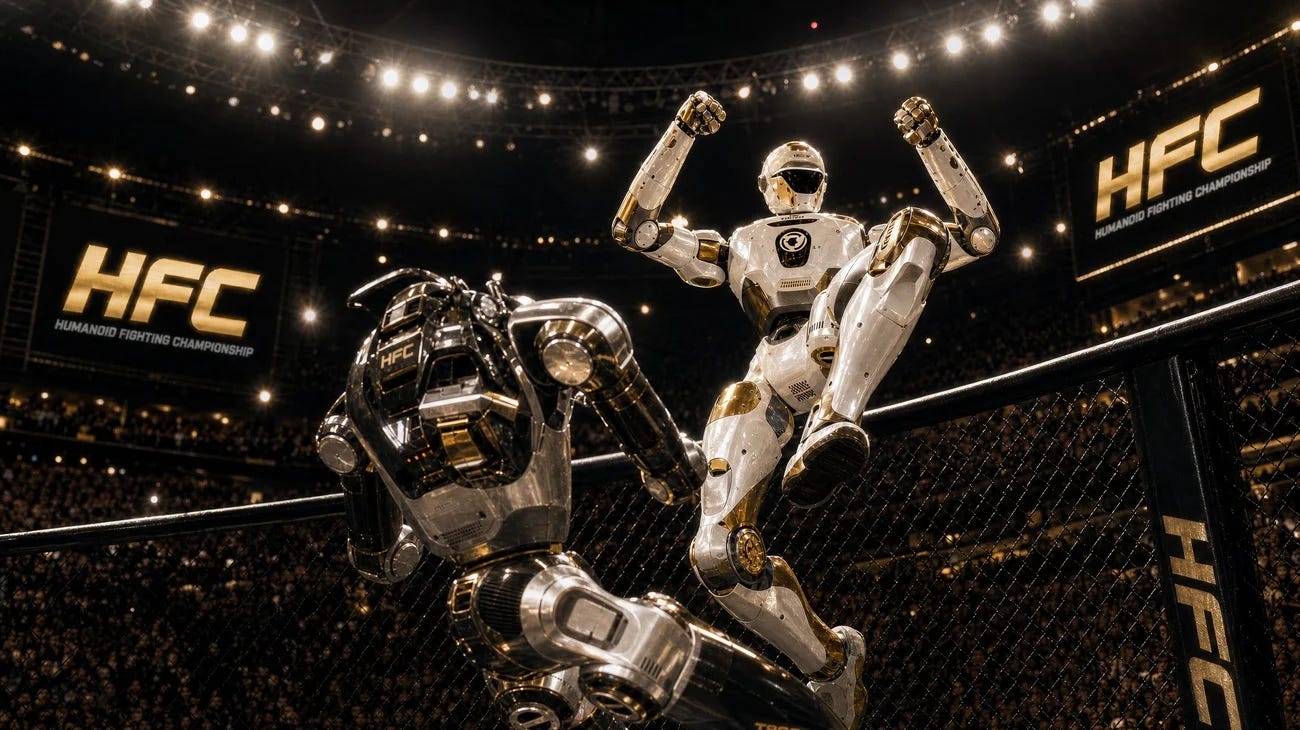
The southern hemisphere is refusing to be left out of the mechanical melee. Australia has officially entered the fray with a recently announced showcase slated for Saturday, 21 November 2026 at the Margaret Court Arena, Melbourne. Promoters have teased a big event featuring eight standardized EngineAI T800 humanoid robots trapped inside a single, continuous cage match. Eight robots enter. One leaves with the first HFC belt.
The HFC I is the first show and launches an international tour with 12 events across 9 countries. The top 4 machines from every city advance to face 4 new local challengers on the road to the belt. HFC II will be hosted by Sydney in December 2026.
The Australian iteration promises to throw the rulebook entirely out the window, focusing heavily on entertainment and crowd spectacle. The teaser showcases a clear local appetite for raw, unadulterated robot-on-robot violence, proving that no matter the continent, humanity’s deepest desire is to watch multi-million-dollar tech developments bash each other into scrap metal.