

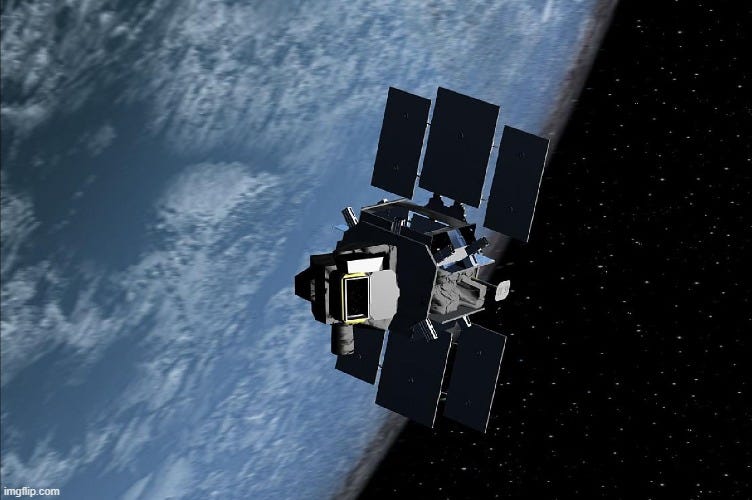
The tactical frontier of modern military intelligence has officially shifted from the atmosphere to the exosphere. Following the launch of the classified USSF-385 mission on September 26, 2026, the U.S. Space Force has accelerated its push into a new era of orbital tracking. This launch is part of a rapid, aggressive cadence designed to deploy a resilient, highly distributed network of spy and tracking assets capable of monitoring every object—and adversarial movement—in low Earth orbit.
The Shift to Proliferated Architecture
For decades, military space surveillance relied on a small handful of massive, highly expensive satellites parked in high orbits. While powerful, these systems represented vulnerable “exquisite” targets. A single anti-satellite weapon or accidental collision could instantly blind a critical segment of national intelligence.
The USSF-385 payload represents the complete antithesis of that legacy model. Driven by the Space Force’s Space-Based Surveillance and Tracking (SBST) portfolio, the Pentagon is building a “proliferated” architecture. By spreading tracking sensors, cameras, and communications hardware across a massive swarm of smaller, interconnected satellites, the military ensures that the overall grid remains fully operational even if individual units are disabled or destroyed.
The Starshield Foundation
Independent orbital trackers and defense industry analysts indicate that the USSF-385 payload utilizes Starshield, SpaceX’s dedicated government and military iteration of the Starlink platform. Unlike commercial internet satellites, Starshield networks are customized for:
Earth and Space Sensing: Carrying tactical intelligence, surveillance, and reconnaissance (ISR) instruments to actively scan the planet and neighboring orbits.
Secured Communications: Utilizing high-encryption, high-bandwidth government data links.
Co-hosted Payloads: Providing a modular, standard satellite bus that allows the military to easily plug in sensitive, classified surveillance hardware.
Establishing Total Space Domain Awareness
The primary directive of this evolving constellation is Space Domain Awareness (SDA)
. As space becomes increasingly crowded and contested, the military requires real-time tracking of active payloads, inactive space debris, and potentially hostile foreign space vehicles.
By placing USSF-385 into low Earth orbit alongside its recently launched sister missions, USSF-153 and USSF-259, the Space Force is closing gaps in its coverage. This continuous, multi-angled view makes it nearly impossible for foreign military payloads to maneuver undetected in the shadows of the planet.
With three national security launches completed in just over two weeks, the speed of deployment underscores the urgency behind this defense initiative. Space is no longer viewed simply as a vacuum for communication, but as a critical domain that requires constant, vigilant surveillance to secure.