

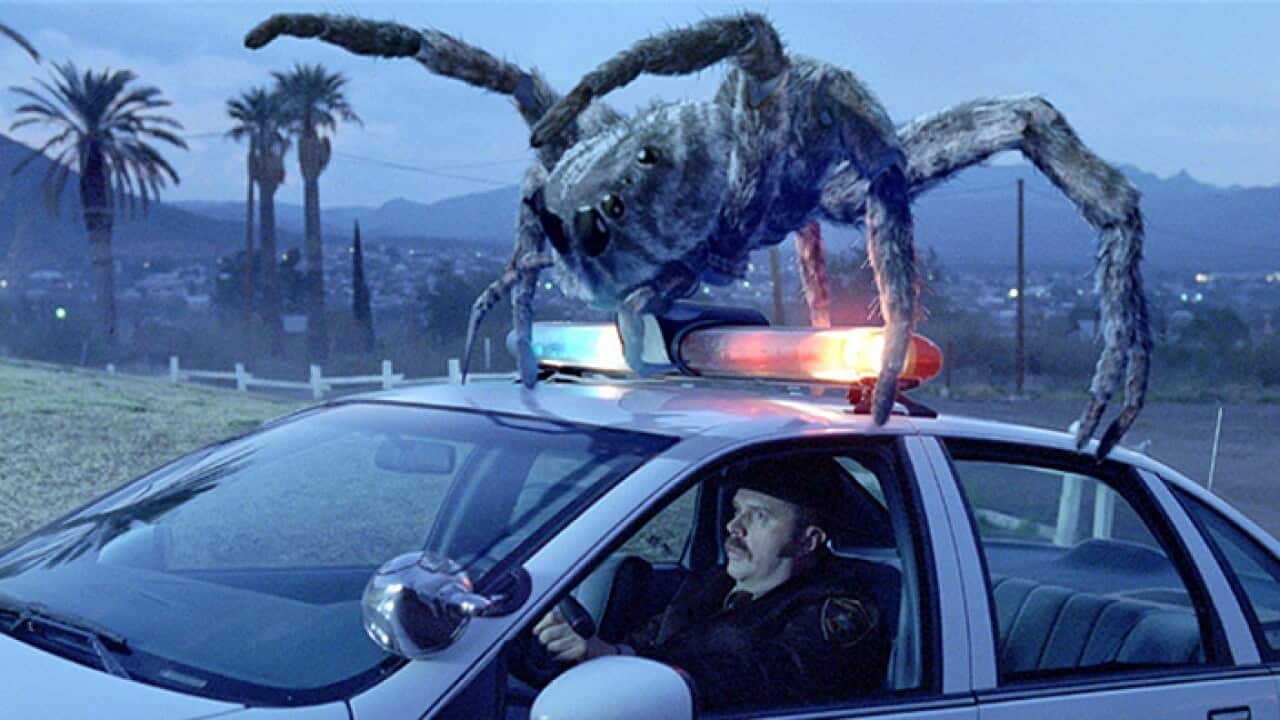
The boundless frontier of space industrialization may eventually turn its gaze toward an unexpected artisan: the spider. While current space agencies are not yet breeding giant arachnids in hyper-oxygenated space nurseries, the theoretical physics of low gravity combined with active genetic breakthroughs make a compelling case for orbital or lunar bio-manufacturing. Looking forward, the fusion of genetic engineering and microgravity farming could offer a radical solution to the high costs of transporting construction materials into deep space.
The scientific foundation for this concept rests on the unique properties of spider silk. Naturally, the material boasts a tensile strength that rivals high-grade steel while remaining remarkably flexible. However, commercial farming on Earth has traditionally failed because spiders are fiercely territorial and cannibalistic when confined. To bypass this, modern terrestrial research focuses on synthetic biology, successfully splicing spider silk genes into silkworms and bacteria to harvest the proteins.
For future space missions, NASA has already investigated using these engineered microbes to manufacture high-strength silk on Mars, aiming to slash launch weight requirements. Furthermore, real-world experiments on the International Space Station have proved that arachnids can adapt to orbit. Spiders sent to the ISS successfully adjusted their web-spinning techniques, using light cues instead of gravity to orient their webs, proving that the basic biological mechanisms of web production function perfectly in zero gravity.
To scale up production beyond microbial vats, future space farms would need to solve the biological constraints of size using the unique physics of orbit. On Earth, the Square-Cube Law dictates that as an animal grows, its weight increases exponentially faster than its limb strength. This is why invertebrates with heavy outer skeletons are not the dominant land animals down here. When they become too large they struggle to lift their bodies and are too slow to escape from predators.
The exceptions to this rule are ocean giants like the Colossal Squid which dominate the ocean depths thanks to water supporting their massive boneless bodies (similar to zero-g) and the prehistoric mega-arthropods. Invertebrates that first inhabited the great land masses of early Earth and perhaps reached the maximum possible scale for their biological limitations. Scorpions the size of domestic cats evolved before amphibians arrived to claim that surface world.
In lunar gravity (one-sixth of Earth’s) or total weightlessness, this structural barrier disappears. To sustain larger bodies, habitats would need to be enriched with oxygen, replicating Earth’s ancient Carboniferous period when high atmospheric oxygen allowed giant insects to thrive through passive tracheal breathing.
The economic incentive for developing such orbital farms is immense. Transporting heavy raw polymers and metals from Earth remains the biggest financial bottleneck for space expansion. If future geneticists use tools like CRISPR to knock out the aggressive, cannibalistic traits of spiders, automated lunar facilities could safely house docile, high-density colonies. Fed on sufficient suitable biomass, these celestial weavers could continuously produce miles of flawless, ultra-lightweight filament to reinforce habitats against micrometeoroids or spin the cables for future space elevators.
While Earthbound laboratories obsess over squeezing spider silk proteins out of complex, engineered bacterial vats, they are ignoring the most direct biological solution: simply scaling up the source. On Earth, scaling up an arachnid is a physical impossibility. The Square-Cube Law dictates that a giant spider’s legs would buckle under its own weight, while its passive respiratory system would leave it starved of oxygen.
But in a microgravity orbital habitat, the rules of physics change. By removing gravitational load and flooding the enclosure with hyper-oxygenated air, space manufacturers could bypass these evolutionary ceilings. This allows for the selective breeding of enlarged arachnids equipped with massive, naturally functioning silk glands—turning the animals themselves into self-assembling, macro-scale textile factories.
On a purely raw, microscopic level, standard spider silk cannot rival pure carbon nanotubes (CNTs). However, when scaled up to real-world macro-engineering, the comparison changes dramatically. While CNTs possess a theoretical tensile strength of roughly 100 to 150 gigapascals (GPa)—far surpassing natural dragline spider silk at 1.5 GPa—nanotubes suffer from a critical flaw: they are nearly impossible to weave into long, continuous, defect-free chains.
The primary roadblock to a Space Elevator is the tether, which requires thousands of kilometers of flawless, ultra-strong material. In laboratories, pure CNTs exhibit unmatched strength at the nanometer scale. However, macro-scale synthesis remains an unsolved challenge; scientists struggle to grow individual, perfect nanotubes longer than about 50 centimeters. When microscopic CNTs are bundled into macro-scale ropes, atomic defects cause them to “unzip” or fray, dropping their usable strength below the 130 GPa threshold required for an Earth elevator.
Spiders are naturally optimized, highly efficient spinning engines. They churn out continuous, macroscopic kilometers of complex protein structures without atomic misalignments. If genetic editing scaled up their silk output in orbit, we could harvest endless, immediately deployable cables without waiting for a breakthrough in carbon molecular manufacturing.
While CNTs are stronger under a constant, steady pull, spider silk is vastly tougher. It can stretch up to 140% of its original length and snap back, absorbing immense kinetic energy. For reinforcing space habitats against unpredictable micrometeoroid strikes or orbital debris, high toughness is actually preferable to rigid tensile strength. A shield made of flexible, ultra-tough bio-silk behaves like a bulletproof vest, catching and dissipating the energy of hyper-velocity space rocks rather than shattering under the impact.
The most compelling argument for orbital spider farming is that silk and nanotubes do not actually have to compete; they can be combined.
Real-world material scientists have already conducted groundbreaking “proof-of-concept” experiments by introducing carbon allotropes into arachnid biology. In terrestrial labs, researchers fed spiders water containing graphene and carbon nanotubes. The spiders naturally absorbed the nanomaterials and incorporated them into their organic spinning process.
The resulting “bionic composite” silk boasted a fracture strength of up to 5.4 GPa and the highest fiber toughness modulus ever recorded for any material. This real-world experiment bridges the gap between biological scalability and synthetic strength.
While an Earth-based space elevator requires such intense structural demands that it may always hold out for pure single-crystal graphene or flawless CNTs, the math changes completely on other celestial bodies.
Because lunar gravity is only one-sixth of Earth’s, the structural strength required for a Lunar Space Elevator is vastly lower. Existing commercial materials like Kevlar are already strong enough to build an elevator from the moon’s surface into orbit. In that economic reality, mass-farmed, genetically enhanced bio-silk—or carbon-infused bionic silk—becomes an exceptionally viable, locally harvestable asset that completely removes Earth’s supply chain from the equation.