

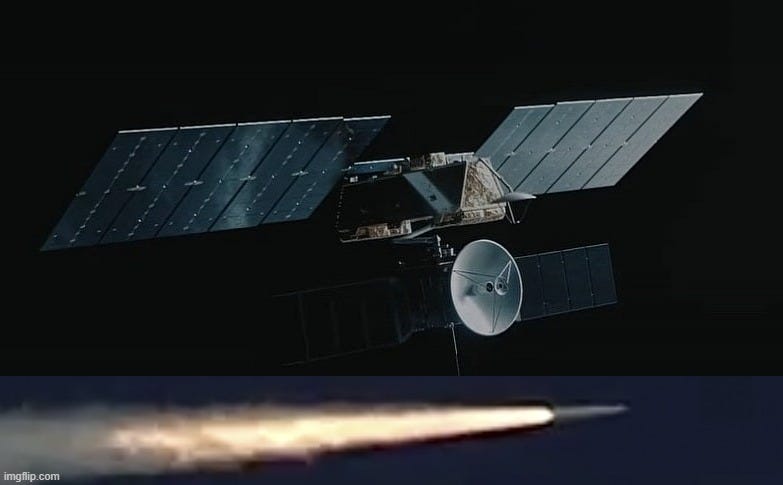
In early October 2026, the chief executive of Canadian satellite technology firm MDA Space underscored the growing urgency of space-based defenses against advanced missile threats. Speaking on CNBC, Mike Greenley explained that the proliferation of hypersonic missiles developed by Russia and China has elevated the importance of orbital systems capable of detecting, tracking, and potentially intercepting incoming threats. From a North American perspective, he noted, monitoring objects that could approach over the polar regions and enabling their interception has become a realistic and necessary element of modern security. Greenley argued that space-based interceptors and related monitoring technologies need not prove more expensive than other complex weapon systems, pointing to cost-efficient opportunities particularly in the areas of detection and tracking. His comments reflected broader industry recognition that space is shifting from a supporting role in military operations to a primary domain that can determine strategic outcomes, especially as nations pursue greater sovereignty in satellite communications and defense capabilities.
Just days later, on October 13, MDA Space attracted a significant strategic investment that aligned with these rising defense priorities. Czechoslovak Group, the Czech defense and industrial conglomerate often referred to in connection with European security interests, acquired a 9.5 percent equity stake in the company for approximately 434 million dollars. The purchase, executed through a dedicated investment subsidiary, established CSG as MDA Space’s largest single shareholder. CSG described the move as a long-term strategic commitment rather than a short-term financial play. The two organizations plan to explore joint co-investments aimed at developing satellite manufacturing and integration facilities in Europe, while also considering collaboration on future industry acquisitions. CSG has formed a dedicated space team to expand its presence in satellite defense and aerospace programs, reflecting Europe’s increasing defense expenditures and demand for sovereign space capabilities among NATO members.
Michal Strnad, chairman of the board of CSG, praised MDA Space as a highly respected, well-led, profitable, and growing company with exceptional technological strengths. He framed the investment as an expression of confidence in the expanding importance of space and in MDA’s position within the sector. For MDA Space, which specializes in earth observation, radar, communications satellites, space robotics, and software-defined platforms, the partnership offers access to growing European defense procurement programs. At the same time, it provides CSG with an established foothold in advanced satellite technology as the group builds out its own space division. The transaction followed MDA’s earlier capital-market steps, including a substantial U.S. initial public offering and dual listing, which had already broadened its institutional investor base.
Taken together, Greenley’s public assessment of hypersonic risks and the subsequent equity investment by a major European defense group illustrate how commercial space companies are increasingly intertwined with national and alliance security strategies. As threats evolve and governments seek reliable alternatives for monitoring and response, firms with proven expertise in dual-use satellite systems find themselves at the center of both technological development and strategic industrial partnerships.