

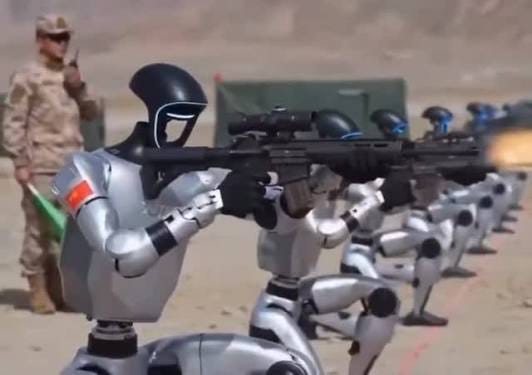
The landscape of modern defense technology is undergoing a foundational shift as autonomous systems transition from specialized tools into versatile combatants. For decades, military robotics focused on remote-controlled drones and tracked explosive-disposal units. Today, the focus has shifted toward the deployment of bipedal humanoid soldiers. Within this emerging sector, no application aligns more perfectly with the inherent strengths of robotic systems than the specialized domain of precision marksmanship. The development of the mobile humanoid robot sniper represents an inevitable, highly strategic leap in automated weaponry, combining human-like agility with machine-encoded perfection.
The Mechanical Perfection of Patience and Precision
Human snipers are defined by their ability to manage physiological limitations under extreme stress. They must control their breathing, ignore physical fatigue, and maintain absolute stillness for hours or days in hostile environments. Humanoid snipers eliminate these biological vulnerabilities entirely. A bipedal robot possesses what can be described as infinite patience. It does not suffer from muscle fatigue, cramping, or the cognitive degradation brought on by sleep deprivation and extreme weather.
Furthermore, the mechanical integration of aiming systems bypasses the traditional reliance on physical optics and human reflex. By embedding advanced ballistic computers directly into the robot’s sensory suite, a humanoid sniper can calculate windage, humidity, air density, and target velocity in real time. The physical act of firing is executed with a level of micro-hydraulic stabilization that reduces barrel sway to near zero, resulting in a mathematical certainty of accuracy that no human marksman can replicate.
The Strategic Logic of the Bipedal Form
While quadrupedal or tracked robots offer excellent stability, the humanoid form factor is uniquely suited for the theater of precision marksmanship. Global infrastructure and combat zones—ranging from dense urban centers with multi-story buildings to rugged, rocky terrain—are built for human navigation. A humanoid sniper can climb ladders, navigate window frames, crawl through tight drainage systems, and position itself in optimal vantage points that are entirely inaccessible to wheeled or tracked platforms.
This mobility allows the robotic sniper to blend seamlessly into the environment. It can utilize standard military camouflage, adopt traditional prone or kneeling positions, and exploit cover just as a human soldier would. By mimicking the human silhouette and movement patterns, these systems avoid easy detection by enemy counter-surveillance, while retaining the capability to operate standard-issue, high-caliber sniper rifles without requiring expensive, customized weapon modifications.
Industry Development and the Future Battlefield
Defense contractors and robotics firms are already laying the groundwork for this specialized industry. Initial developmental phases have focused on mastering the complex physics of bipedal locomotion and balance recovery. As these foundational technologies mature, the integration of tactical artificial intelligence is transforming these machines into independent battlefield assets.
In future deployment scenarios, humanoid snipers will likely serve as force multipliers. They can be inserted into high-risk containment zones or left behind during strategic retreats to delay enemy advances. Operating silently and independently, a small detachment of humanoid snipers could effectively lockdown large urban sectors, disrupting enemy logistics and command structures without risking a single friendly life.
Navigating the Tactical and Ethical Horizon
As the humanoid sniper industry accelerates toward operational readiness, it brings profound tactical advantages alongside complex ethical considerations. The deployment of a machine capable of autonomous, lethal precision at long range fundamentally alters the psychology of warfare. For military commanders, the appeal is clear: unparalleled asset denial and surgical precision with zero risk of pilot casualty. The industry is no longer a concept of science fiction, but a looming paradigm shift in global defense, rewriting the rules of engagement through the lens of robotic perfection.