

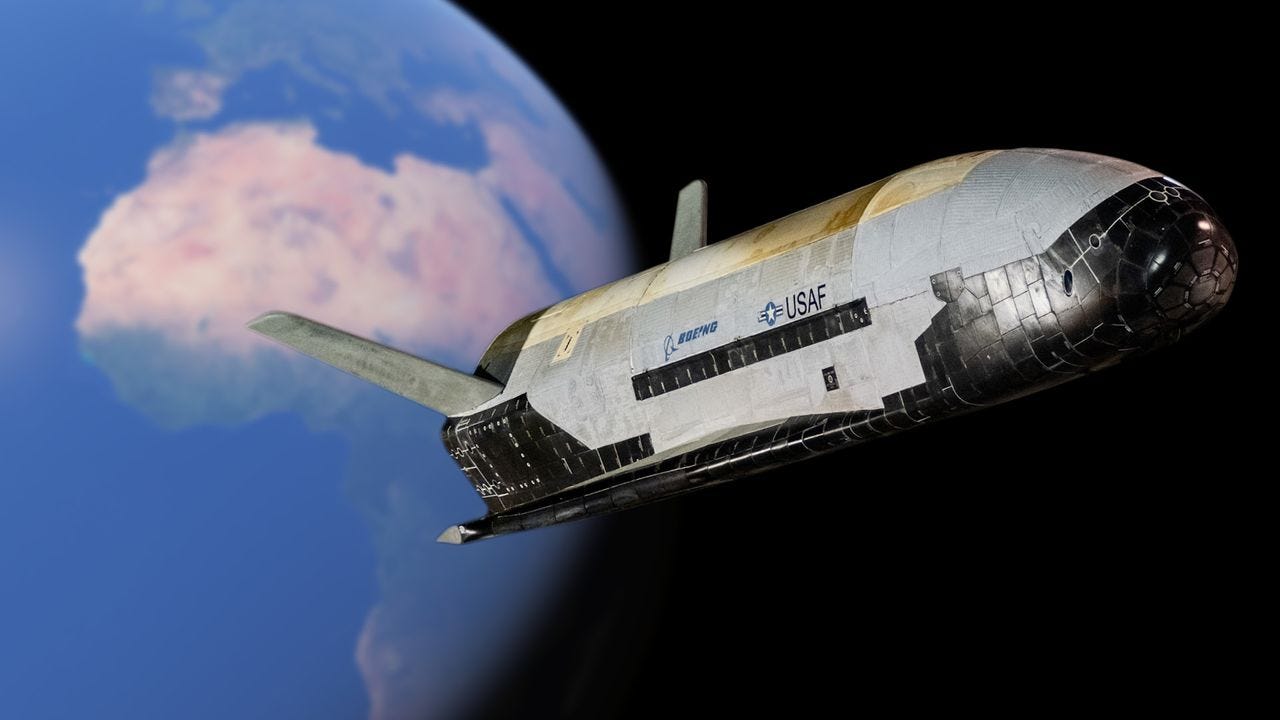
American Secret X-37B Spaceplane
A quiet revolution is unfolding hundreds of kilometres above Earth, away from the grand announcements of lunar bases and Mars rovers. It is a silent race defined by uncrewed, highly maneuverable robotic spaceplanes that slip across orbital planes under the cover of military secrecy. While civilian space agencies focus on giant capsules and heavy-lift rockets, global superpowers and regional defense forces are investing heavily in a vehicle type once thought obsolete: the reusable spaceplane. The stakes of this shadow war were vividly illustrated recently when a United States intelligence report published a remarkably clear, declassified commercial satellite image of China’s secretive reusable spaceplane, Shenlong, captured while actively cruising in low-Earth orbit. This unprecedented look at a highly classified adversary asset confirms that the era of tactical orbital maneuvering is no longer a theoretical threat, but a daily operational reality.
For over a decade, the benchmark for this technology has been the United States Space Force’s X-37B Orbital Test Vehicle. Built by Boeing and operated under the strict secrecy of Delta 9, the American fleet consists of exactly two operational vehicles. To the casual observer, an X-37B looks like a miniaturised, windowless version of the retired NASA Space Shuttle, measuring roughly nine metres long with a cargo bay about the size of a pickup truck bed. What makes these vehicles extraordinary is not their physical scale, but their operational endurance. Freed from the life-support requirements of a human crew and powered by a deployable solar array, the X-37B can remain aloft for years at a time, recently smashing records with a single mission that lasted nine hundred and eight days. It launches vertically atop commercial workhorses like the SpaceX Falcon Heavy or United Launch Alliance’s Atlas V, executes its classified mission profile, and then glides back down to land autonomously on a conventional runway.
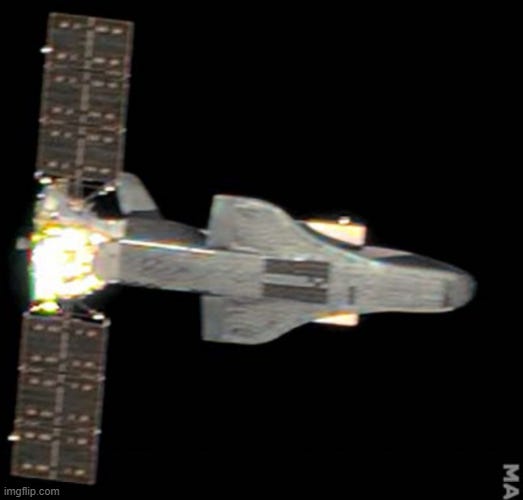
Chinese Secret Shenlong Spaceplane
China has answered this capability directly with its own vehicle, the Shenlong, or Divine Dragon. Launched from the remote Jiuquan Satellite Launch Center, the Chinese spaceplane has become a fixated target for Western military trackers and amateur astronomers alike. While Beijing has never released a single official close-up photograph of the craft, the recently leaked orbital intelligence image confirms what experts long suspected: Shenlong is a technological mirror image of the X-37B, utilizing a clean delta-wing design and an adaptable rear payload configuration. During its orbital deployments, Western sensors have observed the Chinese vehicle releasing mysterious, miniature sub-satellites into orbit, only to perform complex maneuvers to rendezvous with them again weeks later. This cat-and-mouse game in the vacuum of space underscores the primary reason these vehicles are shrouded in such intense secrecy: the intelligence community is less concerned with the planes themselves, and far more preoccupied with what they are carrying and where they will strike next.
The fundamental mystery of these platforms lies in their utility, leading many to ask what these vehicles actually do. Officially, the military branches describe them as flexible, reusable testbeds for next-generation technology. In practice, they are the Swiss Army knives of space warfare. Their cargo bays allow militaries to launch experimental sensors, advanced laser communication suites, and high-tech spy cameras into the harsh vacuum of space, expose them to real-world conditions, and then bring them back to Earth for analysis rather than letting them burn up in the atmosphere. Furthermore, their ability to drastically alter their orbits makes them highly unpredictable reconnaissance platforms. Traditional spy satellites travel on fixed, mathematically certain paths that adversaries can easily predict and hide from. A spaceplane, however, can use its onboard propulsion to unexpectedly shift its altitude and inclination, catching foreign military installations off guard.
This unique operational flexibility explains why the rest of the world is suddenly rushing to emulate the American and Chinese capabilities. In a geopolitical climate where the global economy depends entirely on space infrastructure for GPS, finance, and logistics, satellites have become incredibly vulnerable targets. A recent global defense report highlighted that nations like India, France, Germany, and Japan are actively pivoting toward spaceplane development. Following a series of tense orbital proximity incidents, India’s space agency has accelerated its own military-tracked prototypes. France has been particularly vocal, advocating for dynamic, maneuverable vehicles described as orbital bodyguards. These planned European and Asian variants are envisioned as defensive assets, designed to patrol high-value satellite constellations and deploy electronic countermeasures, or even lasers, to deter foreign interference or physical tampering.
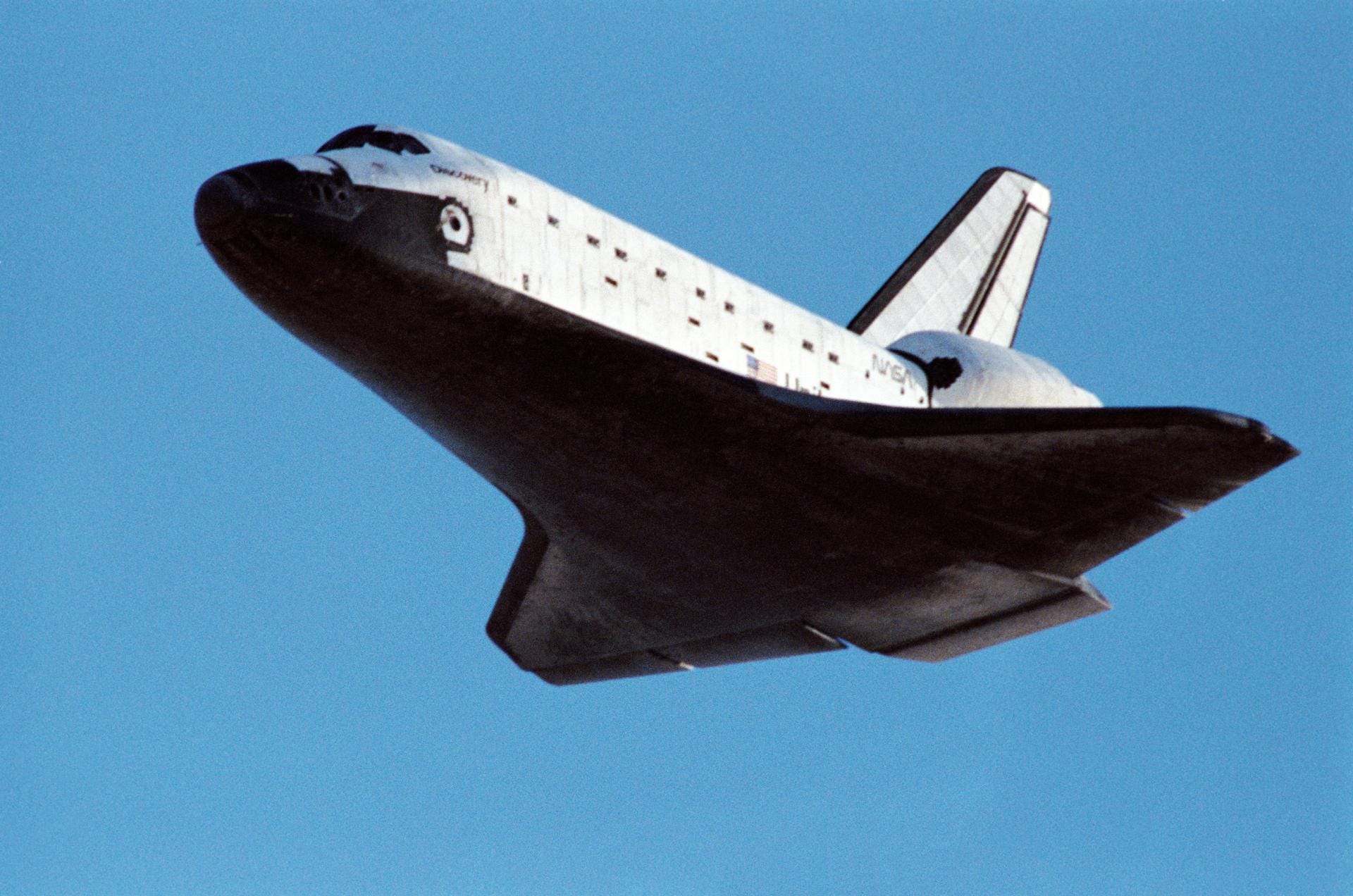
The Space Shuttle
To understand why these highly secretive military spaceplanes are thriving today, one must look at why the civilian NASA Space Shuttle program was ultimately retired. The NASA shuttle was a magnificent engineering achievement, but it was fundamentally flawed by its dual mandate to carry both heavy cargo and human lives. The strict safety margins required to keep a human crew alive through the violence of launch and re-entry made the system staggeringly expensive to maintain, slow to refurbish, and tragically fragile. When the civilian shuttle program died, it was because the financial and human costs of flying it outweighed the scientific returns. Military spaceplanes survived and evolved by stripping humans out of the cockpit entirely. By transitioning to fully autonomous, uncrewed systems, the Space Force and foreign militaries eliminated the heavy life-support systems, emergency escape mechanisms, and strict safety tolerances that crippled NASA’s operational cadence. If a military spaceplane suffers a catastrophic malfunction, it results in a loss of hardware, not human lives, allowing commanders to push these vehicles to the absolute edge of performance.
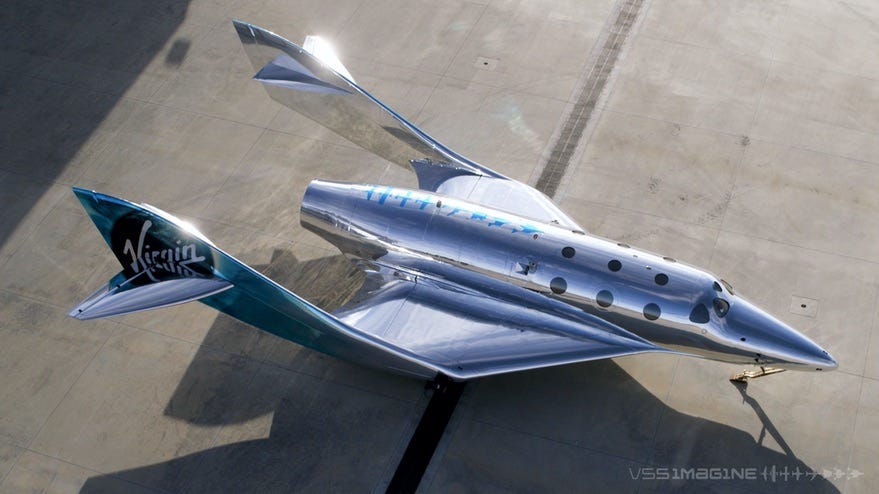
Virgin Galactic’s next-generation Delta-class suborbital Spaceplane
While the weaponization of the upper atmosphere dominates defense headlines, the concept of the spaceplane is also experiencing a parallel, completely transparent renaissance in the commercial and scientific sectors. These non-secretive vehicles are designed for tourism, cargo logistics, and international research, proving that wings still have a vital role to play in the future of space travel. Virgin Galactic remains the most prominent public facing pioneer of suborbital spaceplane technology. The company recently unveiled its next-generation Delta-class vehicle, named Apeiron, which has arrived at its New Mexico spaceport to begin a rigorous phase of atmospheric flight tests. Unlike its military counterparts, Apeiron is built explicitly for human space tourism, designed to carry paying passengers to the edge of space for a few minutes of weightlessness before gliding back to a luxury runway, with commercial operations projected to scale up significantly over the coming years.
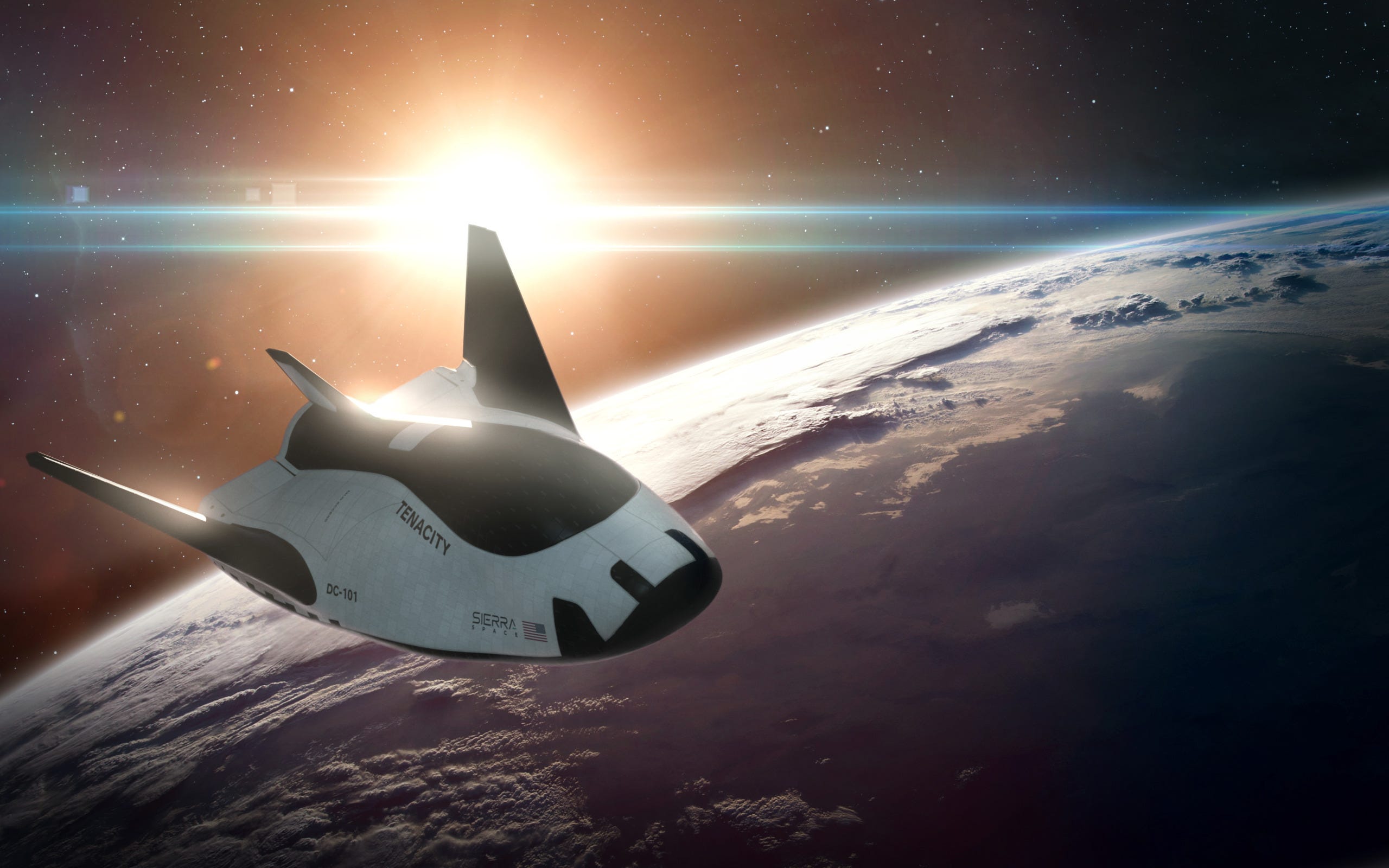
Sierra Space’s Dream Chaser Spaceplane
Beyond space tourism, national civilian agencies and private aerospace firms are building winged vehicles to revolutionize orbital logistics. The European Space Agency is moving forward with its Space Rider project, an uncrewed, reusable laboratory designed to provide European researchers with affordable, routine access to space for microgravity experiments before landing autonomously in the Azores. In the private sector, Sierra Space is finalizing its Dream Chaser spaceplane, a highly anticipated commercial vehicle contracted by NASA to deliver cargo to the International Space Station. Operating with a non-toxic propellant system, Dream Chaser will be capable of landing on any standard commercial runway, allowing sensitive scientific payloads to be rolled off the spacecraft and delivered to laboratories within hours of returning from orbit. These public projects remind us that while the military variants operate in the shadows to secure the high ground of future conflicts, the fundamental geometry of the spaceplane remains one of humanity’s cleanest, most elegant solutions for bridging the gap between the air we breathe and the infinite void beyond.