

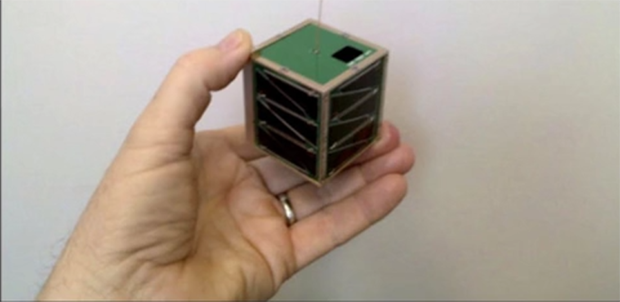
In the hierarchy of small satellites, CubeSats (10 cm units) already transformed access to space. An even smaller standard is now gaining traction: the PocketQube. Measuring just 5 cm on each side per unit (1P), these picosatellites are among the most compact operational spacecraft ever flown. Their low cost and modest launch requirements are allowing a wider range of teams to reach orbit.

Origins and Standard

The PocketQube form factor was developed around 2009 at Morehead State University and Kentucky Space with the explicit goal of reducing barriers for universities and small research groups. A single 1P unit is a 5 × 5 × 5 cm cube; larger configurations such as 2P or 3P simply stack additional units. Mass is typically well under 1 kg, often in the 100–250 g range per unit depending on design.

Like CubeSats, PocketQubes rely on standardized deployers. Companies such as Alba Orbital have become central to the ecosystem, providing buses, integration, and rideshare launch opportunities on vehicles including SpaceX Falcon 9 missions.

What They Do

Despite their size, PocketQubes have flown a variety of missions. Common applications include technology demonstrations, amateur radio experiments, basic Earth observation, Internet-of-Things connectivity tests, and educational projects. Some carry simple cameras, sensors, or communication payloads. Attitude control is often passive or limited to magnetic systems because of the extreme constraints on power, volume and mass; more sophisticated active control remains a technical challenge and an area of ongoing development.

By 2025–2026 the community had reached significant milestones, with the total number of PocketQubes launched approaching or surpassing 100. Many are short-lived educational or experimental platforms, but a growing number are commercial or constellation-oriented, including Earth-observation efforts from companies such as Alba Orbital’s Unicorn series.

Advantages and Limitations

The primary appeal is cost and accessibility. Launch prices can start in the low tens of thousands of euros or dollars for a 1P unit on a rideshare, far below traditional small-satellite missions. Development cycles are shorter, and the platforms are small enough for university labs or small startups to handle.

Limitations are equally clear. Power generation is constrained by tiny solar panels. Antenna performance, data rates and onboard computing are modest. Propulsion is rare. Radiation tolerance and thermal control require careful design. Licensing, insurance and regulatory hurdles can still be significant for new teams, especially in some countries.

Looking Ahead

PocketQubes are unlikely to replace CubeSats for most operational applications. Their niche is low-cost experimentation, rapid technology trials, education, and specialized constellations where extreme miniaturization is an advantage. Continued improvements in miniaturized electronics, better attitude-control solutions, and more frequent rideshare opportunities should support further growth.

As the broader small-satellite market matures, PocketQubes illustrate how far standardization and rideshare economics can push the lower end of orbital access. For students, radio amateurs, and resource-constrained innovators, these five-centimetre cubes have turned “building a satellite” from an institutional project into something closer to a serious but attainable engineering challenge.