

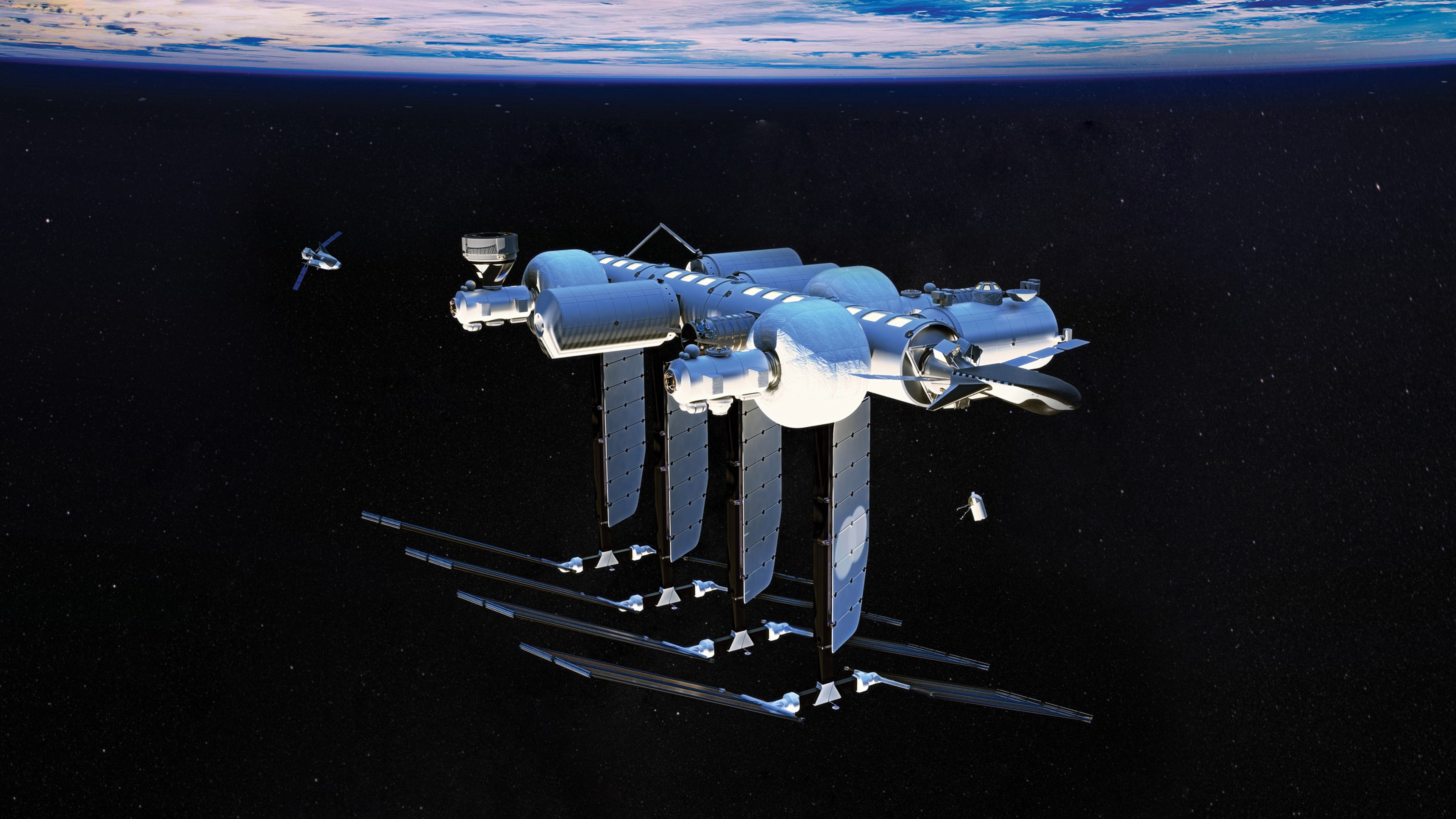
The dawn of the commercial space age is transforming our relationship with the cosmos, shifting the narrative of space travel from elite government expeditions to an accessible frontier of leisure and commerce. At the heart of this revolution is the concept of the orbital resort, a new class of space station designed not just for scientific research, but for human experience. These next-generation structures, frequently described as orbital destinations, promise to redefine luxury, adventure, and human ingenuity by establishing permanent, habitable sanctuaries in Low Earth Orbit (LEO).
As traditional government-led platforms like the International Space Station near retirement, private enterprise is stepping into the void. A leading player in this celestial market is Orbital Reef, a joint venture led by Blue Origin and Sierra Space. Envisioned as a mixed-use business park in space, Orbital Reef is designed to provide the essential infrastructure for commerce, research, and exotic tourism alike. It is not alone in this race. Axiom Space is actively constructing commercial modules that will initially attach to the ISS before detaching to form an independent, state-of-the-art commercial destination. Meanwhile, Vast Space is pursuing an aggressive timeline to launch Haven-1, aiming to field the world’s first commercial, human-habitable space station. These platforms represent a paradigm shift, evolving from sterile laboratories into welcoming orbital retreats where civilians can watch many sunrises and sunsets in a single Earth day.
However, transitioning from temporary astronaut outposts to sustainable luxury retreats requires overcoming monumental technological hurdles. The most significant physiological challenge of long-term space habitation is the absence of gravity, which causes muscle atrophy, bone density loss, and fluid shifts in the human body. To counter these effects and provide a comfortable environment for vacationers, engineers are revisiting a classic concept of aerospace engineering: the spinning habitat. By rotating a structure or a portion of it, engineers can utilize centripetal force to pull occupants outward against the interior hull. This outward push perfectly simulates the sensation of gravity. Striking the right balance is a delicate engineering tightrope, as the radius of the structure and the speed of the rotation must be carefully calibrated to prevent motion sickness and vestibular disorientation among guests.
Beyond artificial gravity, these resorts must master the art of the closed-loop life support system. Present-day systems must evolve to become entirely self-sustaining, recycling nearly one hundred percent of the water, oxygen, and waste generated onboard. Furthermore, shielding guests from high-energy cosmic radiation and orbital debris requires advanced materials and innovative structural physics. The ultimate goal of these engineering feats is to decouple humanity’s reliance on Earth’s immediate biosphere, creating an autonomous ecosystem capable of supporting human life indefinitely.
The realization of these orbital sanctuaries will do more than fulfill the dreams of wealthy thrill-seekers. The technologies forged to make space hospitality possible—such as hyper-efficient water purification, compact waste-to-energy conversion, and advanced automated agriculture—will yield immediate, profound benefits for sustainability challenges on Earth. Ultimately, these resorts in the stars represent the next logical step in our evolutionary journey, serving as the proving grounds for technologies that will eventually carry humanity toward permanent settlements on the Moon, Mars, and beyond.
We've heard these ambitions before but they seem far more in reach than they ever did in the past.