

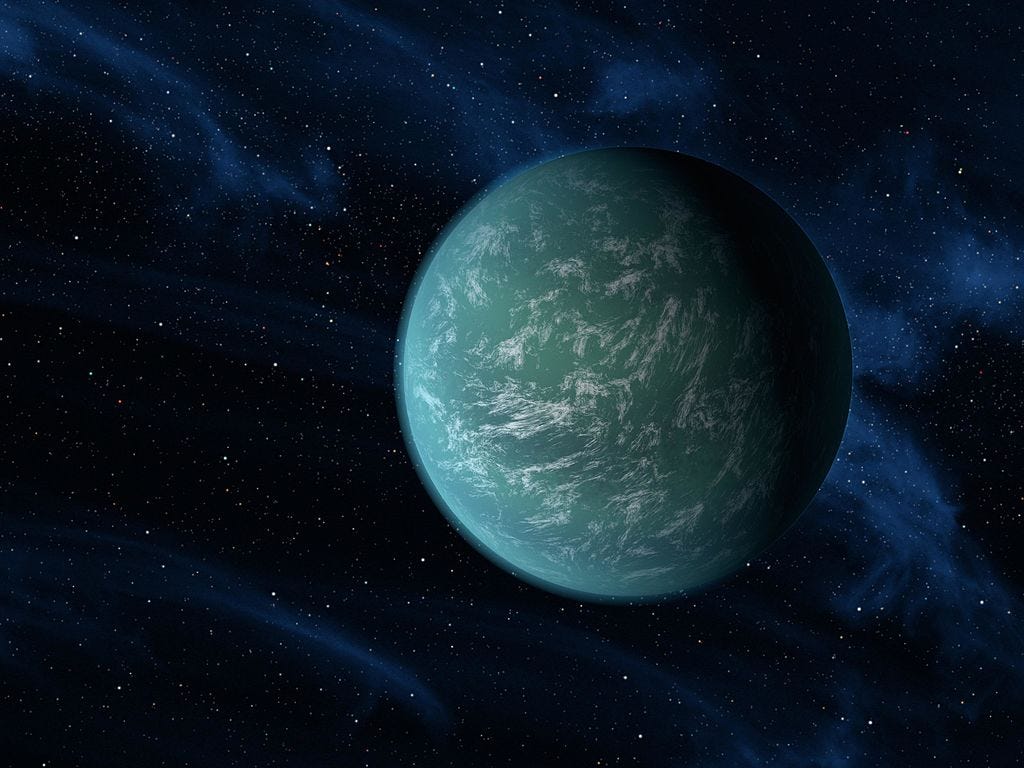
Astronomers have captured an unprecedented glimpse into the earliest stages of planetary birth, discovering the youngest exoplanet ever recorded and challenging long-held theories about how worlds form.
In the vast expanse of the Taurus star forming region, a celestial infant has emerged from the dust. Located roughly four hundred light years from Earth, the newborn planet orbits a very young star known as Elias 24. While typical exoplanets discovered by astronomers are billions of years old, this newly detected world is estimated to be merely a few hundred thousand years old. In cosmic terms, it is a newborn, offering scientists a literal snapshot of planetary genesis in real time.
The discovery was made possible by the Atacama Large Millimeter Submillimeter Array, a powerful network of radio telescopes in Chile. Rather than spotting the planet directly through visible light, researchers observed the distinct footprint it left behind in its host star’s protoplanetary disk. As the infant planet orbits Elias 24, its gravitational pull acts like a cosmic snowplow, clearing out a massive, symmetrical gap in the surrounding ring of gas and dust. By analyzing the depth and width of this gap, astrophysicists were able to confirm the presence of a planet with a mass likely rivaling that of Jupiter.
This finding fundamentally disrupts traditional timelines of planetary evolution. For decades, the dominant model for giant planet formation was core accretion, a slow and methodical process where a rocky core gradually builds up over millions of years before vacuuming up surrounding gas. Elias 24 demonstrates that massive planets can take shape much faster than previously thought possible. Instead of a slow accumulation, this baby giant may have formed through gravitational instability, a process where portions of the protoplanetary disk collapse rapidly under their own weight.
Observing a world at this stage of development provides a rare look at the pristine materials that build solar systems. The gas and dust currently swirling around Elias 24 have not yet been heavily processed by stellar radiation or altered by billions of years of orbital mechanics. By studying the chemical composition of this environment, scientists can learn exactly what ingredients are available at the very beginning of a planet’s life cycle. This could ultimately shed light on the early history of our own solar system and the origins of the elements that make life possible.
As telescopes continue to advance, the discovery at Elias 24 marks the beginning of a new era in observational astronomy. Scientists are no longer just looking at the cosmic retirement home of mature planets; they are walking into the nursery. This cosmic newborn proves that the universe is capable of rapid, chaotic, and brilliant creation, forcing astronomers to rewrite the textbooks on how worlds come to be.