

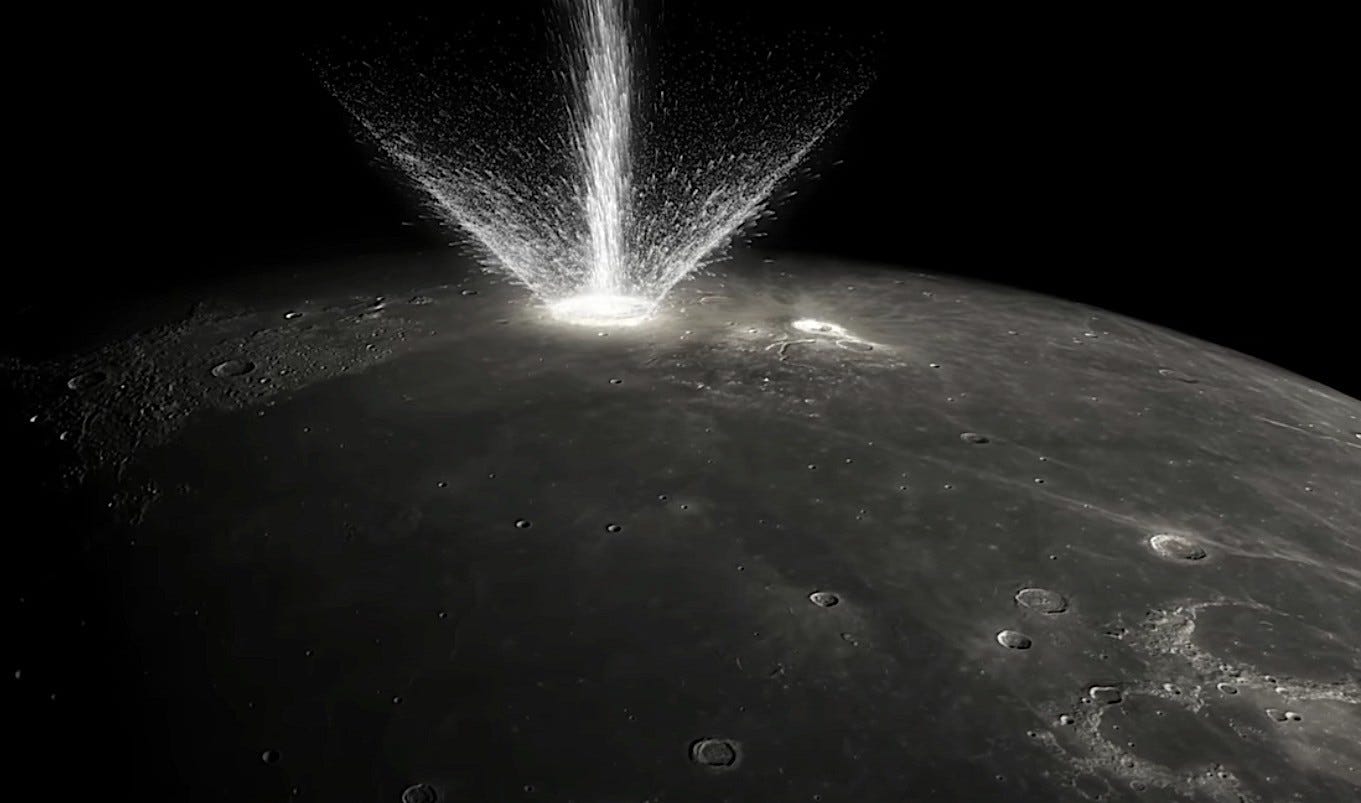
The Artemis II mission provided humanity with its first close-up look at the lunar surface in over half a century. While the astronauts expected to witness the stark beauty of the ancient craters and the deep shadows of the south pole, they did not anticipate witnessing the live geological reshaping of the Moon. During their transit into lunar orbit, the crew reported observing multiple meteorites impacting the far side of the Moon, creating brief but brilliant flashes of light against the darkened terrain.
The unexpected fireworks display occurred as the spacecraft aligned with an annual meteor shower tracking through the inner solar system. Free from the protective shield of an atmosphere, the lunar surface bears the brunt of every piece of space debris that crosses its path. While Earth witnesses these streaks of dust and rock burn up as shooting stars, the Moon experiences them as direct kinetic impacts. From their vantage point in the Orion capsule, the astronauts saw these collisions as instantaneous, white-hot pinpricks of light that quickly dissipated into the vacuum.
NASA scientists later confirmed that the observations matched telemetry from automated lunar impact monitoring systems on Earth. The event provided valuable data on how impact energy radiates across the vacuum of space and underscored the atmospheric protection that Earth takes for granted. For the crew, the experience served as a striking reminder of the dynamic, ever-changing nature of the lunar environment, proving that the Moon is not a dead, static rock, but a canvas continually being reshaped by the cosmos.
As humanity prepares to establish a permanent presence on the Moon, scientists and engineers are confronting an unavoidable cosmic hazard that Earth naturally shields us from. Out in the airless expanse of the lunar surface, there is no thick atmosphere to incinerate incoming space rocks. This means that astronauts, rovers, and habitats are directly exposed to a continuous rain of cosmic debris, raising important questions about the actual risks of a catastrophic strike.
The threat comes in two distinct sizes, each presenting a different type of danger. The first and most common threat is micrometeoroids. These tiny dust particles, often smaller than a grain of sand, travel at staggering speeds that frequently exceed twenty kilometers per second. At these velocities, even a microscopic particle carries enough kinetic energy to pierce a standard spacesuit or pit the lenses of a rover camera. Because millions of these particles strike the Moon every day, the chance of a long-term lunar habitat or rover being hit by a micrometeoroid is effectively one hundred percent. Engineers must design habitats with multi-layered shielding, such as Whipple shields, which break up incoming particles before they can breach the main hull.
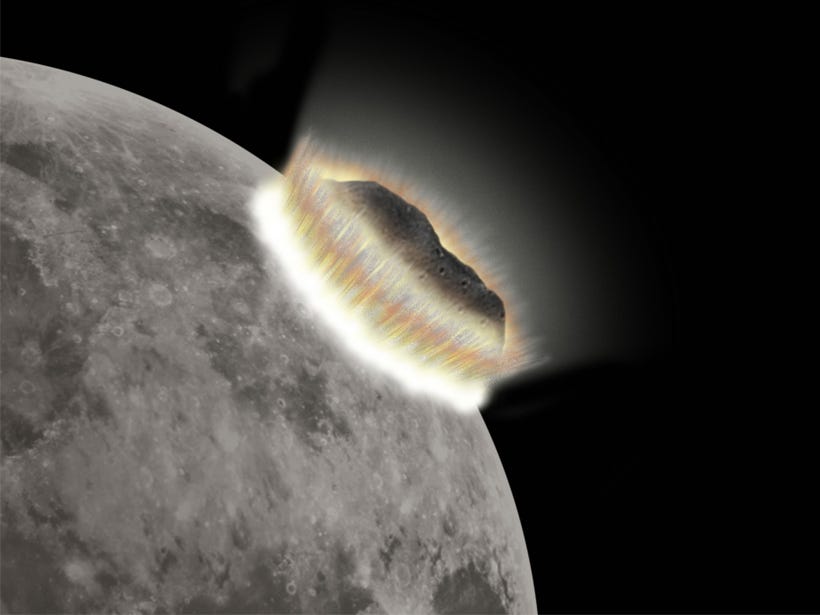
The second threat involves larger meteors, ranging from the size of a pebble to massive boulders. Fortunately, the probability of a direct hit from one of these larger objects on a specific astronaut or habitat is exceedingly low. Space is vast, and the current footprint of human infrastructure on the Moon is incredibly small. Statistics suggest that a significant impact capable of obliterating a habitat would likely occur only once every few thousand or even millions of years in any given square kilometer. However, large impacts create a secondary hazard known as ejecta. When a meteor hits the lunar surface, it blasts out a spray of sharp, high-velocity rocks and dust that can travel for kilometers. This means a meteor does not need to score a direct hit on a base to cause severe damage; an impact miles away could still sandblast a habitat or crush a nearby rover.
To mitigate these risks, future lunar architecture will likely look very different from Earth buildings. Space agencies are actively studying ways to bury habitats under several meters of lunar soil, known as regolith, or place them inside natural underground lava tubes. By using the Moon’s own terrain as a natural shield, astronauts can be protected from both the relentless bombardment of micrometeoroids and the unpredictable dangers of larger cosmic impacts. While the danger of meteor strikes on the Moon is a permanent reality, careful engineering and smart subterranean planning can reduce the risk to a level that makes long-term human survival possible.