

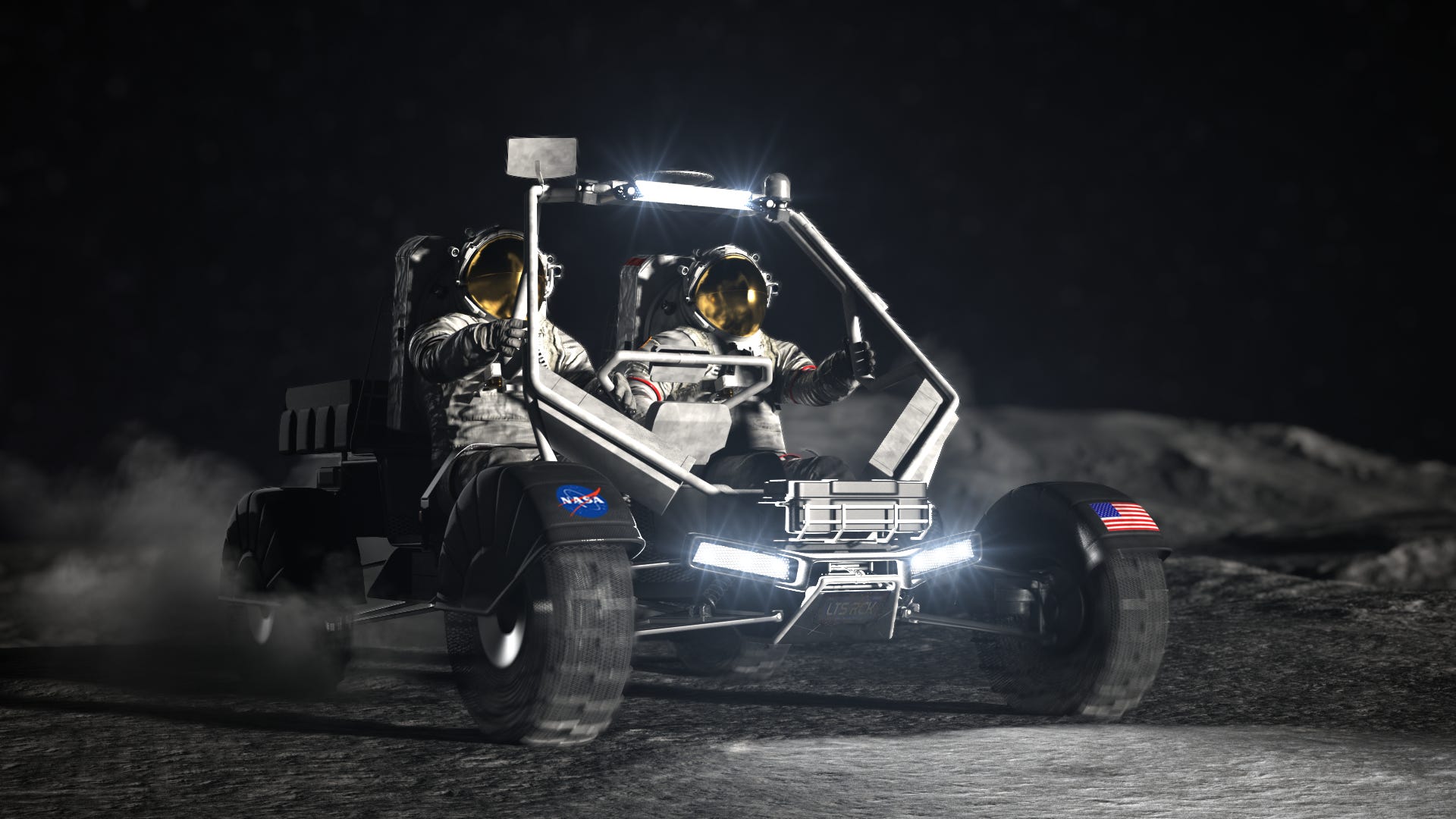
Wheeled vehicles have been central to lunar surface exploration since the first human landings. They extend the reach of astronauts and robots, enable sample collection across varied terrain, and will be essential for any sustained presence near the lunar south pole. After decades of limited activity, a new wave of commercial and agency rovers is preparing to operate on the Moon.

Early History

The first lunar rovers were Soviet. Lunokhod 1, delivered by Luna 17 in 1970, became the first remote-controlled rover to operate on another world. It traveled more than 10 kilometers and returned images and data for nearly a year. Lunokhod 2 followed in 1973 and covered a greater distance.

The United States flew the Lunar Roving Vehicle (LRV) on Apollo 15, 16 and 17 (1971–1972). These battery-powered “Moon buggies” allowed astronauts to travel several kilometers from the lunar module, dramatically increasing the scientific return of the final Apollo missions. The LRVs remain iconic examples of crewed surface mobility.

After Apollo and the Lunokhod program, lunar rover activity paused for decades. China revived the tradition with the Yutu (Jade Rabbit) series. Yutu-1 landed with Chang’e-3 in 2013. Yutu-2, delivered by Chang’e-4 to the lunar far side in 2019, continues to operate years later and has set distance records for lunar rovers.

The New Commercial Era

NASA’s Commercial Lunar Payload Services (CLPS) program and related Moon Base efforts have opened the surface to a range of private companies. Several firms are developing or flying rovers of different sizes and purposes.

Astrolab (Venturi Astrolab) is advancing the FLEX / FLIP family of rovers. These vehicles are designed for both cargo and potential crewed use. NASA has selected Astrolab for Lunar Terrain Vehicle (LTV) development, with awards supporting delivery of mobility systems in the late 2020s.

Lunar Outpost is another major player. Its MAPP rover reached the lunar surface on an earlier Intuitive Machines lander. The company is developing larger platforms, including the Eagle and the lighter Pegasus concept, also selected under NASA’s LTV services contracts for crewed and uncrewed operations.

Astrobotic is preparing its Griffin lander to deliver rovers, including Astrolab’s FLIP, and has its own smaller CubeRover platform. Intuitive Machines has flown or planned small mobility systems and hoppers alongside its Nova-C landers. Blue Origin is involved in lander deliveries that may carry NASA’s long-delayed VIPER rover, originally designed to prospect for water ice at the south pole.

NASA’s VIPER (Volatiles Investigating Polar Exploration Rover) was designed as a flagship polar prospecting vehicle. After cancellation and later revival efforts, its path to the surface has shifted to commercial delivery options.

Future Plans and Requirements

Near-term goals focus on demonstrating reliable mobility in the south polar region, where permanently shadowed craters may hold water ice and where future bases are expected. Rovers must survive extreme temperature swings, abrasive regolith, and long periods of darkness. Many designs incorporate autonomy, teleoperation capability, and the ability to carry instruments or support astronauts.

NASA’s Lunar Terrain Vehicle contracts aim to field vehicles that can transport crew, cargo and tools by the late 2020s. These LTVs are intended to operate both with and without astronauts on board. Parallel commercial efforts seek to offer mobility as a service—delivering data, samples or logistics support for multiple customers.

International activity continues as well. China plans further rover missions, and other nations and companies are studying polar and resource-focused mobility systems.

Outlook

Lunar rovers are transitioning from rare, government-led missions to a more continuous commercial and scientific presence. Success will depend on reliable landers, robust mobility in difficult terrain, and the ability to operate through the lunar night. The vehicles now in development and preparing for flight will help determine how quickly a sustained surface infrastructure can take shape near the Moon’s south pole.