

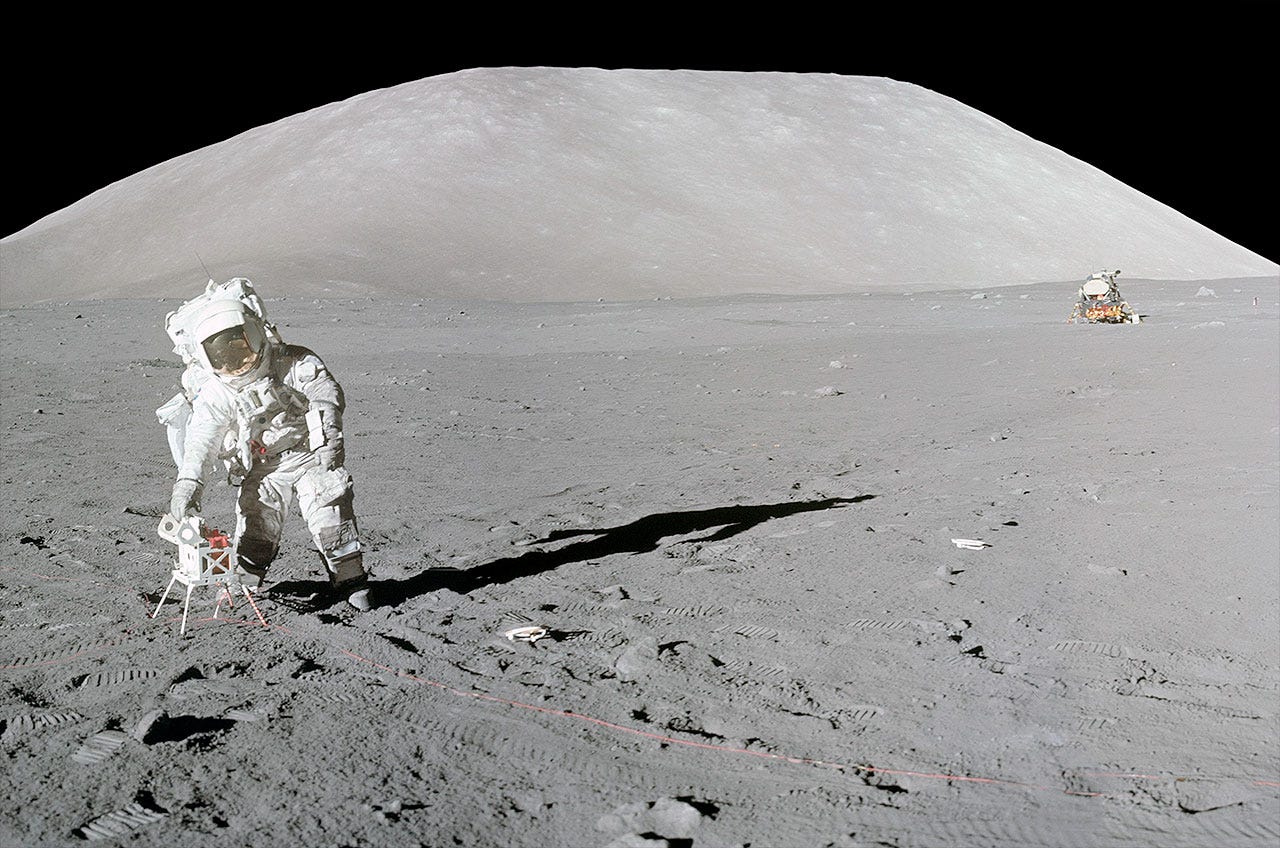
The standard ritual of a lost driver involves tapping a smartphone screen, muttering at a map application, and smoothly correcting course based on an invisible web of satellites. But if you take that smartphone to the Moon, you will find yourself utterly and profoundly lost. The Moon famously lacks a global magnetic field, turning standard compass needles into useless decorative pointers. Worse yet, there is no lunar GPS network. For the modern explorers and robotic rovers paving the way for the Artemis missions, finding a way across the dusty lunar surface is less about cutting-edge digital convenience and more about historical survival.
In a twist of cosmic irony, navigating the Moon today looks remarkably similar to the way maritime explorers crossed the open oceans centuries ago. When Apollo astronauts and early rovers ventured into the alien terrain, they had to rely heavily on celestial navigation and landmark pilotage. Because the Moon lacks an atmosphere, the stars shine with crisp, unblinking clarity even during the day. Astronauts use modified space sextants and optical alignment telescopes to measure the angles between known stars, crater rims, and the sharp lunar horizon. Just as Ferdinand Magellan or James Cook tracked the sky to map the unknown Earth, modern explorers must look up at the cosmos and cross-reference their visual angles with meticulous orbital maps to figure out exactly where their boots are hitting the dust.
Even on the ground, the similarities to the age of sail continue. Lacking satellites, rovers use dead reckoning, a centuries-old technique where you calculate your current position by using a giant math equation based on your last known location, your speed, and your heading. Astronauts on the lunar surface track their movements through precise inertial gyroscopes, matching their turns against mechanical sun-shadow devices that act as high-tech sundials. If the wheel odometer miscalculates a rotation because it slipped on the slippery, glass-like lunar soil, the entire calculation drifts, leaving explorers blind without a landmark to anchor them.
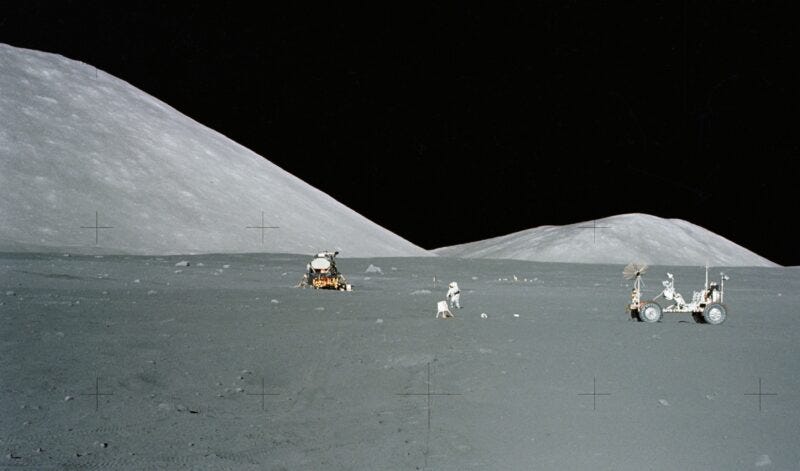
Fortunately, a new lunar space race is focused entirely on bringing the Moon out of the age of sail and into the digital era. Private aerospace firms and international tech companies are moving aggressively to build a robust, localized positioning, navigation, and timing infrastructure. Because building an entirely new satellite network from scratch is incredibly expensive, engineers are getting creative by looking back toward home.
Space PNT, a Swiss-based technology firm, has developed specialized, ultra-sensitive receivers designed to capture the incredibly weak, diluted GPS and Galileo signals that bleed past Earth and out into deep space. By picking up these terrestrial side-lobe signals from thousands of kilometres away, spacecraft can get a direct, automated fix on their position without relying on expensive ground stations. Similarly, Spanish technology giant GMV has rolled out an innovative software system called Lupin. Part of a European Space Agency initiative, Lupin utilizes specialized algorithms to process signals from nascent moon-orbiting satellites, promising real-time, automated positioning that will eventually make navigating the Moon as seamless as checking a delivery app.
Meanwhile, companies are tackling the problem directly on the lunar surface. Advanced Navigation has partnered with Intuitive Machines to deploy lightweight, highly precise navigation sensors on upcoming lunar landers and rovers. These systems are designed to deliver drift-free velocity and location data independent of visual landmarks, a crucial requirement for exploring the permanently shadowed craters of the lunar south pole where the sun never shines. Intuitive Machines is actively transitioning into a space infrastructure prime, working under NASA contracts to build out the communication and navigation backbone that will essentially serve as the internet and GPS provider for the permanent lunar economy. Even on the software side, artificial intelligence is stepping in. Vision-tracking systems are being trained on satellite elevation models, allowing autonomous cameras on rovers to instantly identify mountain ridges and crater lips, matching the horizon against a digital database to pinpoint location within a few meters.
Navigating the Moon is a stark reminder that as humanity reaches for the future, we often have to lean on the wisdom of the past. Until the orbital networks of private aerospace firms are fully operational, the brave pioneers of the next lunar frontier will continue to look out their cabin windows, raise their modern variants of the sextant, and steer by the stars.