

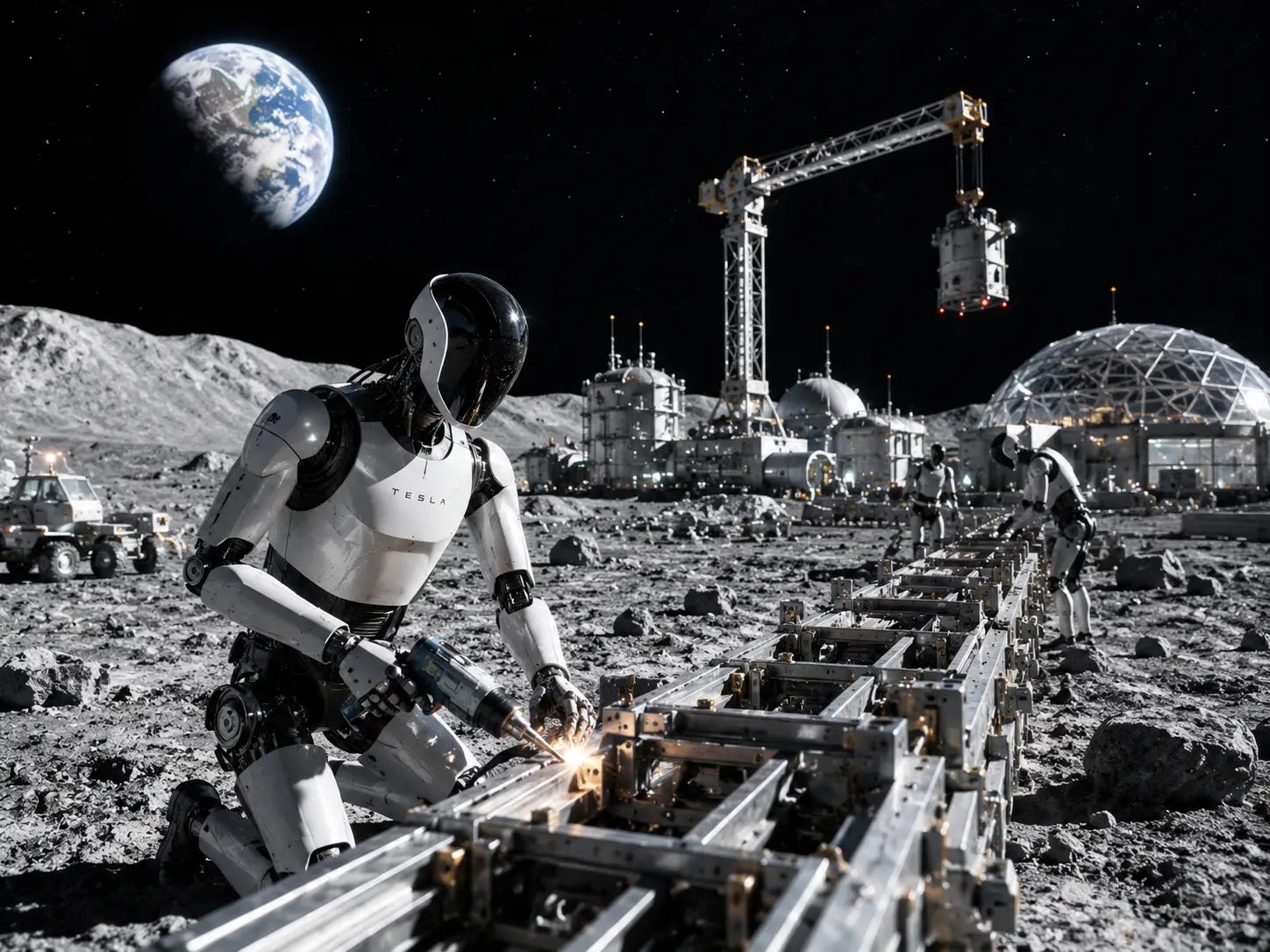
While the moon was once the exclusive playground of Neil Armstrong’s boots and a few high-tech golf clubs, the lunar surface is about to get a lot more crowded with the arrival of lunar humanoids. Space agencies and tech giants have realized that human astronauts are remarkably fragile, expensive to feed and prone to complaining about extreme radiation. The solution is sending two-legged, metal stand-ins to do the heavy lifting. Four major players are currently in a cosmic race to land the first functional robotic butler on the lunar regolith, changing the face of space exploration forever.
The National Aeronautics and Space Administration, better known as NASA, is leading the charge with Valkyrie, a sleek, superhero-looking humanoid originally designed for disaster relief but now pulling double duty for deep space. Standing over six feet tall and weighing a hefty three hundred pounds, Valkyrie is currently undergoing rigorous testing at the Johnson Space Center and through partnerships in Western Australia, where she is learning to operate automated energy facilities. NASA envisions Valkyrie as the ultimate advance-guard for the Artemis missions. Her primary tasks will include cleaning solar panels, inspecting dangerous machinery, and setting up habitats before fragile human flesh arrives. NASA aims to deploy these mechanical pioneers to the moon in the early 2030s, ensuring that when humans finally move in, the Wi-Fi is already hooked up and the dust is swept.
Not to be outdone by government bureaucracy, Elon Musk is throwing his hat into the crater with Tesla and the Optimus humanoid robot. While Optimus spent its infancy being mocked as a guy in a spandex suit dancing on a stage, the current Generation 2 models are terrifyingly capable, featuring custom actuators and delicate tactile fingers that can handle eggs without making an omelet. Tesla is rapidly deploying Optimus inside its own car factories for real-world beta testing, aiming to have thousands of them working by next year. Musk has made no secret of his interstellar ambitions, and a rugged, space-hardened variant of Optimus is being prepared to hitch a ride on SpaceX’s Starship. Tesla plans to land its humanoids on the moon by the late 2020s, where their primary job will be building the heavy infrastructure, digging trenches, and presumably filming high-definition promotional videos for X.
Stepping up to challenge the tech giants is Apptronik, an Austin-based robotics company that has quietly built Apollo, one of the most versatile commercial humanoids on the market. Apollo is currently in its commercialization and pilot-testing phase, with major corporations like Mercedes-Benz testing its ability to lug heavy boxes around warehouses. Apollo stands out because of its unique modular design; it can operate on legs, mount to a wheeled platform, or function as a stationary torso. Apptronik is actively working with NASA under a Small Business Innovation Research contract to adapt Apollo’s core architecture for the harsh vacuum of space. The company is targeting the early 2030s for Apollo’s lunar debut, where it will utilize its unique force-control architecture to operate human tools and survive the brutal, freezing lunar nights.
On the other side of the globe, the China Academy of Launch Vehicle Technology, or CALT, is engineering China’s own classified mechanical workforce. Operating under the state-owned China Aerospace Science and Technology Corporation, CALT has been rapidly accelerating its humanoid development, recently unveiling prototypes capable of navigating rough terrain and performing delicate manipulation tasks. China is treating the lunar humanoid race with absolute geopolitical seriousness, integrating these robots directly into its broader lunar plans. CALT aims to land its humanoid robots on the moon by 2030 as a core component of the International Lunar Research Station. Once there, the Chinese humanoids will focus on constructing the base, operating heavy drilling equipment to hunt for water ice, and conducting scientific experiments under the extreme conditions of the lunar south pole.
The moon is about to undergo a massive robotic renaissance. Whether it is NASA’s heroic Valkyrie, Tesla’s hyper-commercial Optimus, Apptronik’s blue-collar Apollo, or CALT’s precision-engineered state laborers, the next footprints on the moon will likely be made by synthetic humanoids. When humans finally return to stay, they will be greeted by a welcoming committee of robots that have already done all the hard work.