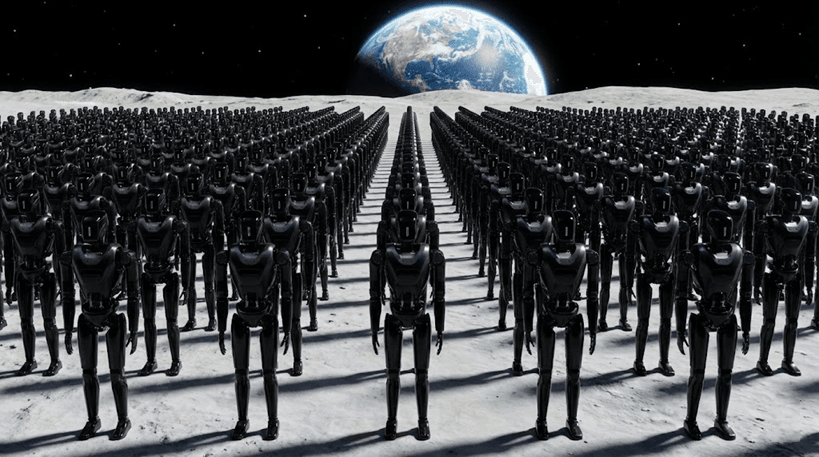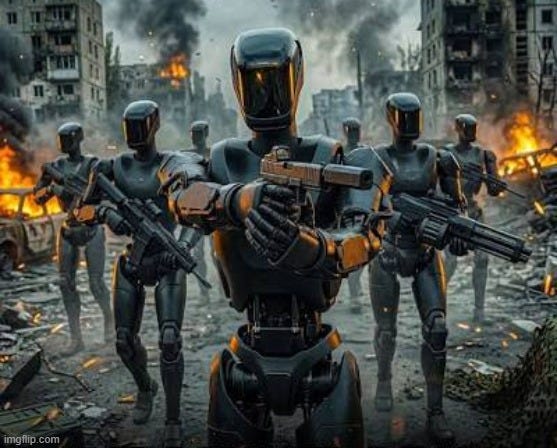
The nature of warfare is undergoing its most radical transformation since the invention of gunpowder. As demographics shift and technological capabilities reach a critical mass, the battlefield is moving away from human combatants toward autonomous machinery. Leading global powers are no longer just upgrading their drones or software; they are actively building soldier humanoids. This shift from flesh-and-blood troops to advanced bipedal machines represents a profound reorganization of military strategy, international law, and societal structures.
The Sino-American Robotic Race
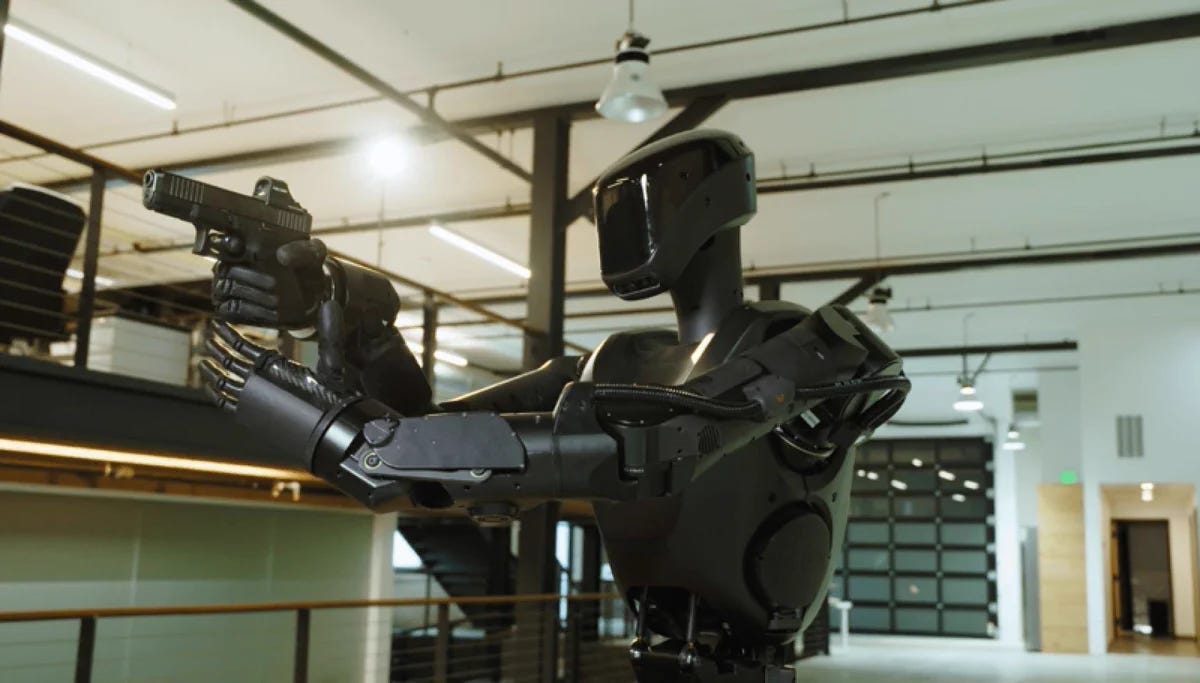
The United States and China are currently locked in a fierce technological competition to deploy the world’s first operational units of soldier humanoids. In the United States, the military establishment relies on a mix of defense contracts and highly advanced commercial robotics companies. The focus rests heavily on creating highly adaptable, agile systems capable of navigating complex urban environments, breaching buildings, and operating existing military hardware designed for humans. American development emphasizes decentralized artificial intelligence, allowing individual soldier humanoids to make tactical decisions in environments where communication is jammed.
China has approached the challenge with a centralized, state-driven industrial strategy. Utilizing its massive manufacturing infrastructure and supply chains, Beijing is focusing on mass production and rapid scalability. The Chinese military aims to deploy soldier humanoids in large, synchronized formations. Their development leverages massive datasets to train neural networks in battlefield tactics, focusing on sheer volume and integrated electronic warfare capabilities. This structural difference highlights two distinct philosophies: American precision engineering versus Chinese industrial scale.
The Strategic Realities of Russia and Other Nations
While Washington and Beijing dominate the cutting edge of robotics, other global powers are forced to adapt based on their specific economic and technological constraints. Russia has historically taken a keen interest in combat robotics, frequently showcasing tracked and wheeled autonomous platforms. However, economic sanctions and supply chain limitations regarding high-end microchips have slowed its development of complex bipedal systems. Instead of building agile soldier humanoids from scratch, Russia focuses on automating heavy armor and deploying simpler, cheaper loitering munitions, while attempting to bridge the tech gap through commercial components sourced from allied nations.
Other technologically advanced nations are carved into specific niches. South Korea and Japan, both facing severe demographic crises and shrinking birth rates, invest heavily in humanoid research. South Korea focuses on border security applications, aiming to place autonomous sentries along volatile frontiers. European nations, particularly the United Kingdom, France, and Germany, are exploring robotic integration, but their efforts are heavily constrained by strict ethical frameworks and public pushback against autonomous lethal weapons.
The Urgent Imperative of Asymmetric Warfare
The tactical necessity for soldier humanoids has been starkly illustrated by recent conflicts, most notably the war in Ukraine. When a smaller nation faces a much larger adversary with vast human resources and deep stockpiles of conventional artillery, attrition becomes a losing equation for the defender. Human lives cannot be easily replaced, and public tolerance for casualties has a finite limit in democratic societies.
In such asymmetric conflicts, soldier humanoids offer a paradigm shift. They provide a force multiplier that removes the human element from the frontline attrition rate. A nation utilizing robotic forces can sustain defensive lines indefinitely without the political and social devastation of high casualty counts. For smaller or depopulating nations, automation is not an experimental luxury; it is the only viable path to maintaining national sovereignty against a demographically superior adversary.
Legal and Ethical Conundrums
The rise of soldier humanoids threatens to break the existing framework of international humanitarian law. The Geneva Conventions were written with human psychology, empathy, and accountability in mind. A machine cannot feel fear, nor can it experience the battlefield panic that often leads to war crimes. Conversely, a machine lacks human compassion, raising questions about its ability to distinguish between an active combatant and a surrendering soldier or civilian in chaotic environments.
The issue of accountability remains unresolved. If a unit of soldier humanoids commits a massacre due to a software glitch or a misinterpreted command, it is legally unclear who bears the blame. The field commander, the software programmer, the hardware manufacturer, and the state itself all present layers of liability that complicate traditional military justice. International bodies are currently deadlocked on whether to ban autonomous lethal weapons entirely or to regulate their targeting algorithms, while the technology itself outpaces the diplomatic consensus.
Social and Domestic Transformation
Beyond the battlefield, the transition to humanoid forces will fundamentally alter the relationship between citizens and the state. Historically, the need for a large military forced governments to maintain a degree of social consensus and civilian buy-in to sustain conscription or volunteer recruitment. When a government no longer requires its citizenry to fight its wars, the traditional social contract changes. A state with an entirely robotic military could theoretically wage prolonged foreign campaigns without risking the domestic political backlash triggered by returning coffins.
Furthermore, the domestic security implications are profound. The same soldier humanoids built for foreign battlefields can be repurposed for domestic policing, riot control, and border enforcement. This introduces unprecedented risks regarding authoritarian control, as robotic forces are immune to political sympathy, exhaustion, or ideological defection. The societal perception of safety will inevitably clash with the chilling reality of unyielding, mechanized enforcement.
The Future Landscape of Autonomous Power
As nations continue to invest billions into these programs, the geopolitical hierarchy will be redefined by computational power and manufacturing capacity rather than population size. The traditional metric of military might—the size of a nation’s standing army—will become obsolete. Future global stability will depend on the cybersecurity of these robotic fleets, as a single software vulnerability could allow an adversary to neutralize or reprogram an entire army instantly. The era of mechanized human warfare is drawing to a close, replaced by a cold, algorithmic competition where soldier humanoids will decide the fate of nations.