

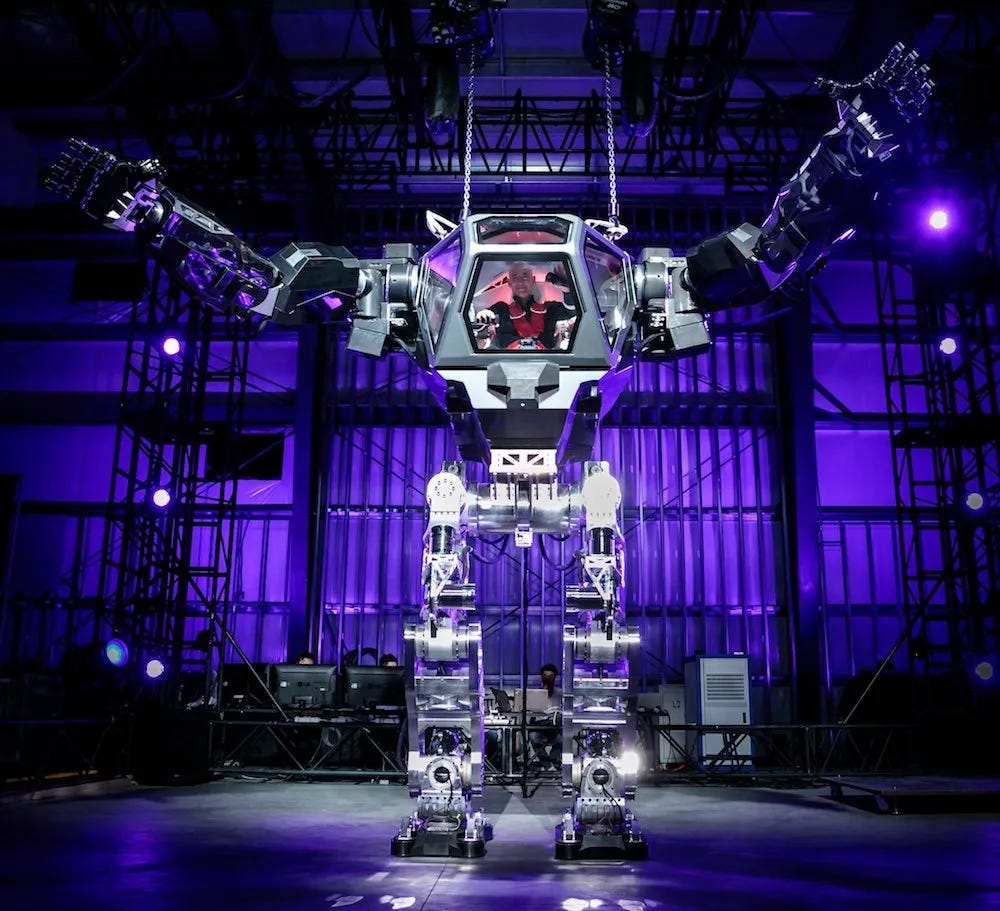
The dream of piloting a towering bipedal machine has long belonged to the realm of science fiction, yet a handful of determined engineers and companies have spent the past decade and a half turning that fantasy into steel, hydraulics, and code. Across Japan, China, South Korea, and the United States, a small number of genuine mecha have been built, tested, and in some cases even made available for limited public experience. These machines are not mass-produced weapons platforms. They are engineering proofs of concept, expensive statements of what current materials and control systems can achieve when someone decides that walking like a giant is worth the cost.
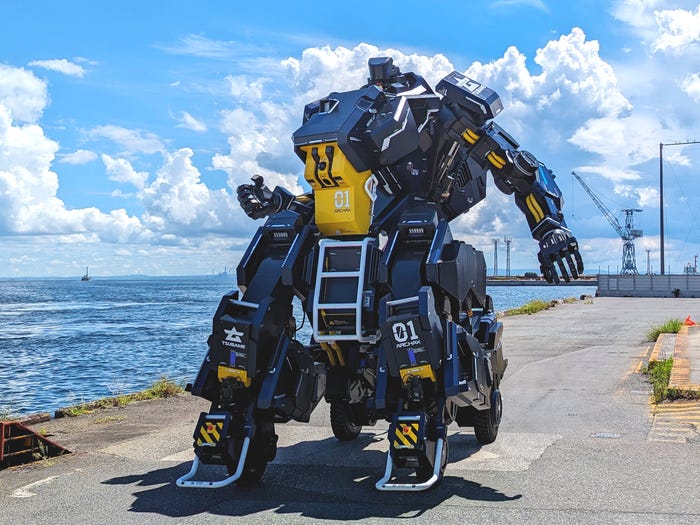
Archax (Tsubame Industries)
In Japan, Tsubame Industries has created Archax, a 14.8-foot-tall, 3.85-ton machine that leans heavily into anime aesthetics while remaining fully functional. Its defining feature is a chest-mounted cockpit that seats a human pilot, giving the operator a direct view of the world from roughly the height of a second-story window. With twenty-six articulated joints, Archax can shift between a standing bipedal posture and a more compact mobile vehicle mode, allowing it to travel greater distances without the inefficiency of continuous walking. The machine is slow and deliberate by necessity. Every step requires careful balance management, and the pilot must learn to move with the robot rather than against it. Archax is less a tool for practical labor and more a demonstration that a rideable, anime-inspired mecha can exist in the real world and still remain controllable.
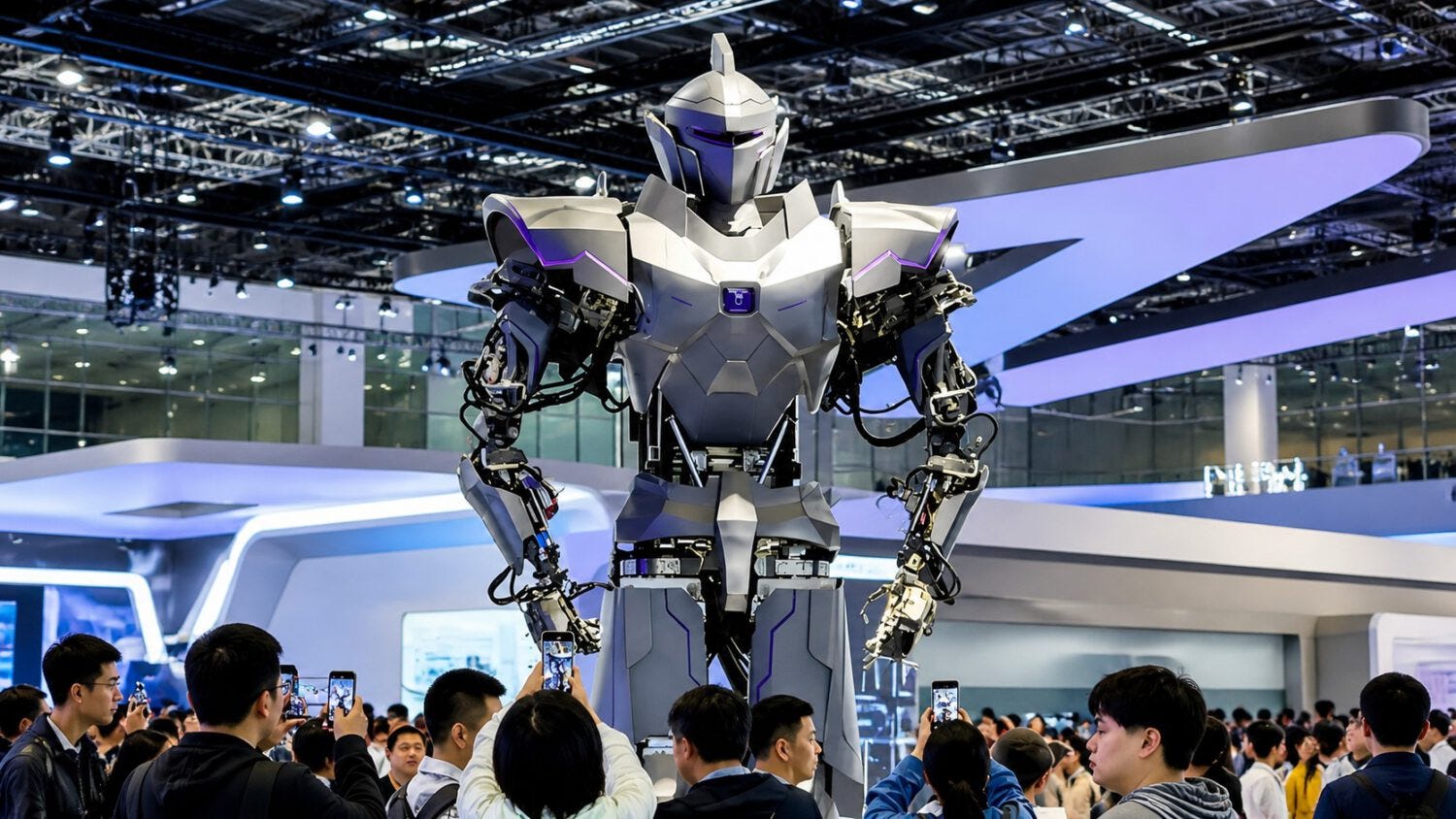
Neo1 (NeodraDynamics Robotics)
Across the East China Sea, NeodraDynamics Robotics has taken a more utilitarian approach with Neo1. Standing thirteen feet tall and weighing 1.2 tons, this hydraulic-electric hybrid was designed from the outset for heavy industrial work, disaster response, and operations in environments too dangerous for unprotected humans. Its proportions are more industrial than theatrical. The limbs are thick, the joints heavily reinforced, and the control systems prioritize stability and load capacity over graceful movement. Neo1 can operate in conditions that would defeat lighter machines, including scenarios involving radiation, structural collapse, or deep-sea pressure when properly outfitted. Where Archax invites spectators to dream, Neo1 is built to work in places where dreaming is a luxury.
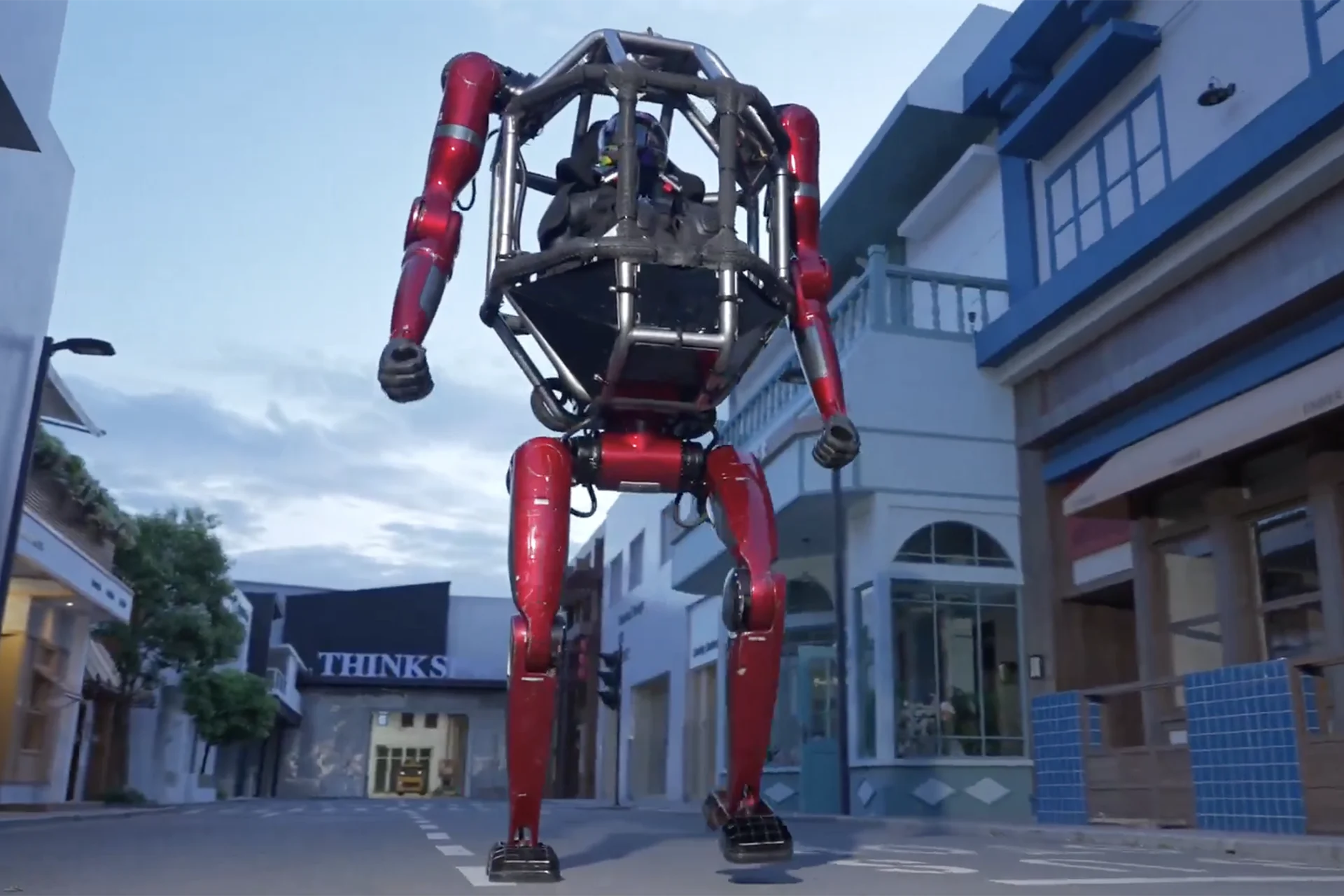
GD01 / GB-01 (Unitree Robotics)
Unitree Robotics, better known for its agile quadrupeds and humanoid research platforms, has also entered the manned mecha space with the GD01, sometimes referred to as the GB-01. This production-ready civilian machine weighs approximately five hundred kilograms and is designed to carry a human pilot. Unlike the larger Japanese and Chinese giants, the GD01 is compact enough to be considered almost practical. It provides the pilot with 360-degree camera views and autonomous balance assistance, reducing the cognitive load of simply staying upright. The machine occupies an interesting middle ground. It is large enough to feel like a mecha yet light enough that a single operator can manage it without a support team of engineers. Unitree’s decision to pursue a civilian market suggests that the company sees potential beyond pure spectacle.
Kuratas (Suidobashi Heavy Industry)
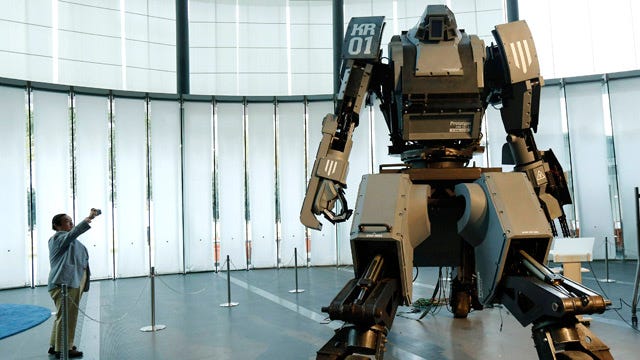
The modern mecha movement did not begin in the 2020s. In 2012, Suidobashi Heavy Industry unveiled Kuratas, a pioneering thirteen-foot, four-ton piloted machine that captured global attention. Kuratas was crude by today’s standards. Its movements were limited, its controls were demanding, and its practical applications were essentially nonexistent. Yet it proved that a privately funded team could build a walking bipedal vehicle large enough to carry a person and still keep it upright. Kuratas became a cultural landmark more than a functional tool. It appeared at exhibitions, inspired countless imitators, and established Japan as the spiritual home of real-world mecha development. Many of the machines that followed owe a conceptual debt to that first public demonstration.
Method-2 (Hankook Mirae Technology)
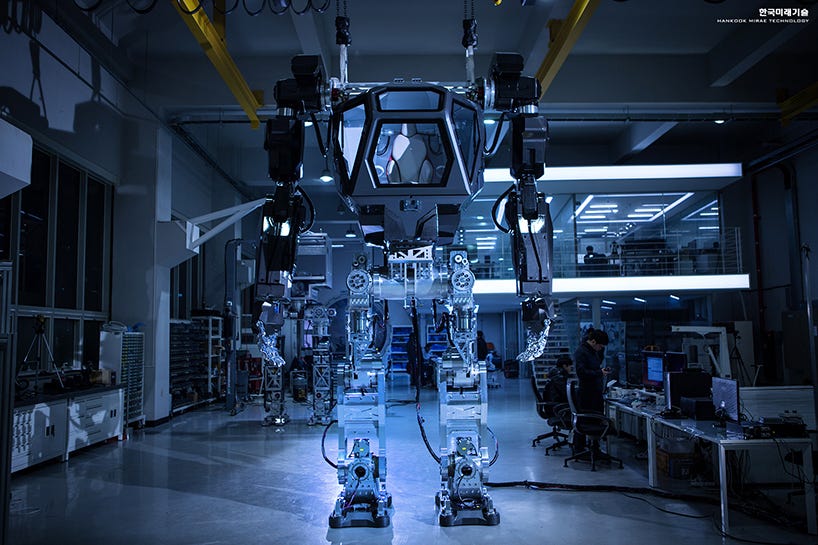
South Korea entered the field with Method-2, developed by Hankook Mirae Technology. Standing 13.5 feet tall, this bipedal prototype was presented as a serious attempt at a walking industrial platform. Method-2’s design emphasized structural rigidity and the challenges of dynamic balance at large scale. Like most early mecha, it moved slowly and required significant power, but its existence demonstrated that the engineering problems of bipedal locomotion at human-plus scale were being tackled in multiple countries simultaneously. The project highlighted both the ambition and the limitations of the form. Maintaining balance while walking requires constant micro-adjustments that become exponentially more difficult as mass and height increase.
Prosthesis (Exosapien Technologies)
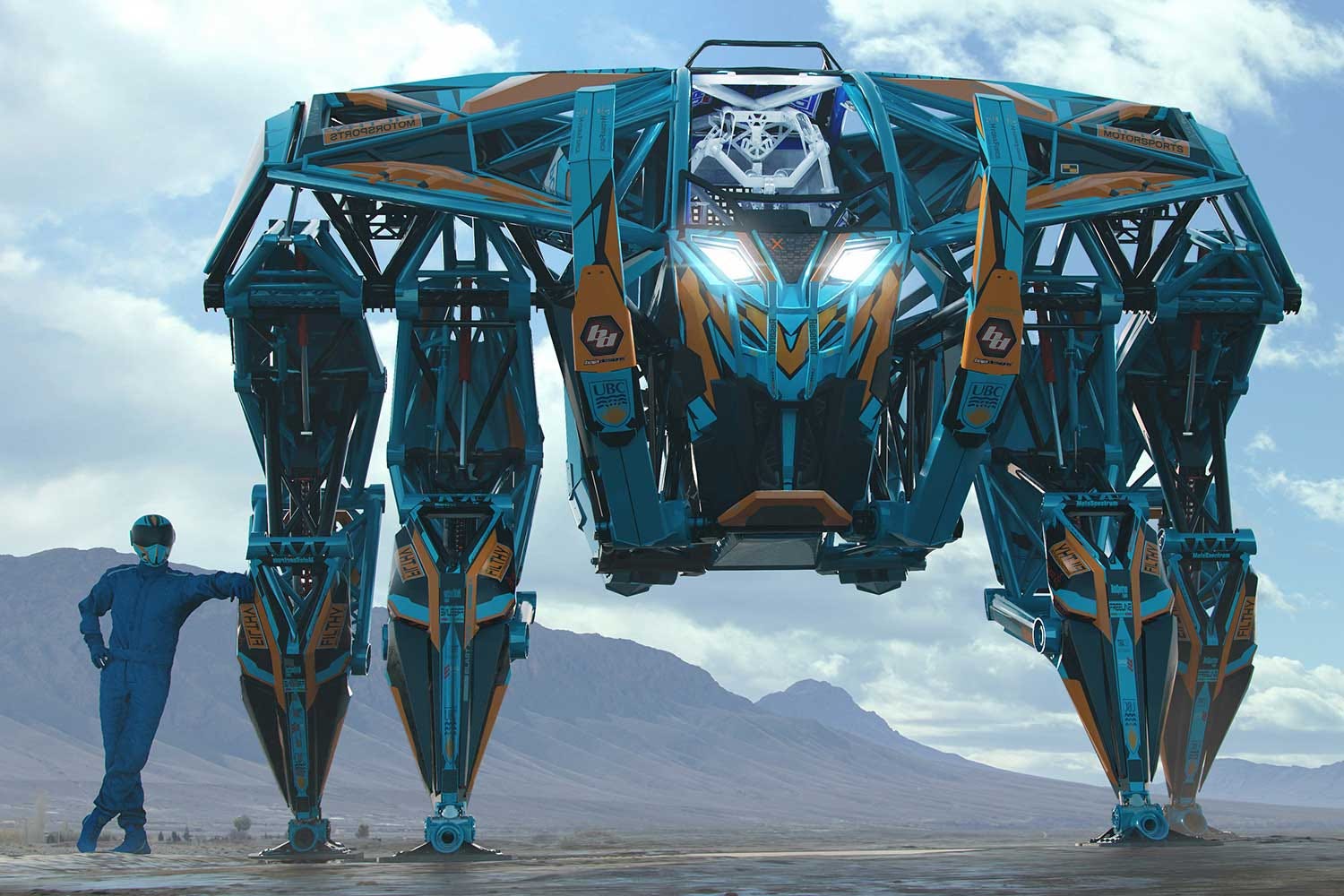
In the United States, Exosapien Technologies has pursued a different path with Prosthesis, a large-scale all-terrain mechanical exoskeleton intended for pilot training and heavy leverage operations. Prosthesis is less concerned with pure bipedal walking elegance and more focused on amplifying human strength across difficult terrain. Its design philosophy treats the machine as an extension of the pilot’s body rather than a fully independent robot that happens to carry a person. This approach has practical advantages. By keeping the human more closely integrated with the machine’s movements, the control problem becomes somewhat more intuitive, even if the resulting form is less visually dramatic than the fully enclosed cockpits of Archax or Kuratas.
Taken together, these machines reveal a consistent pattern. Real mecha are still extremely expensive, power-hungry, and limited in speed and endurance. Walking on two legs at multi-ton scale remains one of the harder problems in robotics because the energy cost of balance and locomotion is high, and the consequences of a fall are severe. Most of these platforms spend more time standing, turning, or demonstrating controlled steps than they do covering meaningful distances. Their true value lies less in immediate commercial utility and more in the hard-won engineering knowledge they generate. Every joint design, every balance algorithm, and every pilot interface refined on these machines feeds back into smaller humanoid robots, industrial exoskeletons, and future systems that may one day prove more practical. The current generation of real mecha occupies a peculiar cultural space. They are too large and costly for widespread use, yet too impressive to dismiss as mere toys. They exist because a small number of engineers and financiers decided that the question of whether such machines could be built was more important than whether they could immediately turn a profit. In doing so, they have given the world a handful of genuine walking giants that can be photographed, filmed, and in rare cases even piloted.