

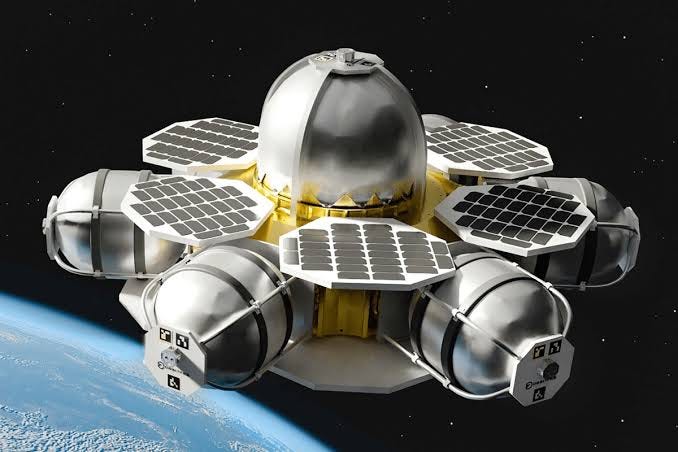
Propellant depots and in-space refueling are moving from concept to demonstration, promising longer missions and more flexible spacecraft

Rockets leave Earth carrying every kilogram of propellant they will need for the entire journey. That constraint has shaped spaceflight for decades. A growing set of technologies aims to change it by placing fuel depots in orbit and enabling spacecraft to refuel after launch. The result would be orbital “gas stations” that support longer missions, satellite life extension, and more ambitious exploration of the Moon and Mars.

Why Depots Matter

Launch vehicles are limited by the tyranny of the rocket equation: most of a rocket’s mass is propellant. Once in orbit, a spacecraft that can top up its tanks gains extra delta-v—the ability to change velocity—for maneuvering, raising orbits, or heading farther into the Solar System. Refueling also allows satellites designed for servicing to stay operational longer instead of becoming debris.

For lunar and Mars architectures the payoff is even larger. NASA’s Artemis plans and commercial lander concepts rely on multiple tanker flights to fill a vehicle or depot in low Earth orbit before a crew or cargo ship departs for the Moon. Without in-space refueling, the mass that can be delivered beyond Earth drops sharply.

The Technical Challenges

Cryogenic propellants such as liquid hydrogen and liquid oxygen are especially difficult. In microgravity they can boil off, settle unpredictably, and create thermal management problems. Engineers must develop zero-boil-off storage, reliable fluid transfer in weightlessness, and automated docking systems that connect and disconnect without leaks.

Non-cryogenic propellants such as hydrazine are simpler to handle and are the focus of several near-term military and commercial demonstrations. Standardized interfaces—essentially the orbital equivalent of a fuel nozzle—are another priority so that different companies’ vehicles can work together.

Progress in 2026

Demonstrations are accelerating. NASA has tested cryocoupler hardware designed to transfer super-cold propellants automatically. Commercial and government missions planned for 2026–2027 will attempt refueling of operational satellites in geostationary orbit using depots and shuttle vehicles. Companies including Orbit Fab, Astroscale, and others are flying or preparing propellant-transfer systems. SpaceX continues work on large-scale cryogenic transfer between Starship vehicles, a capability required for its lunar lander architecture.

Military interest is also high. The U.S. Space Force is funding orbital logistics experiments that treat fuel and spare parts as commodities that can be prepositioned and delivered on demand.

What Comes Next

If the demonstrations succeed, the next steps are routine commercial refueling services in low Earth orbit and geostationary orbit, followed by depots in cislunar space. These facilities would support satellite servicing, debris removal, and the higher energy demands of sustained lunar operations. Longer term, depots could become nodes in a broader logistics network that includes orbital transfer vehicles—space tugs that move cargo between orbits more efficiently than launching everything directly from Earth.

Challenges remain. Cost, reliability, regulatory frameworks, and the need for common standards will determine how quickly the market grows. Yet the direction is clear: spaceflight is shifting from single-use, fully fueled launches toward a model closer to terrestrial transportation, where vehicles refuel and continue their journeys. Orbital propellant depots are a central piece of that transition.