

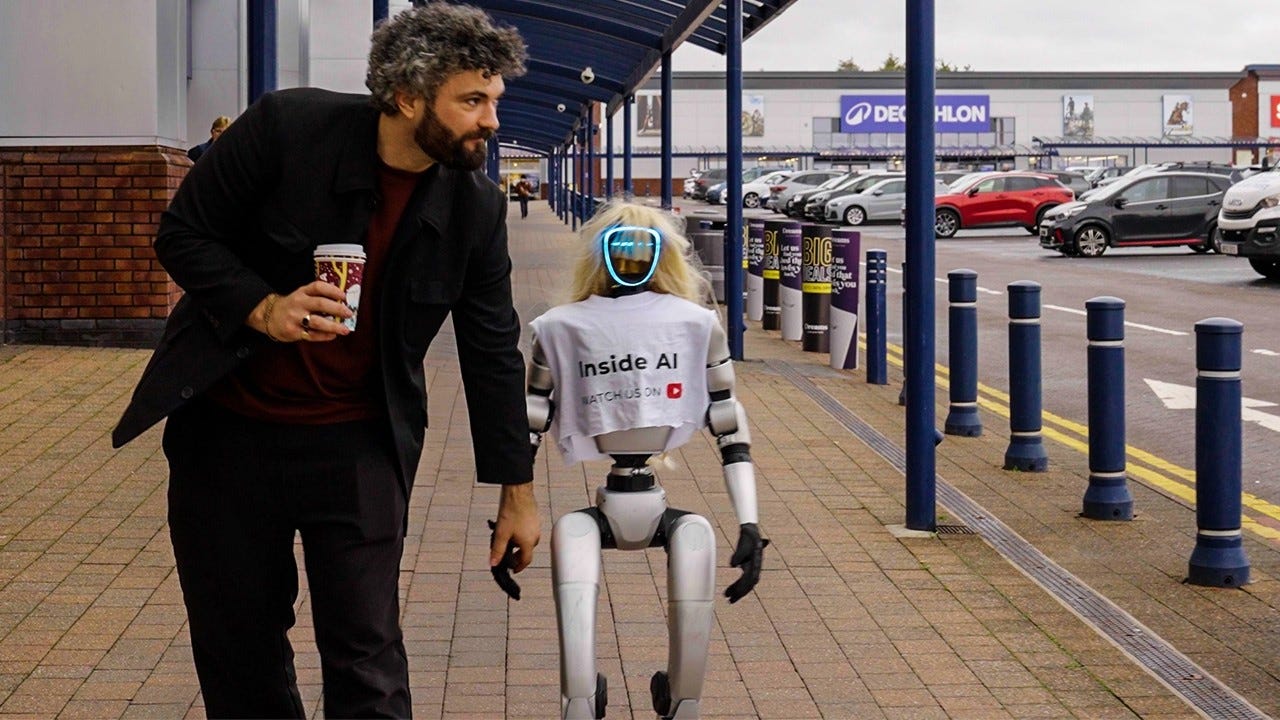
For several years, AI companions lived almost entirely on screens. Apps offered customizable chatbots that could role-play romance, remember personal details, and maintain ongoing conversations. Millions of users formed attachments to these digital partners. Consumer spending on romantic and NSFW companion apps has already reached hundreds of millions of dollars, with downloads in the tens of millions.

That software layer is now meeting hardware. Companies are attaching conversational AI to physical bodies—ranging from expressive robotic heads on silicone figures to more mobile humanoid platforms. The result is an early form of embodied AI companionship: machines designed not primarily for chores or industry, but for presence, conversation, and emotional interaction.

The Digital Foundation

The current wave began with large language models that made chat feel more natural and persistent. Apps allowed users to shape personality, appearance, and relationship style. Some platforms added voice, images, and long-term memory. Usage data shows significant engagement, particularly among younger adults, with both male and female users depending on the market and cultural context.

These systems remain limited. They have no physical presence, no shared space, and no real-world agency beyond the phone or computer. Loneliness, curiosity, and the desire for low-pressure interaction drive much of the adoption. Critics raise concerns about emotional dependency, privacy, and the substitution of human relationships. Supporters argue the technology can provide comfort, practice for social skills, or simply entertainment.

Adding a Body

Embodiment changes the experience. A physical form occupies the same room, can make eye contact through cameras, move its face, and in some cases gesture or roll on a base. Companies with roots in high-end silicone dolls have added motorized heads capable of dozens of facial expressions, lip sync, and head movement. The AI runs either in the cloud or, increasingly, on-device for lower latency and better privacy.

Products such as those from Realbotix pair realistic faces and bodies with companion-oriented AI. Prices currently range from tens of thousands of dollars for busts or partial systems to well over $100,000 for full configurations. Other firms in Asia and elsewhere are developing more affordable humanoid or semi-humanoid companions aimed at emotional support, elderly care, or general presence. Most current systems do not walk bipedally; mobility is often limited to wheeled bases or static posing.

The technical challenges are substantial. Facial motors must look natural rather than mechanical. Conversation latency and emotional responsiveness still lag behind pure software chatbots in many demonstrations. Battery life, reliability, maintenance, and cost remain barriers to mass adoption. Yet the direction is clear: the same AI that powers screen-based girlfriends and boyfriends is being given eyes, a face, and a physical footprint.

Market and Social Questions

Demand appears driven by several overlapping trends—rising single-person households, aging populations, reported increases in loneliness, and simple technological curiosity. Some products target romantic or intimate companionship; others emphasize platonic presence, caregiving, or entertainment. The line between these categories is not always sharp.

Regulators, ethicists, and the public are only beginning to grapple with the implications. Questions include data privacy (always-on microphones and cameras), the psychological effects of forming bonds with machines, consent and representation in design, and whether these systems will complement or displace human connection. Early commercial offerings are expensive and limited in capability, which currently restricts them to a small early-adopter group.

What Comes Next

Progress in humanoid robotics, cheaper actuators, better on-device AI, and more natural multimodal interaction will determine how quickly embodied companions move beyond niche status. Within a few years we are likely to see more expressive faces, improved mobility, longer battery life, and tighter integration between cloud and edge intelligence.

The shift from pure software AI girlfriends to physical robotic companions is not a sudden leap but a convergence. Language models supplied the conversational mind; robotics is now supplying a body. Whether these systems become common household presences or remain expensive curiosities will depend on cost, reliability, social acceptance, and how well they actually meet the human need for connection. The technology is advancing rapidly. The harder questions about its place in daily life are only starting to be asked.