

In the dusty expanses of a Texas rocket test site just outside Waco, the long-promised future of personal transportation finally performed a midair pirouette that no amount of marketing hype could have staged better. Tesla’s second-generation Roadster, the car Elon Musk once promised would make every other vehicle feel like a steam locomotive, rose into the air on jets of compressed air borrowed from SpaceX, flipped like an Olympic gymnast, and settled back onto pavement as if the laws of gravity had politely stepped aside. The demonstration, held in mid-October 2026, was equal parts carnival and engineering thesis. One moment the sleek, cyber-edged two-seater clung upside down to a towering inverted ramp, held there by a fan-driven suction system capable of generating two Gs of downward force. The next, thrusters fired, the car launched, spun, and landed with theatrical precision over a lineup of its corporate siblings, including a Cybertruck and a Semi. Musk, never one for understatement, declared that flying cars were real and that this machine took the fun meter to eleven out of ten, while cheerfully admitting it was not exactly optimized for safety.
The magic comes from cold-gas thrusters, the same attitude-control technology SpaceX uses on its rockets, adapted for dense atmosphere. High-pressure carbon-overwrapped tanks store roughly 250 kilograms of compressed air, feeding as many as ten nozzles arrayed around the chassis. In the base Performance trim the car relies on its electric motors and active aerodynamics alone, promising more than 300 miles of range and acceleration that already borders on the absurd. The Thrust version adds rear-mounted thrusters that shove the machine from zero to sixty miles per hour in under a second. The top Rocket configuration, limited to a single seat and available only by invitation, surrounds the vehicle with a full perimeter of nozzles. These allow brief, controlled hops, lateral shifts, and rotational gymnastics. Production is scheduled for 2028. Reservations are open now, with a sizable deposit required even for the non-flying versions, while the true aerial edition remains exclusive and explicitly not approved for public roads. It is less a daily driver than a high-performance toy that can occasionally leave the ground, a rocket ship disguised as a sports car.
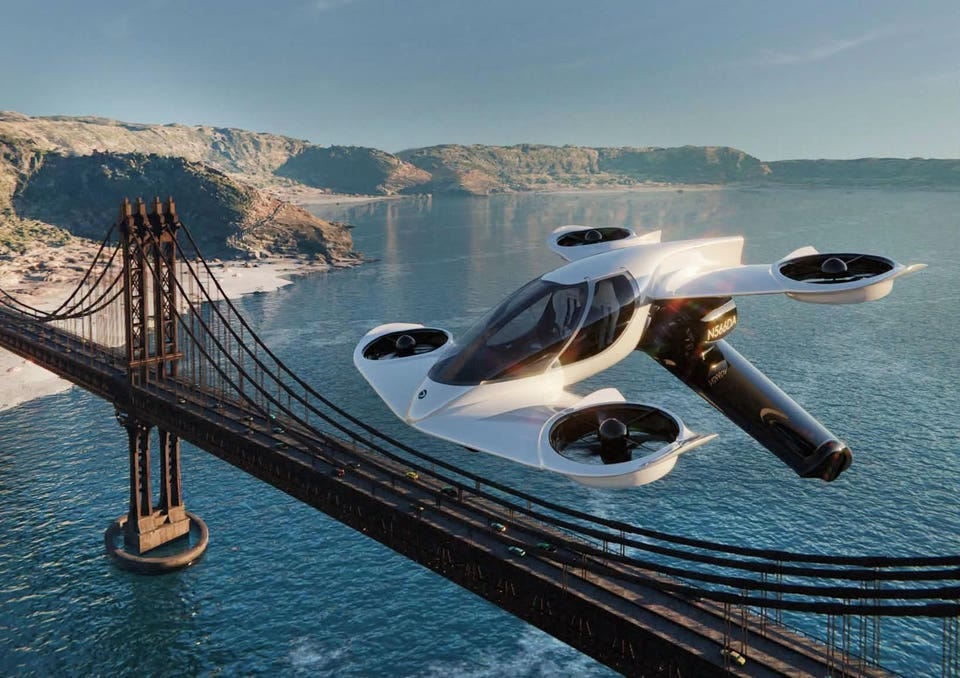
Yet Tesla’s showstopping debut is only the latest chapter in a story that stretches back more than a century, filled with inventors who refused to accept that cars and airplanes must remain separate species. The dream of a vehicle that could drive to the airfield, unfold its wings, and take off has tempted engineers since the earliest days of powered flight. One of the most determined early efforts came from Molt Taylor, an American inventor who in the late 1940s created the Aerocar. Taylor’s machine looked like a conventional automobile with detachable wings and a pusher propeller. It could cruise at highway speeds on the ground and then, after a short conversion, fly at around 120 miles per hour. The Federal Aviation Administration eventually certified it, and a handful of examples were built. Plans for mass production never materialized; buyers proved scarce, regulators nervous, and the economics unforgiving. Still, the Aerocar remains a charming proof of concept that genuine dual-mode travel was possible decades before most people owned a personal computer.
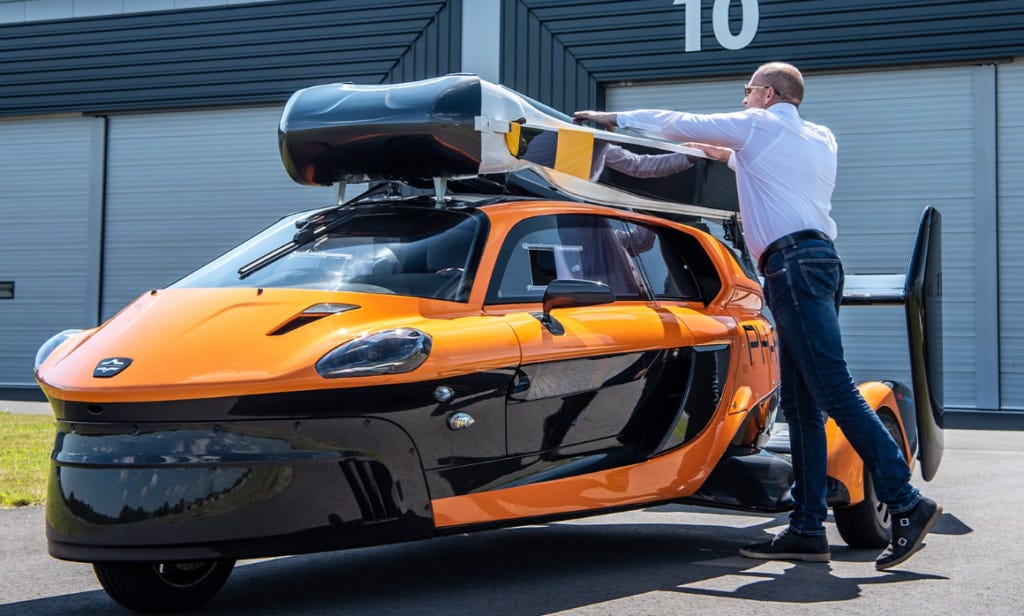
In more recent years the field has grown crowded and sophisticated. In the Netherlands, PAL-V has spent over a decade refining the Liberty, a three-wheeled gyroplane that folds its rotor and tail into a compact package for road travel. On pavement it behaves like a sporty motorcycle-car hybrid, capable of nearly 100 miles per hour. In the air the free-spinning rotor and propeller let it reach similar speeds with a flight range measured in hundreds of miles. Conversion takes only a few minutes. The company has moved through rigorous European and American certification processes and is preparing production in 2026, with deliveries expected thereafter. Prices start in the mid-to-high six figures depending on the edition. Owners will need both a driver’s license and a private pilot’s certificate, and takeoff still requires a short stretch of open ground rather than a vertical leap from a parking space. Nevertheless, the Liberty stands as one of the first machines that can be ordered, driven home, and then flown with relative practicality.
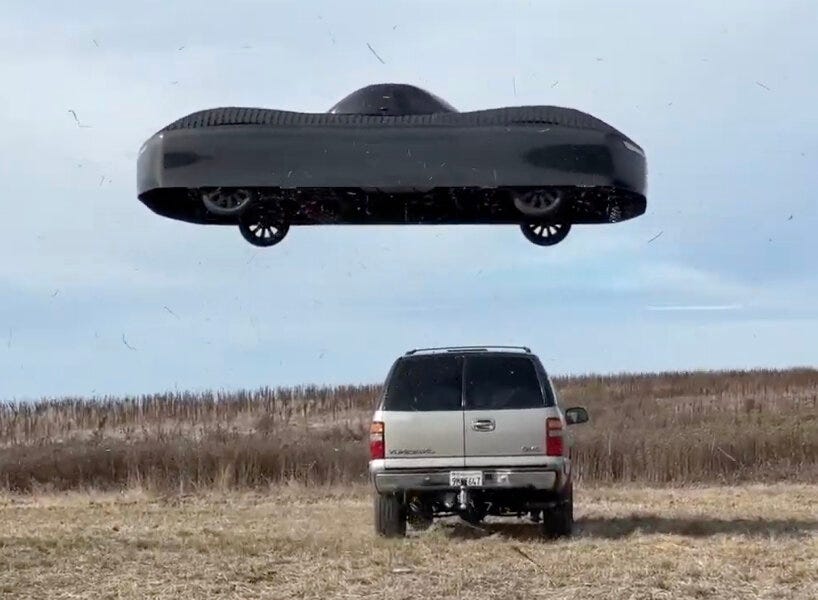
Across the Atlantic in California, Alef Aeronautics has taken a different and more radical approach. Founded by Jim Dukhovny, the company set out to build what it calls the first true flying car under the traditional definition: a vehicle that drives on public roads and takes off vertically like a multicopter. The Model A is fully electric, with a body that looks more like a futuristic sedan than an aircraft. On the ground it is limited to low speeds appropriate for an ultralight vehicle, offering roughly 200 miles of driving range. In the air eight rotors lift it vertically and propel it for about 110 miles at around 100 miles per hour. In 2023 it received a special airworthiness certificate from the FAA, a significant regulatory milestone. Hand assembly of early units began in late 2025, and limited customer deliveries are expected through 2026. The price sits near 300,000 dollars, and thousands of preorders have already been placed. It is not yet a mass-market appliance, but it comes closer than most predecessors to the Jetsons ideal of simply rising above traffic.
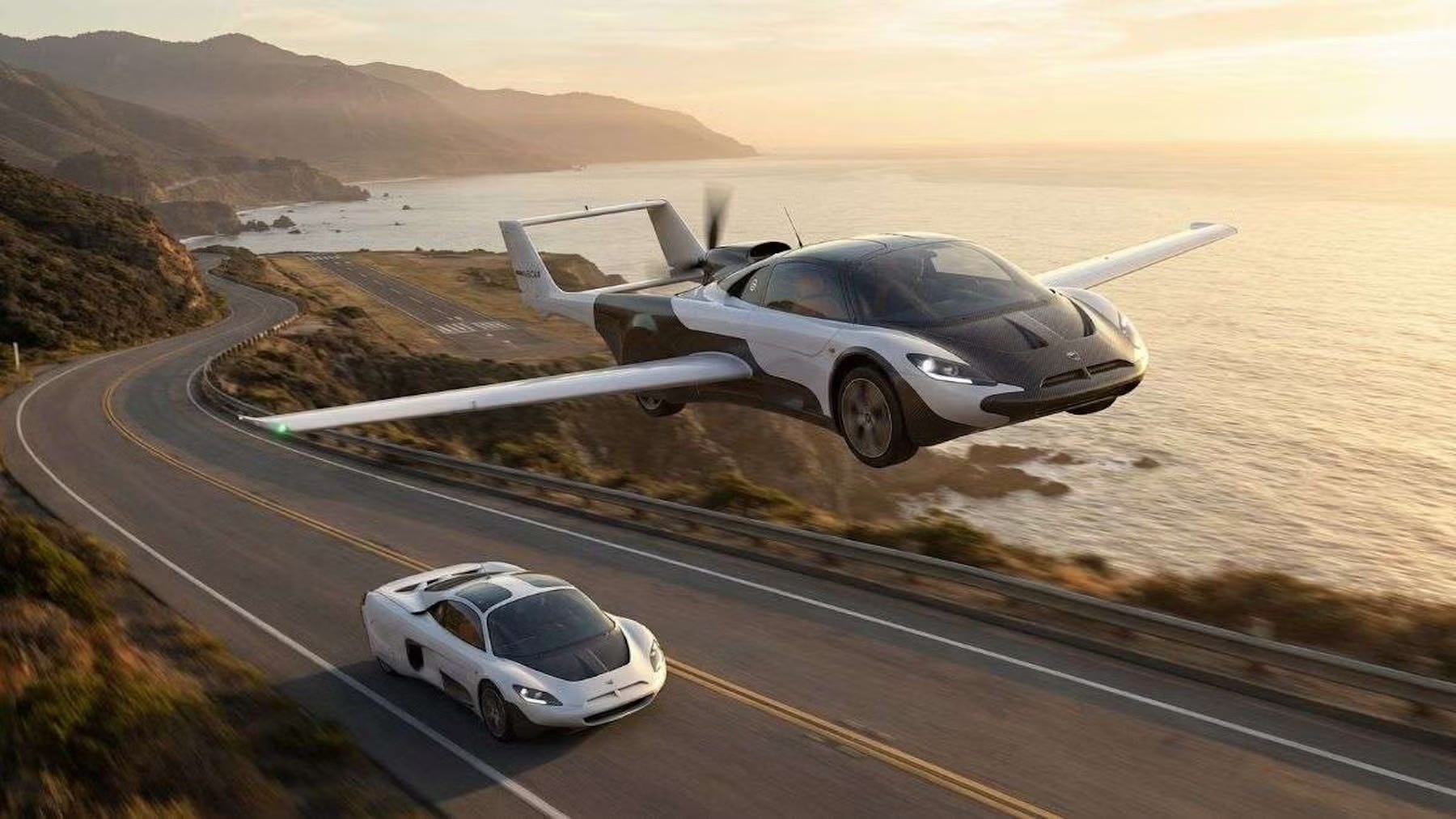
Other contenders have added their own flourishes. In Slovakia, Klein Vision developed the AirCar, a sleek coupe whose wings fold out in under three minutes, transforming it into a conventional fixed-wing aircraft powered by a piston engine. Test flights have accumulated hundreds of hours, and European certification has progressed steadily. The machine can cruise at highway speeds on the road and fly at more than 150 miles per hour for substantial distances. Its projected price places it firmly in the exclusive category, and it still requires a runway and a pilot’s license. Meanwhile, Chinese manufacturers such as XPeng, through its AeroHT division, have pursued modular designs in which a road-going “mothership” carries and charges a separate electric vertical-takeoff aircraft. These systems aim for practicality in dense urban environments, with production timelines pointing toward the late 2020s.
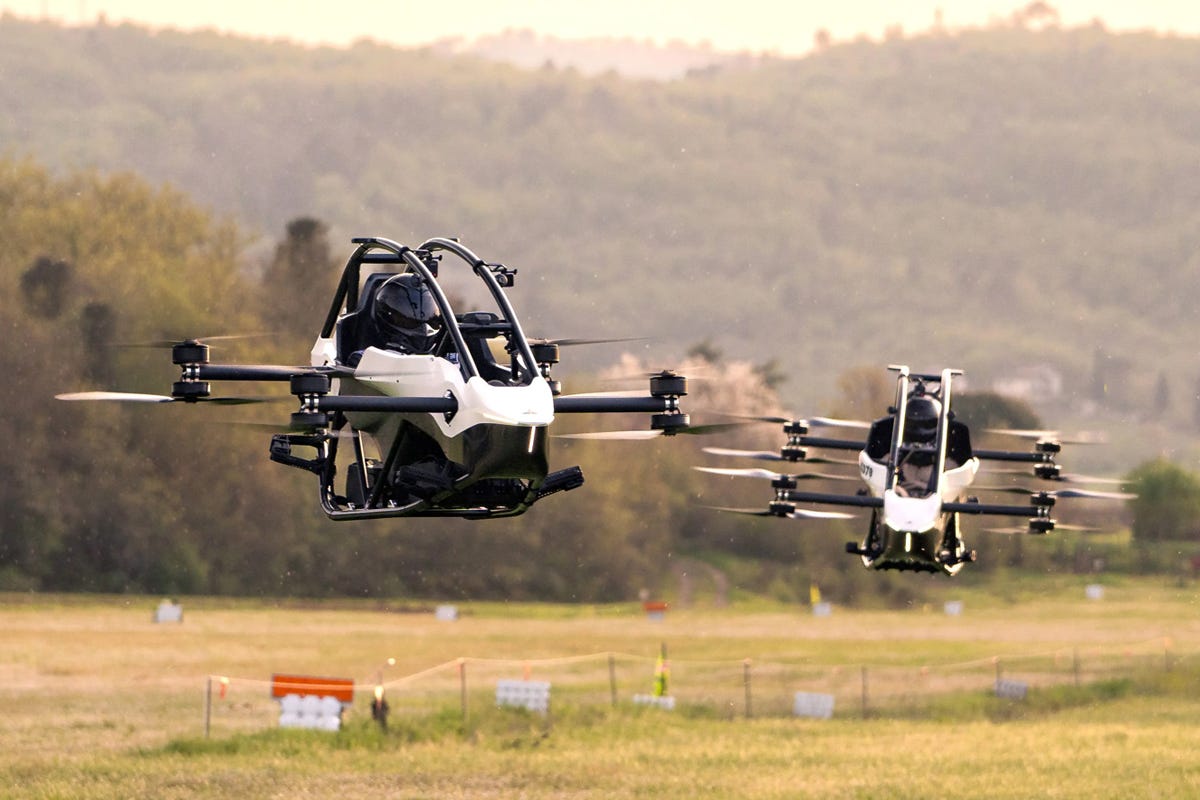
Further afield, single-seat personal aircraft like the Swedish Jetson ONE blur the line between flying car and ultralight multicopter. Available for purchase and already delivered to early customers, these machines can be flown after modest training and cost far less than full dual-mode vehicles. They lack the ability to drive on public roads in the conventional sense, yet they embody the same spirit of personal aerial freedom.
What unites these projects is both ambition and constraint. Battery energy density, noise regulations, airspace management, and the simple physics of lifting a heavy vehicle with people inside have all slowed progress. Early flying cars struggled with weight, complexity, and cost. Modern ones benefit from electric propulsion, advanced composites, and sophisticated flight controls, yet they still demand either specialized licenses, restricted operating environments, or both. Tesla’s Roadster sidesteps some of these issues by offering only brief, theatrical hops rather than sustained flight, while companies like Alef and PAL-V chase genuine dual-mode utility.
The entertainment value of the quest is undeniable. There is something deeply human about watching a machine designed for asphalt suddenly defy it, whether through a controlled barrel roll in Texas or a quiet vertical climb above a California test field. For decades the flying car served as cultural shorthand for promises that never quite arrived. Now prototypes are flying, orders are being taken, and production lines are starting to move. The Tesla Roadster may never become a common sight commuting above freeways, and most of its rivals will remain expensive toys for the adventurous few. Yet each successful flight chips away at the old joke that flying cars are always twenty years away. The road ahead still contains turbulence, regulatory headwinds, and plenty of engineering challenges. But for the first time in a long while, the sky no longer feels entirely out of reach.