

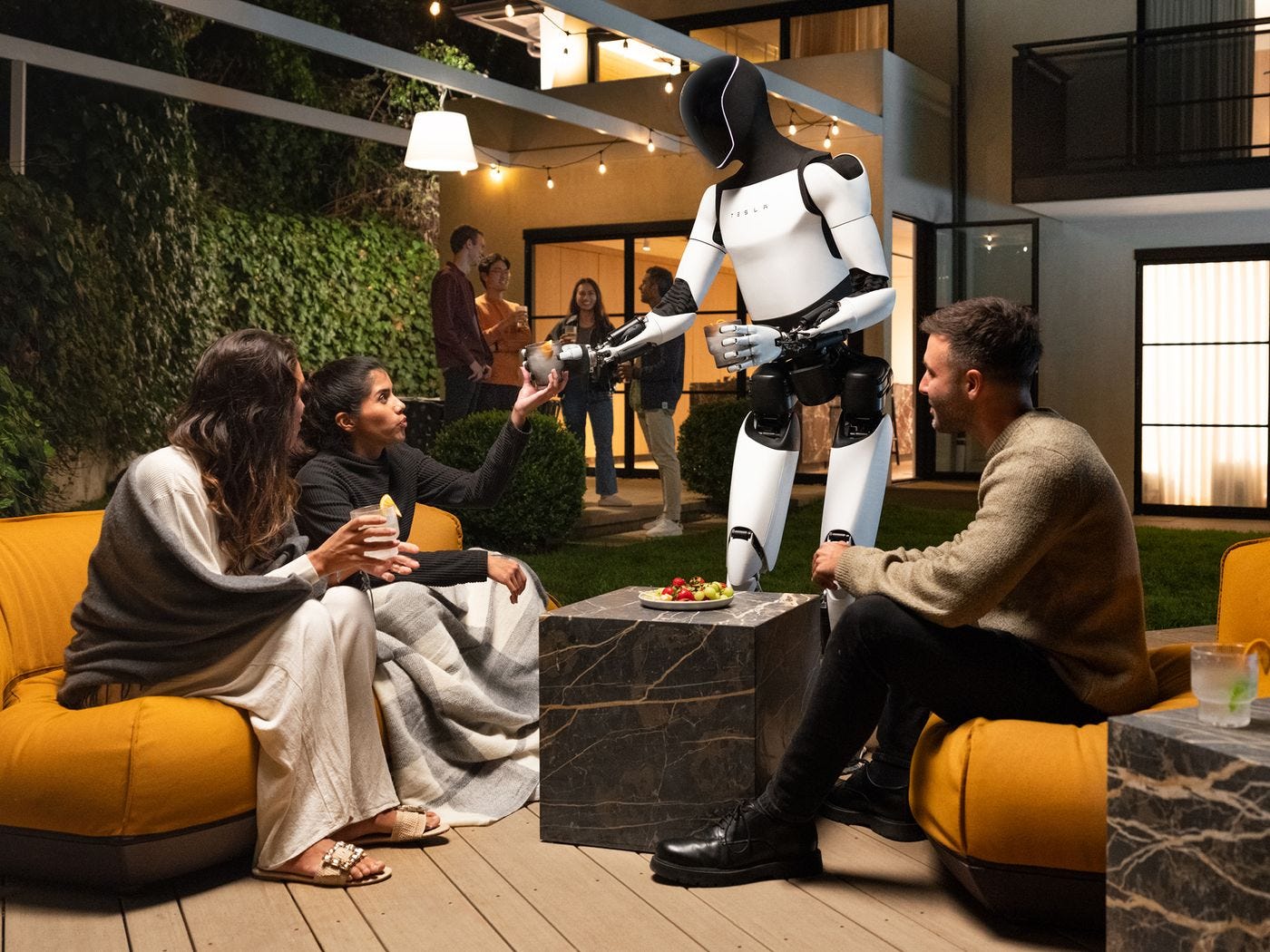
The line between science fiction and reality has completely collapsed. Humanoid robotics, once a concept confined to Hollywood cinema and academic laboratories, has taken center stage in a global race to redefine the future of physical labor. At the epicenter of this tectonic shift is a machine originally introduced to the world under a wave of skepticism, but one that now commands the attention of global manufacturing, artificial intelligence research, and the entire technology sector. The machine is the Tesla Optimus, a humanoid robot designed to transition from a specialized industrial tool to a universal home assistant capable of managing the everyday tasks of human life.
To understand the current state of this technology, one must look back at the history of robotic humanoids. For decades, the field was defined by rigid programming, hydraulics, and localized environments. Early attempts by academic institutions and engineering firms yielded machines that could walk carefully over predefined surfaces, yet they remained deeply unsuited for the chaos of the unstructured real world. The traditional approach treated robotics purely as a hardware problem, building complex mechanical shells that ultimately lacked the cognitive flexibility to adapt when an object moved an inch out of its expected place.
The vision articulated by Elon Musk fundamentally inverted this paradigm. When Tesla first announced its humanoid project, it did not approach the challenge from a legacy robotics background. Instead, the company recognized that its electric cars were already, in essence, autonomous robots with wheels. By leveraging the immense neural network infrastructure, computer vision foundation, and custom inference hardware developed for Full Self-Driving vehicles, Tesla possessed a unique foundation to build an embodied artificial intelligence that could navigate the physical world using vision alone. Musk’s ultimate ambition stretches far beyond factory automation. He has predicted a future populated by five billion humanoid robots, envisioning an economy of abundance where machines handle boring, repetitive, or hazardous tasks, allowing humanity to redefine the nature of productivity itself.
The evolutionary journey from conceptual drawings to actual machinery has been defined by rapid prototyping, intense engineering stumbles, and remarkable technological leaps. The first generation of the Tesla Bot, unveiled as a prototype walking cautiously on a stage, was a fragile proof of concept. It faced significant challenges, including balancing issues, high power consumption, and hands that lacked the dexterity required for useful work. Hardware constraints and software training gaps meant early iterations could do little more than wave or perform rudimentary tasks under strictly controlled conditions.
The transition to the second generation brought measurable structural refinements. The machine shed significant weight, increased its walking speed, and gained drastically improved balance. Most importantly, it featured custom-designed actuators and an improved sensory architecture that allowed the robot to handle fragile objects, such as eggs, without breaking them. Yet, despite these upgrades, the machine remained a research platform rather than a scalable product.
The current frontier is defined by the latest third-generation advancements, built specifically with volume production in mind. This model introduces an entirely re-engineered biomimetic tendon-driven hand architecture with twenty-two degrees of freedom and an abundance of integrated tactile sensors. Powered by the new local processing capabilities of the company’s next-generation silicon chips, the robot is designed to remain intelligent and functional even if it temporarily loses its network or cellular connection. To clear a path for this automated future, manufacturing lines at the Fremont facility previously dedicated to legacy luxury electric vehicles have been dismantled to make way for dedicated robot production.
This aggressive scaling occurs against a backdrop of fierce global competition. Legacy players such as Boston Dynamics have moved away from hydraulics to pioneer highly capable electric humanoid designs, securing partnerships to deploy their systems into advanced automotive factories. At the same time, agile competitors like Figure AI have successfully run pilot programs inside major industrial facilities, while Chinese developers such as Unitree are aggressively lowering hardware costs through rapid manufacturing cycles.
Despite the intense momentum, Tesla has not been immune to release delays and public skepticism. Timelines for the formal public unveiling and consumer availability of the third-generation platform have repeatedly shifted as engineers grapple with the agonizingly complex realities of hardware scaling, supply chain validation, and the need to protect highly confidential design elements from competitive replication. Initial timelines that promised massive consumer availability have adjusted into a more calculated, long-term rollout strategy.
The current roadmap outlines a multi-stage deployment phase. Small-scale production is focused on internal validation, utilizing the robots within the company’s own gigafactories to perform basic tasks and collect the vast amounts of real-world training data required to refine their behavior. High-volume production pipelines are being engineered toward a goal of massive annual capacities, with commercial sales to third-party industries and the broader consumer public targeted for the coming years. Whether this timeline encounters further delays or accelerates into the market, the foundational shift is undeniable. Humanoid robots are moving out of the realm of speculation and onto the factory floors and streets of the real world.