

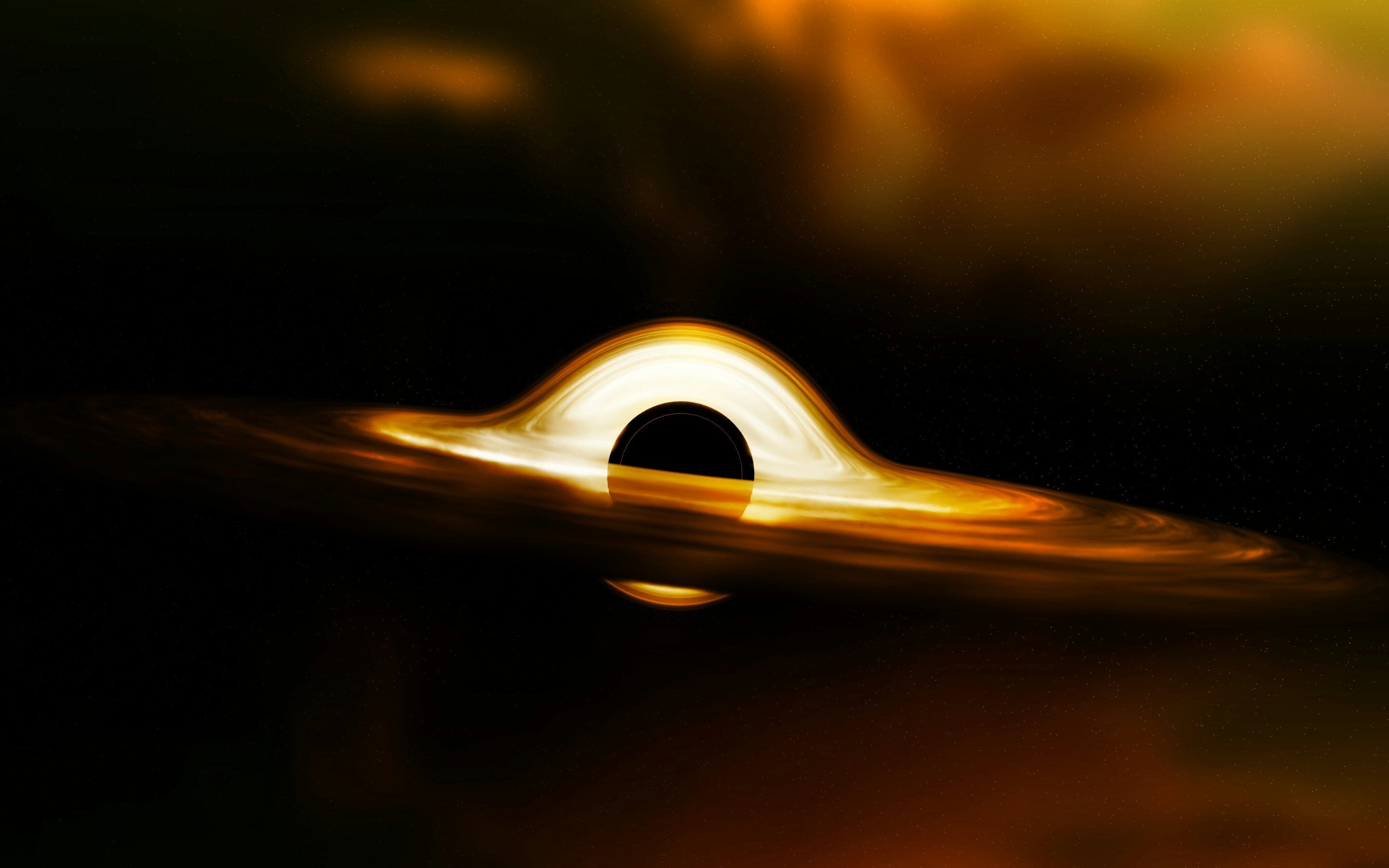
When astronomers observe a black hole, they are trained to see an absolute boundary: the event horizon, a point of no return where gravity becomes so intense that not even light can escape. For decades, classical general relativity has treated this threshold as a mathematically smooth, featureless sheet of pure spacetime. However, a profound crisis at the intersection of quantum mechanics and gravitational physics has forced a radical reimagining of these cosmic abysses. According to string theory and quantum gravity models, the event horizon is not an empty void, but a highly dense, microscopic membrane of quantum structures colloquially referred to as a fuzzball. While physicists have spent years debating the mathematical existence of this boundary to solve the famous black hole information paradox, a cutting-edge discipline known as quantum horizon telemetry is emerging, treating these horizons not just as anomalies to be studied, but as giant, passive hard drives that have recorded the history of the universe.
The mechanism driving this new science relies on the immense cosmic collisions of binary black holes. When two of these titanic objects spiral into one another and merge, they release an incredible burst of gravitational waves that ripple across the fabric of space like sound waves through air. If a black hole were as smooth as classical physics dictates, this gravitational wave signal would abruptly drop to zero after the merger, a process known as ringdown. But if the event horizon is actually a textured, quantum fuzzball membrane, it acts as a partial mirror. A fraction of the gravitational waves generated during the collision will bounce inward, trap themselves between the core and the membrane, and then reflect back out into deep space. These faint, delayed pulses are known as quantum horizon echoes, and they serve as a natural cosmic sonar system echoing directly from the edge of reality.
Hunting for these phantom signals requires an unprecedented scale of astronomical engineering, moving far beyond traditional light-based telescopes. While terrestrial networks like the Laser Interferometer Gravitational-wave Observatory have spent a decade logging high-frequency black hole collisions, ground-based instruments are physically too small and plagued by Earth’s seismic noise to capture the ultra-low-frequency vibrations of a quantum echo. To bypass this barrier, scientists are designing space-based laser interferometers, such as the Laser Interferometer Space Antenna. This mission, alongside collaborative next-generation frameworks like the Einstein Telescope synergy project, will deploy constellations of trailing spacecraft separated by millions of kilometers in a flawless triangular orbit. By shooting ultra-stable laser beams across millions of miles of empty space, these orbital arrays can measure fluctuations smaller than the width of an atom, operating as an ultra-sensitive stethoscope tuned explicitly to hear the subtle, rhythmic echoes bouncing off the quantum boundaries of distant supermassive black holes.
By capturing and analyzing these microscopic vibrations, quantum horizon telemetry transforms an invisible black hole into an accessible archaeological archive. Because gravitational waves pass through solid matter, stars, and dust clouds completely unhindered, the echoes reflecting off the fuzzball membrane carry the pristine structural imprints of everything the black hole has ever consumed over billions of years. The quantum texture of the horizon changes subtly every time a star, a planet, or a cloud of dark matter crosses the threshold, leaving a permanent holographic signature etched into the fuzzball’s surface. Telemetry instruments can decode the precise frequency shifts in the gravitational echoes to reconstruct a sequential, historical log of the black hole’s feeding habits, effectively mapping the deep past of its host galaxy without ever needing to peer through obscuring interstellar dust.
If applied to Sagittarius A*, the supermassive black hole at the center of the Milky Way, a reconstructed data log would expose a chronological, high-fidelity autopsy of our own galaxy’s violent youth. The coded echoes would reveal the exact masses, trajectories, and arrival times of primeval satellite galaxies that the Milky Way devoured billions of years ago, pinpointing the moment our galactic home transitioned from a chaotic cluster of infant stars into a mature spiral. Every shredded ancient solar system and swallowed dark matter stream would appear as a distinct timestamp in the telemetry data, providing astronomers with an unalterable narrative of the titanic collisions that shaped our local cosmic neighborhood.
Ultimately, this technology proves that the dark spaces we once thought were empty abysses are actually the most sophisticated, non-volatile data storage networks in existence, quietly broadcasting the forgotten biography of the cosmos to anyone listening closely enough to the silence. As these orbital laser arrays begin gathering cleaner data from distant galactic cores, quantum horizon telemetry is drawing an entirely new map of the universe’s interior history, showing that the dead monuments of gravity are actually the ultimate keepers of our cosmic genesis.