

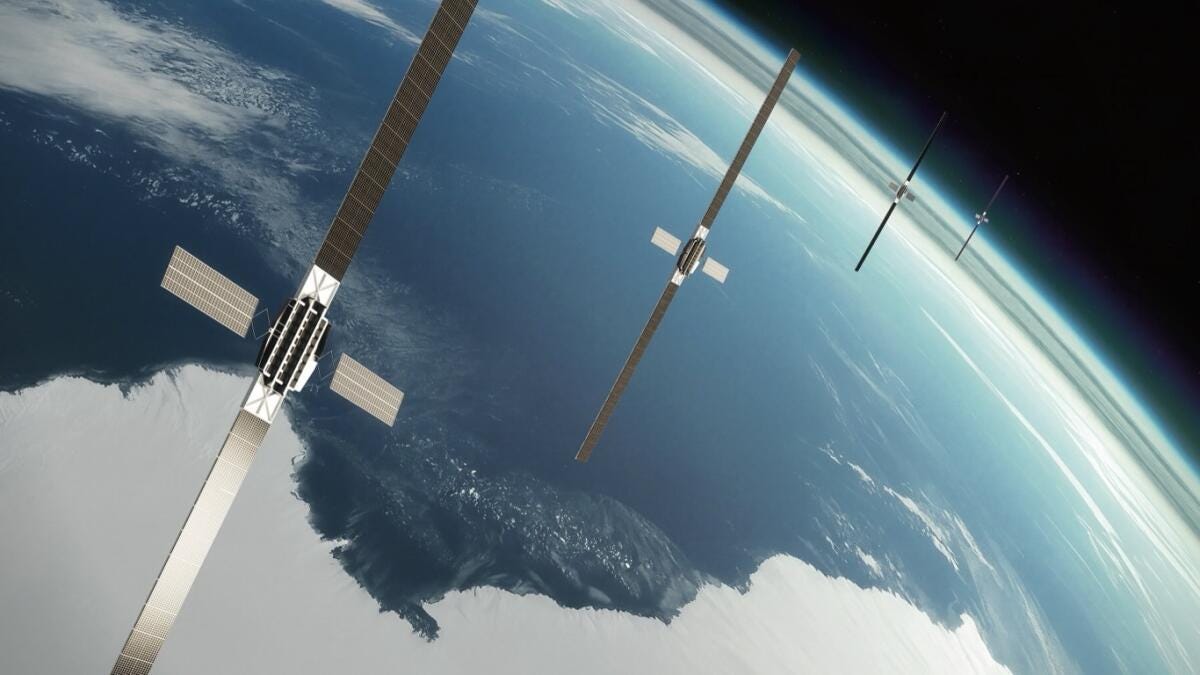
The concept of orbital data centres represents a monumental shift in how humanity processes information, transitioning from a far-fetched science fiction premise into a highly competitive engineering reality. For decades, the history of computing was tethered strictly to the ground, with early mainframe systems giving way to massive, planet-wide networks of terrestrial server farms. However, as the global demand for artificial intelligence, large language models, and real-time big data analytics skyrockets, Earth-based infrastructure is rapidly approaching a hard energy wall.
Terrestrial data hubs consume staggering amounts of land and electricity, stretching power grids to their absolute breaking point and requiring billions of litres of water just to keep the server racks from overheating. In response to these intensifying bottlenecks, visionary engineers and aerospace architects began looking upward, realising that the harsh environment of space could actually flip the computing equation by offering an endless supply of free solar power and a natural, unrestricted vacuum for radiative cooling.
Current progress in this emerging industry is accelerating rapidly, moving past conceptual white papers into active, in-orbit hardware testing and major regulatory filings. Aerospace teams are successfully deploying prototype payloads to low-Earth orbit, validating that delicate graphics processing units and high-performance server clusters can survive the severe vibrations of launch, extreme thermal cycling, and constant cosmic radiation.
A major catalyst driving this movement is the dramatic drop in space launch costs, spearheaded by heavy-lift reusable rocket programs like Starship, which makes putting mass into orbit economically viable for commercial tech infrastructure. Startups and established aerospace giants are simultaneously developing advanced laser communication networks capable of beaming terabits of data per second across the vacuum of space and directly down to ground stations, bypassing traditional undersea cables and terrestrial bottlenecks.
By decoupling high-performance computing from the physical constraints of our planetary grid, orbital servers open up revolutionary applications for everyday technology, most notably the widespread adoption of advanced personal AI robots. Running complex artificial intelligence models requires immense, heat-generating processing hardware that is too heavy, expensive, and energy-hungry to fit inside a consumer-grade household machine.
By offloading these demanding tasks to a constellation of space-based data hubs, personal robots can access near-instantaneous cloud computing for natural language processing, real-time spatial navigation, and complex decision-making. A domestic helper or automated drone could perform highly intelligent tasks smoothly, while its internal hardware remains lightweight, safe, and cool, drawing its collective brainpower directly from the stars.
The race to dominate this next tier of digital infrastructure has ignited a fierce geopolitical and corporate competition, led primarily by aggressive American enterprises and closely followed by deeply interested foreign competitors. In the United States, powerhouse players like SpaceX, Blue Origin, and heavily funded startups like Starcloud and Cowboy Space Corporation have already filed sweeping proposals with the Federal Communications Commission to launch massive constellations ranging from tens of thousands to over a million data-processing satellites. Concurrently, international rivals are moving quickly to establish their own sovereign footprints in the orbital cloud.
China’s aggressive push into orbital Supercomputing is driven not by land or energy shortages, but by a state-led mandate for strict digital sovereignty and processing speed. Because traditional methods result in less than ten percent of satellite data being effectively utilized due to ground-link bottlenecks, Chinese entities are launching networks like the Three-Body Computing Constellation to run multi-billion-parameter AI models directly in the cosmos.
By analyzing data at the orbital edge, they can bypass traditional undersea cables, ensure their data networks remain entirely independent of Western control, and provide real-time commercial and strategic intelligence.
Meanwhile, European nations are focusing heavily on establishing independent technological footprints to avoid being left behind by these two superpowers. Rather than launching massive commercial server fleets right away, the European Space Agency has focused on specialized edge-computing missions like Phi-sat-2, a miniature demonstration satellite that utilizes onboard artificial intelligence to filter out cloudy images and map disaster zones in real time.
Combined with broader European Union initiatives like the ASCEND feasibility study, these projects aim to secure Europe’s digital sovereignty, ensuring that the continent will not have to rely on foreign third-party actors to compute its own space-born data as the global economy expands into the stars.
Looking ahead toward future projections, the initial networks of low-Earth orbit servers are merely the stepping stones for a radical, long-term expansion of cosmic infrastructure. Industry experts predict that by the 2030s, computing hubs will begin moving beyond Earth’s immediate vicinity to support permanent lunar industries, deep-space exploration, and orbital manufacturing platforms. As these modular space networks continue to grow and intertwine, they could eventually scale into the ultimate progression of solar harvesting: a proto-Dyson Swarm.
This theoretical mega-engineering concept involves deploying vast, coordinated arrays of satellite nodes entirely around the sun to capture its raw, unfiltered energy output. Transitioning from localized orbital data centres to a solar-encompassing Dyson structure would effectively transform humanity into a civilization capable of wielding the full energetic potential of our star, forever shifting the center of human intelligence from the terrestrial ground to a shining network among the stars.