

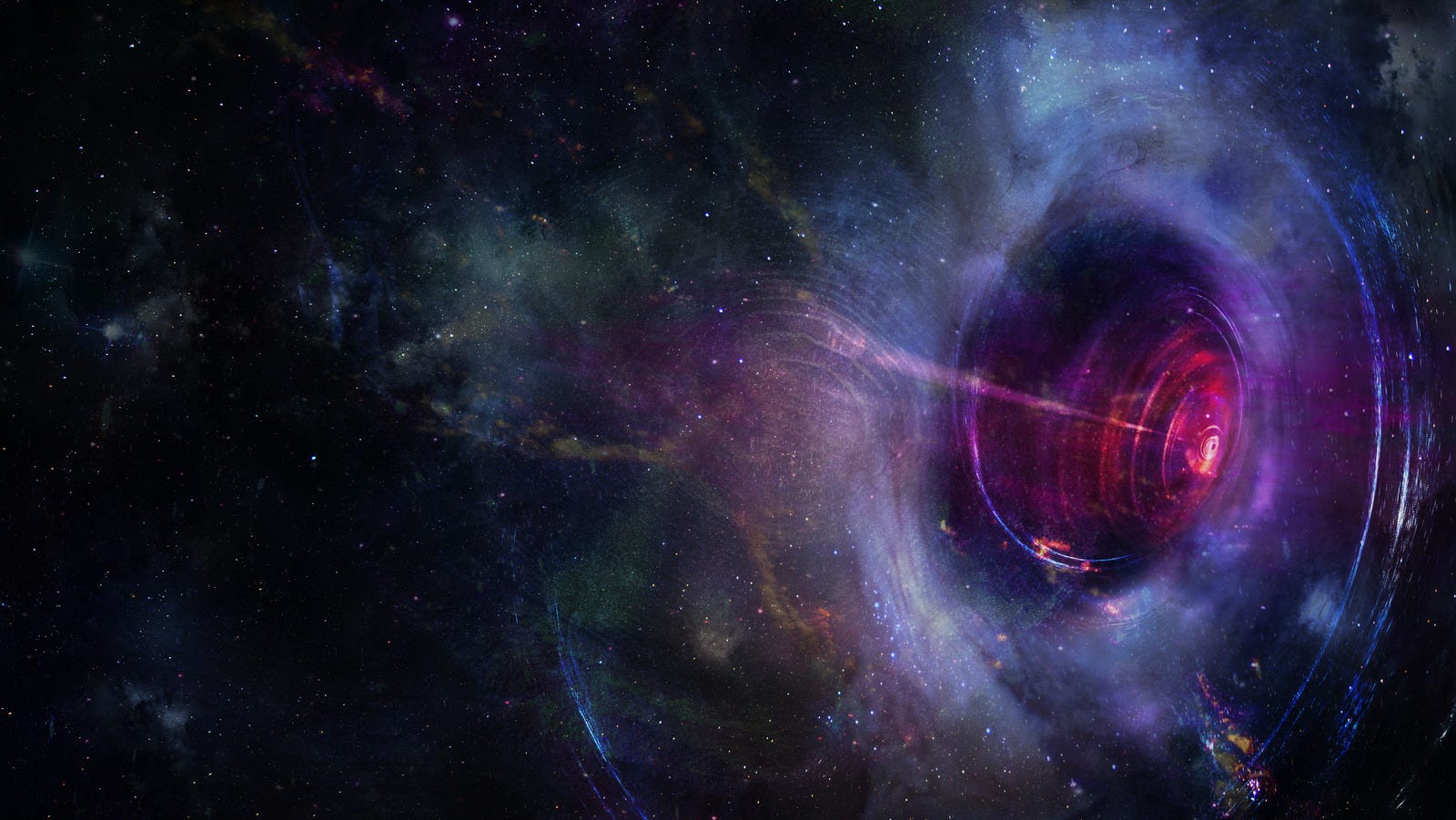
Across the vast expanse of the cosmos, the universe is typically viewed as a uniform fabric governed by a single, unchanging set of laws. In the lexicon of modern astrophysics, however, few concepts carry the chilling weight of false vacuum decay. It is the ultimate cosmic doomsday scenario, a hypothetical event where a localized subatomic trigger snaps our current universe into a more stable state of reality, initiating an unstoppable bubble that expands at the speed of light, altering the laws of physics and erasing matter as we know it. For decades, science communication has treated this phenomenon strictly as a future-tense apocalypse. Recently, cosmologists studying the turbulent dynamics of the early universe have shifted their gaze from what might happen to what has already occurred. This paradigm shift has birthed an entirely unpublicized discipline known as vacuum decay archaeology, which treats the universe not as a pristine canvas, but as a scarred battlefield holding the structural ruins of failed, ancient apocalypses.
The foundational premise of this new science lies in the chaotic fractions of a second following the Big Bang, an epoch when the fundamental forces of nature were separating and settling into their current values. During this hyper-dense, high-energy era, the universe underwent multiple phase transitions, during which premature bubbles of vacuum decay likely nucleated across the cosmos. While most popular articles assume a vacuum decay event is an all-or-nothing cataclysm that expands infinitely, advanced cosmological models show that the extreme gravitational pressures of the early universe could actually stall or collapse these bubbles before they consumed everything. When a bubble of a different physical reality expands into space and then collapses, it does not leave cleanly. It leaves behind an imprint: a localized, microscopic region of space where the quantum fields were permanently warped, forming what researchers call relic pockets of false vacua.
These relic pockets act as genuine archaeological sites frozen in the deep dark of the cosmos, preserving a fossilized record of an alternative laws-of-physics environment. Within these invisible boundaries, the Higgs field or the strong nuclear force may possess subtly altered values compared to the rest of the observable universe. To pass through one of these zones would not necessarily mean instant annihilation for an ordinary object; instead, it would manifest as an area of anomalous cosmic weather. A spacecraft or an asteroid entering a relic pocket might experience a microscopic, instantaneous shift in the mass of its electrons or the binding energy of its atomic nuclei. This would cause materials to temporarily warp, chemical reactions to abruptly alter their rates, or electronic systems to experience spontaneous, unexplainable current fluctuations because the local rules of reality are slightly out of alignment with the rest of creation.
Hunting for these invisible anomalies requires a new generation of hyper-sensitive observation tools that look far beyond ordinary light or heat. Because a relic pocket does not emit photons, vacuum decay archaeologists rely on cosmic interferometry arrays to map the universe’s ambient quantum fluctuations. These advanced instruments track the infinitesimal drag that fractured space exerts on passing high-energy particles, such as dark matter axions and primordial neutrinos. When these subatomic particles cross the threshold of a dead zone, their spin vectors and decay rates alter in a highly specific, mathematical pattern, leaving behind a faint, circular ring of anomalous radiation. By synchronizing orbital gamma-ray observatories with ground-based gravitational wave detectors, scientists can isolate these phantom rings, effectively using quantum telemetry to trace the exact perimeter of a collapsed bubble that vanished billions of years ago.
The existence of these mapped zones fundamentally rewrites the rules of deep-space exploration and automated navigation. For a future interstellar probe traveling at relativistic speeds, accidentally plunging into a pocket of fractured physics could instantly destabilize its onboard systems, altering the conductivity of its circuits or weakening the molecular bonds of its hull. Consequently, future navigation computers must be programmed with avoidance algorithms driven by quantum-sensor arrays. These sensors actively monitor the local fine-structure constant ahead of the ship, treating the vacuum of space like an oceanographer scanning for hidden sandbars or dangerous thermal currents. Rather than navigating simply around stars and asteroid belts, autonomous voyagers will have to chart complex, winding detours through the interstellar void to safely bypass these invisible regions of altered reality.
The ongoing mapping of these cosmic dead zones reveals a universe far more intricate and resilient than previously imagined. When an ancient vacuum bubble collapsed billions of years ago, the sudden compression of space released an intense, unique signature of primordial gravitational waves, leaving a permanent scar on the cosmic background. Rather than mapping stars or galaxies, vacuum decay archaeologists are drawing an entirely new atlas of the night sky, charting the faint, circular scars of ancient quantum conflicts. These hidden structures remind us that our hospitable universe is not a flawless masterpiece, but a survivor, scarred by the structural ruins of forgotten mini-apocalypses that failed to destroy the cosmos, forever drifting through the deep dark as a testament to the chaotic birth of reality.