

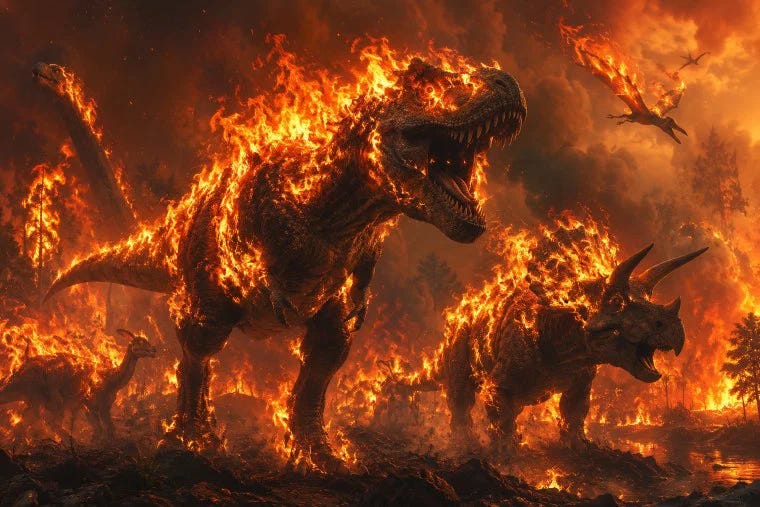
The catastrophic event that wiped out the non-avian dinosaurs has long been a subject of intense scientific scrutiny, with the prevailing theory focusing on a prolonged “impact winter” triggered by an asteroid strike. However, recent geological and atmospheric simulations have introduced a stark, harrowing dimension to this prehistoric apocalypse. New findings suggest that the immediate aftermath of the Chicxulub asteroid impact was characterized not just by freezing darkness, but by a global inferno where millions of organisms likely burned to death as the atmosphere itself became a weapon of mass destruction.
According to the latest research models, the initial impact ejected trillions of tons of vaporized rock and debris high into the upper atmosphere. As this material condensed into a torrential downpour of microscopic glass spherules, it fell back to Earth, generating intense friction with the air. This process transformed the atmosphere into a global radiator, heating the sky to temperatures resembling a commercial oven. Simultaneously, vast plumes of superheated ash and specialized insulating dust blanketed the globe. This thermal radiation was so intense that it acted as a global tinderbox; living trees and dense canopy forests did not merely catch fire—they spontaneously burst into flames under the sheer pressure of the ambient heat.
While the planet’s surface raged with unchecked wildfires, the combination of thick ash and insulating dust created a secondary, paralyzing effect by completely blocking out the sun. This dual-action crisis meant that while the world burned below, the skies above were plunged into total, suffocating darkness. The insulating nature of the dust trapped the immense thermal energy near the surface initially, accelerating the combustion of global flora, before eventually giving way to a drastic, rapid drop in temperature once the surface fuel was exhausted.
This updated timeline fundamentally alters our understanding of the Cretaceous-Paleogene extinction event. It suggests that megafauna like the dinosaurs faced a multi-tiered assault within the first few hours and days of the impact. The primary wave of extinction was driven by extreme thermal radiation and widespread firestorms rather than a slow starvation in the cold. For the creatures that survived the initial thermal blast, the subsequent darkness and collapse of the photosynthetic food chain sealed their fate, marking the end of a 165-million-year reign in a matter of days.