

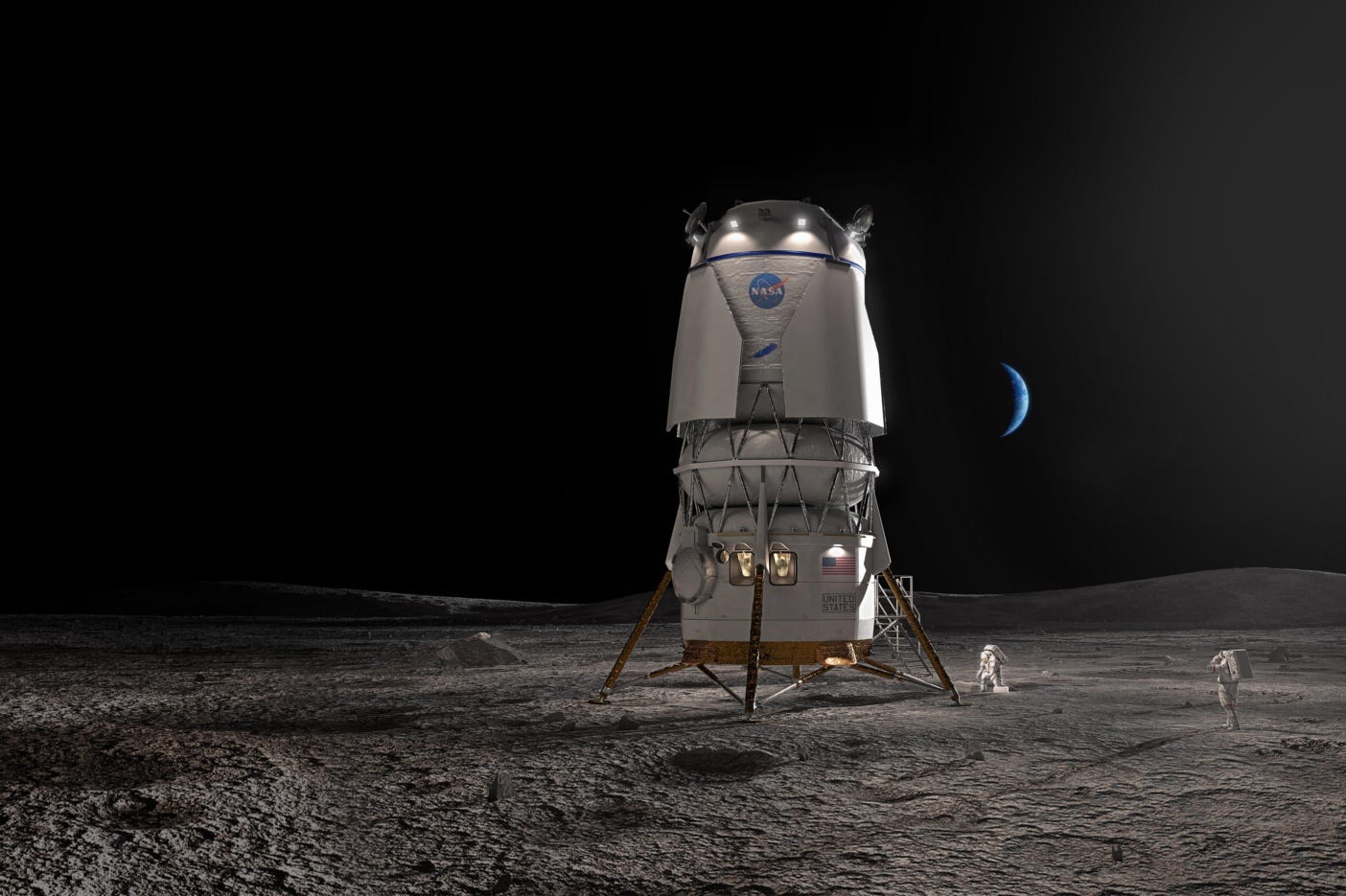
Cargo landers have emerged as the essential first movers in the commercial return to the Moon. While grand visions of permanent bases, resource extraction, and industrial activity capture headlines, the practical reality is more sequential. Nothing of lasting value can be established on the lunar surface until reliable, repeatable delivery of mass becomes routine. That delivery capability is being built and proven now by a small group of commercial companies flying under NASA’s Commercial Lunar Payload Services initiative and the agency’s broader Moon Base effort. These cargo landers are the hottest commodity in the early lunar economy because every subsequent layer of infrastructure depends on them.
The current generation of vehicles is modest by the standards of future ambition, yet transformative in practice. Intuitive Machines of Houston has flown its Nova-C class landers, achieving the first commercial soft landings on the Moon even as the missions highlighted the unforgiving nature of the environment. Firefly Aerospace, based in Texas, scored a clearer operational success with its Blue Ghost lander, completing a fully successful soft landing and payload deployment. Astrobotic of Pittsburgh continues development of its Peregrine and larger Griffin landers, with multiple task orders in hand for science and technology deliveries. Blue Origin is advancing the cargo-focused Mark 1 version of its Blue Moon lander, sized for heavier payloads that will eventually include larger infrastructure elements. Together these companies form the core of a nascent commercial delivery market. NASA has continued to award new missions, including recent contracts totaling nearly six hundred million dollars for additional flights targeted toward the late 2020s, signaling an intent to raise the cadence of surface deliveries substantially.
This market is expanding because cargo landers solve the most immediate constraint: the high cost and risk of placing hardware on the Moon. Each successful landing reduces technical uncertainty, builds operational experience, and creates demand for the next tier of systems. Prepared landing pads will be required to protect assets from plume ejecta and to enable precise, repeatable touchdowns close to one another. Surface mobility systems, from small rovers to larger lunar terrain vehicles, need delivery before they can begin mapping, prospecting, or preparing sites. Power systems, communications relays, and early construction equipment follow the same logic. In-situ resource utilization, particularly the extraction and processing of water ice into propellant and life-support consumables, cannot begin at scale until the necessary machinery arrives. Cargo landers therefore act as the forcing function. They are not merely transport; they are the prerequisite that unlocks every other commercial and scientific activity.
As flight rates increase and payload capacities grow, the economics begin to shift. Early missions focus on science instruments and technology demonstrations. Later flights will carry the components of power stations, mobility platforms, and the first elements of surface infrastructure. Companies that master reliable landing will be positioned to offer higher-mass services, potentially including delivery of propellant depots or habitat modules. Competition and iteration should drive down costs over time, much as commercial launch has done in low Earth orbit. International participation and private payloads beyond NASA contracts will further broaden the customer base. The result is a self-reinforcing cycle: more landings create more surface capability, which in turn generates demand for still more deliveries.
A recent analysis by Deloitte illustrates the longer-term stakes. The firm estimates that the lunar economy could generate between 343 billion and 566 billion dollars in cumulative economic value through 2050, depending on the pace of infrastructure development and commercial adoption. Transportation forms a substantial early share of that value, reflecting the central role of getting mass to the surface. Once basic delivery is routine, secondary markets in energy, mobility, construction, resources, and data services can emerge. Those downstream opportunities remain speculative until the foundational problem of surface access is solved at scale.
The companies now flying and building cargo landers are therefore performing work of outsized importance. Their successes and failures are teaching the entire sector how to operate on another world. In the process they are converting the Moon from a destination of occasional government missions into a place where commercial logistics can take root. The infrastructure that follows—pads, roads, power systems, resource plants—will be led by the capability these landers first demonstrate. Commercialization of the Moon begins not with habitats or mines, but with the unglamorous, essential task of landing cargo safely and repeatedly. That task is underway, and the market is expanding around it.
Our dreams of space exploration are moving full speed ahead, but logistics remain an immobile wall to making science fiction into science fact. We had better perfect our space supply chain on the Moon before even thinking of going to Mars.