

For the better part of two decades, BattleBots held the undisputed heavyweight title of mechanical mayhem. Week after week, squat wheeled warriors with names like Tombstone and Bite Force rolled into an arena and proceeded to turn each other into expensive confetti. Fans cheered every spinning blade, every catastrophic flip, every moment a robot’s entire existence reduced itself to a smoking pile of regret. It was pure, unfiltered engineering sadism, and it worked. People loved watching carefully designed machines suffer catastrophic failure in high definition. The formula was simple: build something tough, attach something sharp or explosive, and let physics do the rest. BattleBots proved that the human appetite for controlled destruction had not diminished one bit since the days when Romans filled amphitheaters to watch other humans do roughly the same thing with less insurance coverage.
Then the humanoids arrived, still wobbly, still slightly embarrassing, and somehow already packing venues. In 2026 the first professional full-sized humanoid combat leagues flickered into existence. In Shenzhen, robots kicked each other’s heads clean off and kept fighting. In San Francisco, blade-armed machines gouged cages and pierced camera lenses while crowds roared. In Singapore, professional martial artists climbed into motion-capture suits and piloted humanoids in real time like the world’s most expensive video game. These machines are still in their infancy. They fall over with the grace of a toddler learning gravity the hard way. Their recovery looks like a drunk uncle trying to stand up after the family barbecue. Latency makes some of their punches arrive fashionably late. Yet audiences are showing up. Something about watching a roughly human-shaped machine take a high kick to the face and then stubbornly rise again triggers a deeper, more primal satisfaction than any wheeled flipper ever managed.
Humanoids simply hit different. A squat BattleBot is an impressive piece of machinery, but it is still essentially a very angry Roomba with commitment issues. A humanoid robot, even an awkward one, looks like us. When it gets knocked down, the crowd feels a tiny echo of every time they themselves have been knocked down, literally or metaphorically. When it lands a clean strike, the audience experiences a strange, secondhand triumph. The anthropomorphic form opens the door to recognizable combat styles, dramatic timing, and emotional investment that a low-slung wedge robot can never quite deliver. We root for the underdog bot that keeps getting back up. We boo the flashy one that relies too heavily on cheap spinning weapons. We invent rivalries. Suddenly the destruction feels personal.
This is only the beginning. The current generation of humanoid fighters is the equivalent of early mixed martial arts, all raw potential and occasional accidental comedy. As actuators grow stronger, batteries last longer, and autonomy improves, the sport will expand in deliciously theatrical directions.
Fast Draw
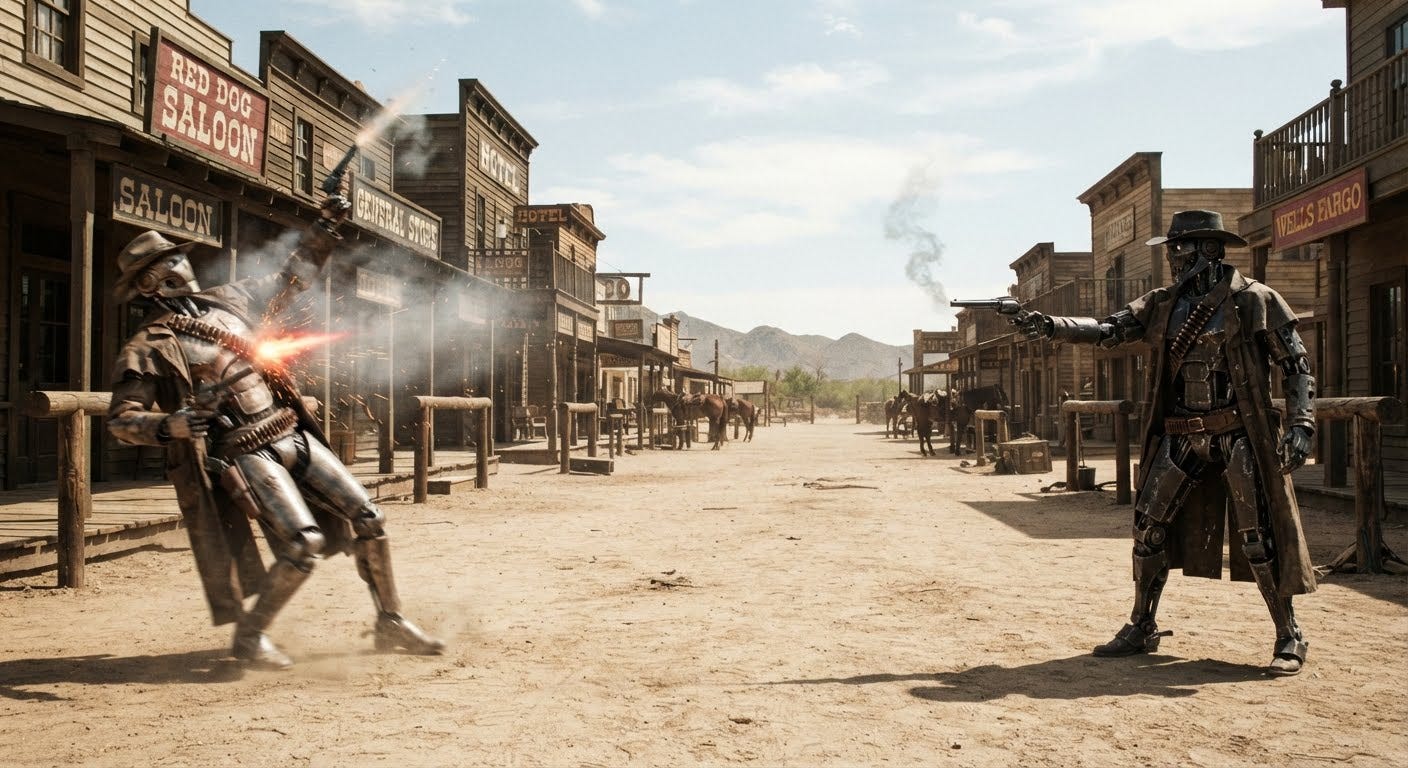
Cowboy-style gunfights are an obvious and glorious upgrade. Picture two humanoids facing each other at twenty paces in a dusty arena styled like a frontier town complete with swinging saloon doors and convenient barrels for cover. Holsters. Limited ammunition. The agonizing pause before the draw. The first machine to clear leather and land a clean shot wins while the loser collapses in a shower of sparks and wounded mechanical dignity. The crowd will lose its collective mind the first time a robot fans its gun like a digital Wyatt Earp who never had to worry about carpal tunnel. Every misfire, every dramatic slow-motion tumble into the dirt, every last-second ricochet will be replayed endlessly by fans who suddenly discover they have strong opinions about optimal holster placement on a titanium pelvis.
Jousting
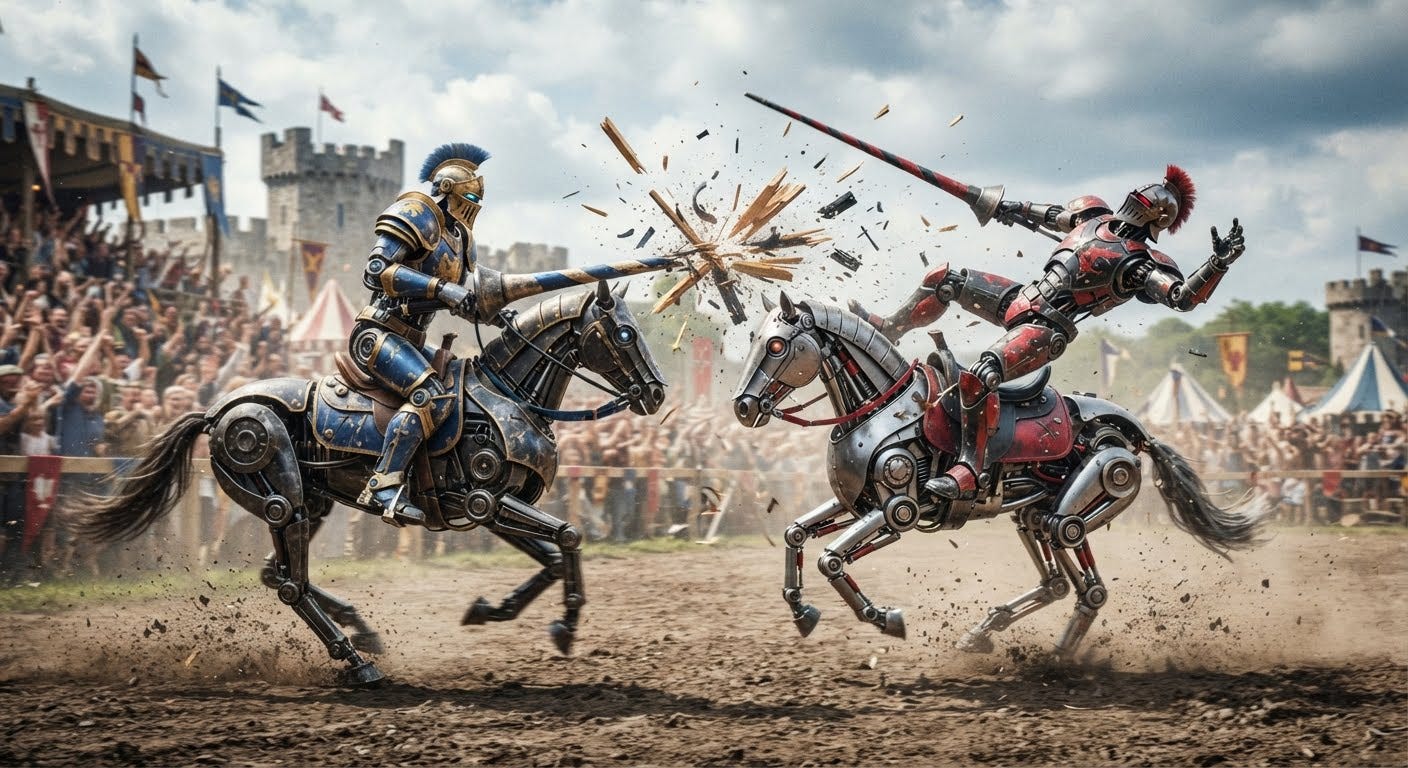
Medieval jousting arrives next, and it will look even better once the competitors mount something faster than their own legs. Imagine bipedal humanoids charging toward each other on robotic horses that gallop with unsettling realism, or better yet, on heavily armored motorcycles that roar down the lists at terrifying speed. Lances lowered, shields raised, the machines attempt to unbalance their opponent without becoming a tumbling scrapyard themselves. The physics of staying upright while delivering a heavy impact at velocity will separate the champions from the ones who invent creative new ways to face-plant in front of thousands. After the initial pass the combatants can continue the fight dismounted with swords or maces, or simply keep riding and try again. The combination of medieval pageantry and modern horsepower will be pure visual catnip.
Colosseum
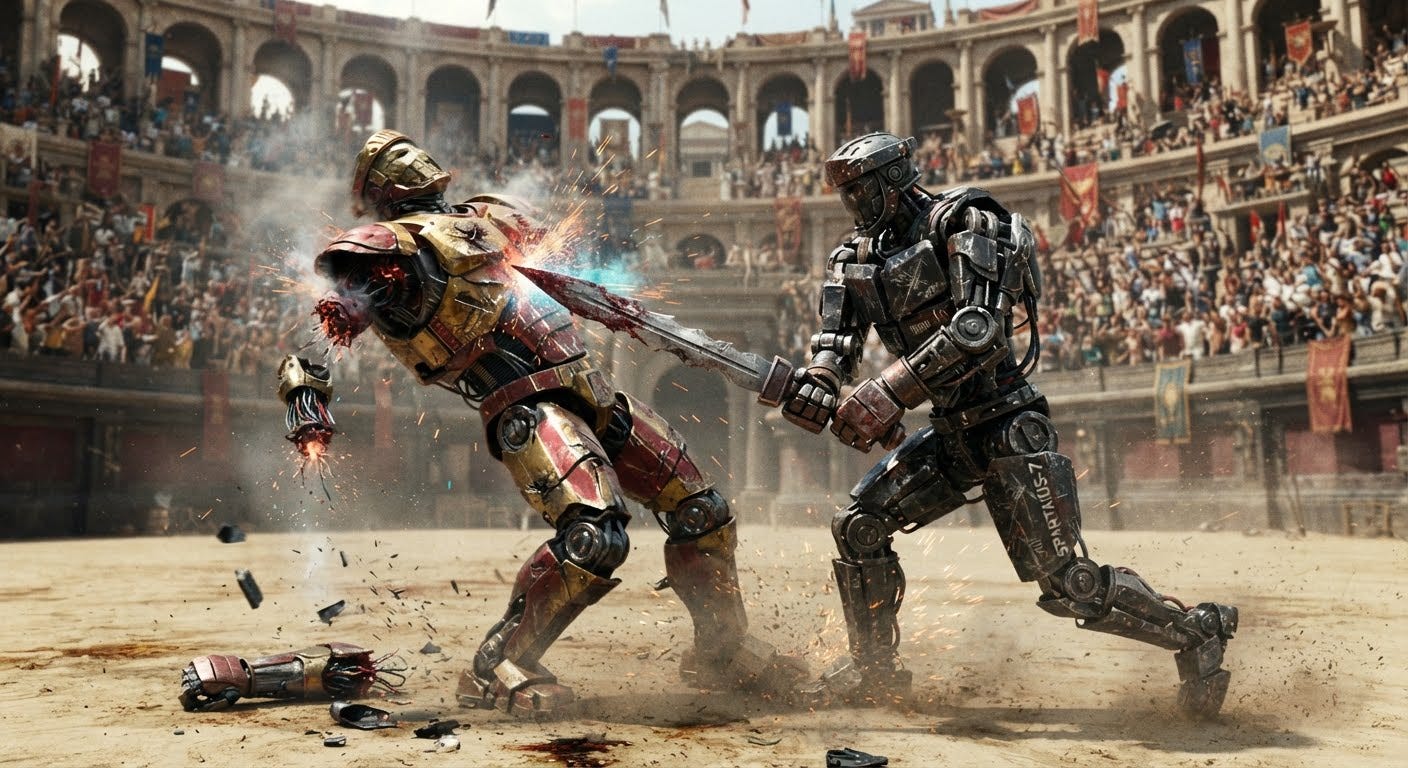
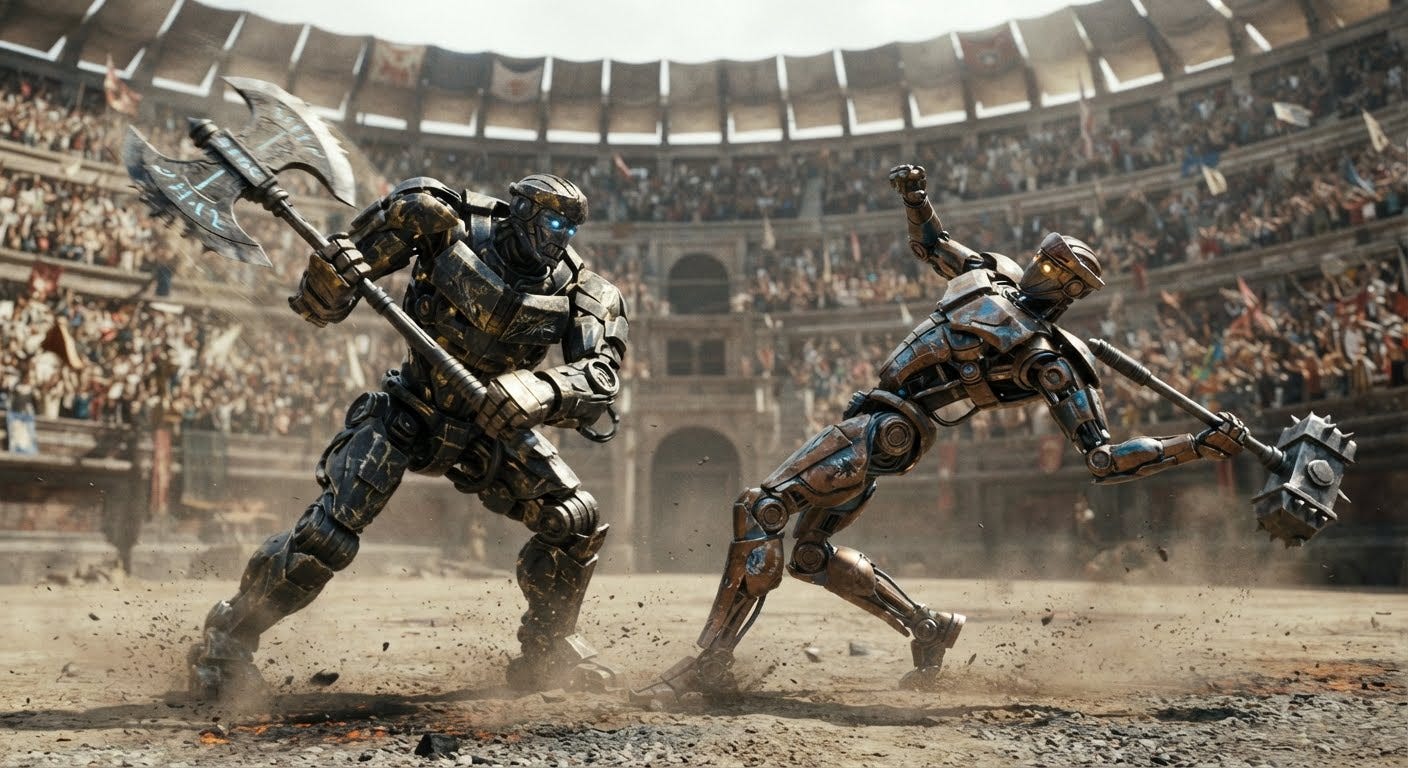
Then comes the full colosseum treatment. Armed humanoids in varied loadouts of shields, nets, tridents, and modular armor designed to shear away in dramatic pieces fill an arena built for spectacle. Environmental hazards appear. Team formats emerge. Seasonal storylines turn individual machines into characters with grudges and fan clubs. The arena itself becomes a star of the show. This is where the sport graduates from novelty to cultural fixture, complete with roaring crowds, dramatic entrances, and the occasional robot that somehow becomes a folk hero after surviving three consecutive decapitation attempts.
Mecha
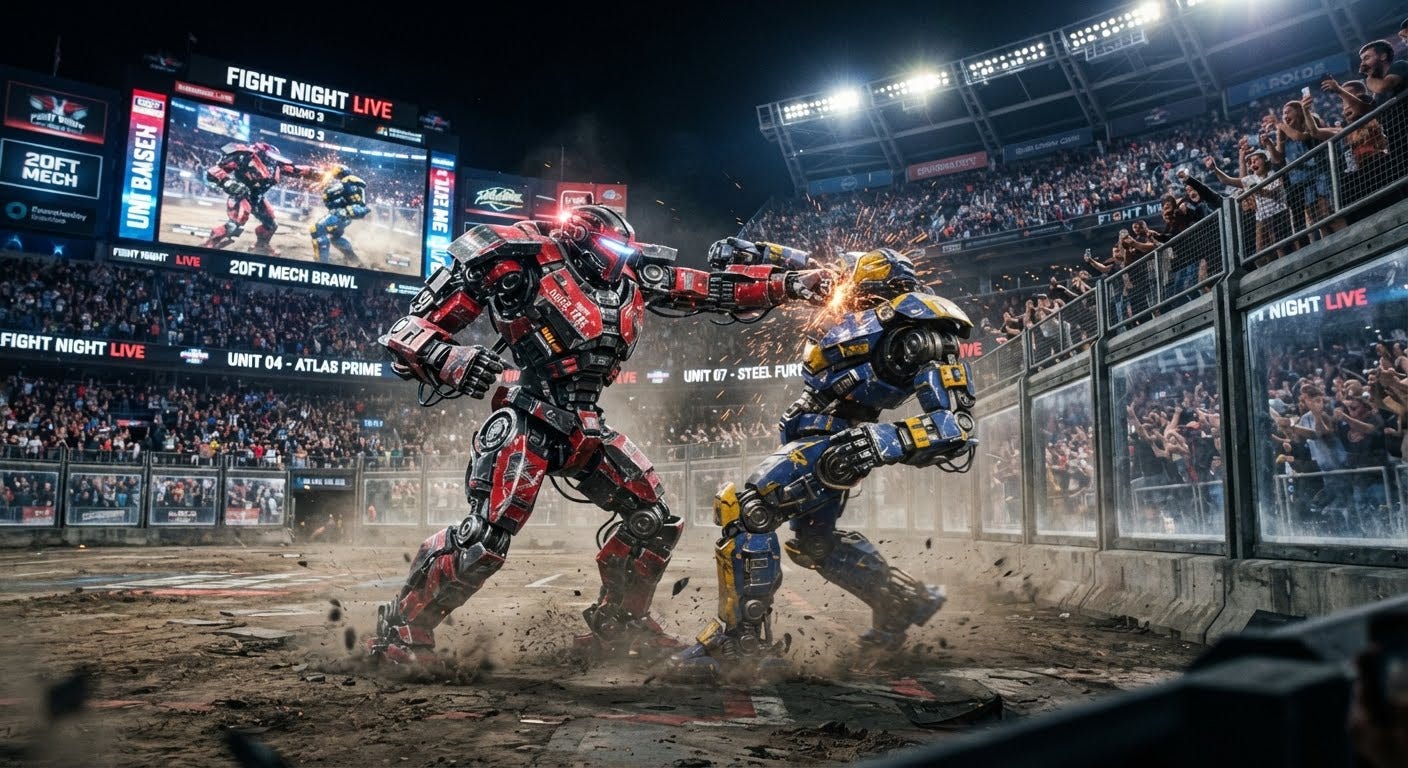
And of course the machines will grow. Once human-sized fighters prove the concept, the obvious next step is bigger. Much bigger. Mecha combat arrives with giant robots towering over the audience, trading blows that shake the stands and make the original humanoid fights look like a particularly violent game of chess. Even if the current generation of humanoid contests remains confined to octagons and modest cages, the demand for ever-larger spectacle will force arenas to expand. Colosseum-scale venues will rise again, this time filled not with blood and sand but with hydraulics, lithium batteries, and the deeply satisfying crunch of advanced materials meeting their design limits. The engineering challenges will be immense. The ticket sales will be larger. The merchandising opportunities for twelve-meter-tall action figures will be frankly obscene.
There is a perfect historical irony at the heart of all this. Humanity spent centuries developing technology to leave the brutality of the ancient world behind. We built laws, ethics, medical science, and a general consensus that watching people die for entertainment is in poor taste. Then we created sophisticated humanoid machines, looked at their complete lack of legal personhood and biological vulnerability, and immediately thought, “Finally, we can have gladiators again without the paperwork.” The same species that once filled the Colosseum with blood is now filling arenas with non-living proxies designed specifically to be destroyed for sport. We did not conquer our appetite for violence. We simply outsourced it to robots that cannot sue, cannot suffer, and can be rebuilt by Monday. The future is here, and it is wearing a fighting stance while a commentator screams about a perfectly timed roundhouse kick that just removed another robot’s head. The ancients would have understood completely. They just would have been jealous of the special effects.