

Australia is rapidly positioning itself as a major sovereign player in the global space economy, marked by a significant new commercial initiative on the western edge of the continent. The Western Australian Government recently awarded a 1.75 million dollar Spaceport Establishment Support Grant to Perth-based startup Space Angel to advance a commercial launch facility.
This funding, matched dollar for dollar by the recipient, is designed to fast-track site assessments, regulatory approvals, and the comprehensive business case required to build a permanent spaceport. The project represents a deliberate shift toward capturing a slice of the global space launch market, which currently exceeds 15 billion US dollars annually and continues to expand at a rapid pace.
This planned facility represents a historic first for Western Australia, but it is not the very first spaceport on the Australian continent. It enters an increasingly competitive domestic landscape where other states have already established commercial launch sites, such as the Whalers Way Orbital Launch Complex in South Australia and the Arnhem Space Centre in the Northern Territory, the latter of which notably hosted historic suborbital launches for NASA.
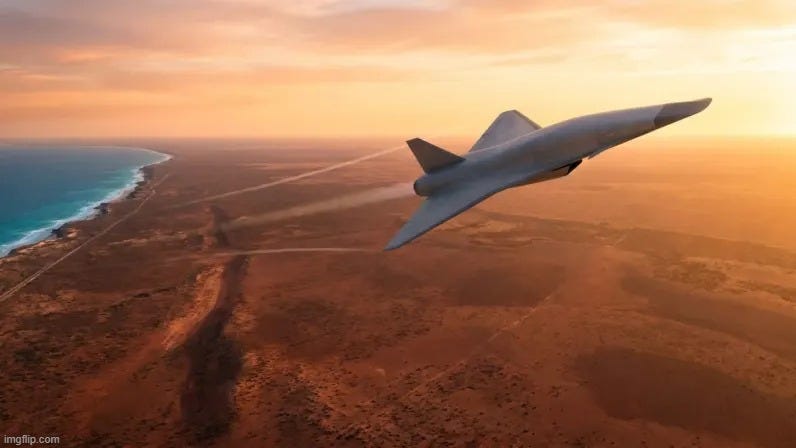
However, Space Angel is proposing a unique geographic model for Western Australia, focusing on prospective “green” spaceport sites near Eucla on the vast Nullarbor Plain, as well as on Christmas Island. The vision includes a dual-corridor launch architecture capable of servicing both polar and equatorial orbits, alongside dual 2.9-kilometre asphalt runways designed for orbital re-entry and horizontal landing.
To understand why this modern push is fundamentally different from Australia’s aerospace past, one must look at the legacy of the Woomera Range Complex in South Australia. Historically, Woomera was not a commercial spaceport in the modern sense; it was established in 1947 primarily as a military rocket testing range and a joint Anglo-Australian research facility.
While Woomera holds a legendary status in space history, having hosted the launch of Australia’s first satellite, WRESAT, in 1967, its operations were strictly governed by state defense priorities and Cold War military testing. Woomera was built for experimental rocketry, atmospheric research, and weapons validation within a restricted military exclusion zone, rather than for the routine, commercial, and high-frequency deployment of private satellite constellations.
The proposed Western Australian spaceport circumvents the limitations of these older state-run test ranges by leaning heavily into a commercial, multi-modal infrastructure model. Modern commercial satellite operators require rapid turnaround times, highly flexible orbital inclinations, and simplified regulatory pathways that traditional national defense ranges cannot easily prioritize.
By building commercially accessible infrastructure independent of active military testing schedules, Space Angel aims to offer international and domestic clients a sovereign launch option free from foreign overflight complications. The facility is designed to function less like a closed government military base and more like a specialized commercial airport for orbital transit.
Environmental and economic sustainability form the core operational pillars of this new frontier. A key element of the Western Australian initiative is the focus on low-impact, sustainable space flight, utilizing renewable power infrastructure and investigating green fuels for propulsion. The geographic isolation of the Nullarbor Plain offers a vast, empty recovery corridor, allowing spacecraft to return and land safely over unpopulated territory where payloads can be recovered within hours.
Beyond the immediate launchpad infrastructure, the state government anticipates that a domestic spaceport will serve as an industrial catalyst, attracting international investment, fostering high-tech engineering jobs, and integrating local manufacturing businesses into the broader global space supply chain.
As the state government simultaneously conducts parallel feasibility studies to map out additional launch sites across Western Australia, the path toward a fully operational space industry begins to crystallise. While early pioneers at Woomera proved that Australia could reach the upper atmosphere, this new wave of commercial spaceports aims to prove that the nation can reliably sustain commercial space traffic.
By transitioning from the restrictive rocket testing frameworks of the twentieth century to open, commercially viable orbital gatehouses, Australia is preparing to transform its vast geography into a permanent, sustainable bridge to the stars.